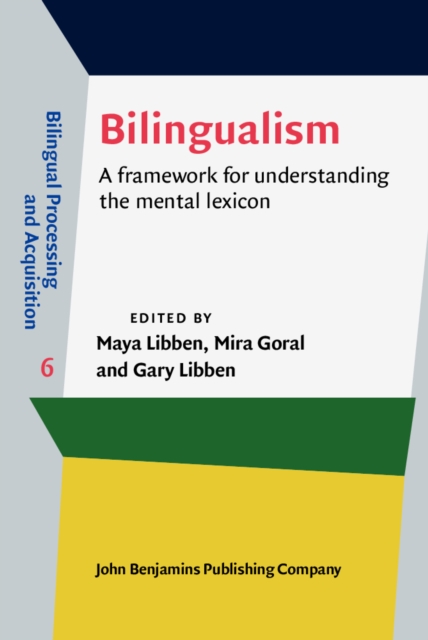
How does knowledge of a first or second language develop, and how is that knowledge used in real time comprehension and production of one or two languages?
Estimating native-speaker vocabulary size is important for guiding interventions to support native-speaker vocabulary growth and for setting goals for learners of English as a foreign language.
The production and processing of collocations and formulaic language is a field of growing interest in corpus linguistics and experimental psycholinguistics.
This book explores socio-cultural meanings of 'self' in the Chinese language through analysing a range of conversations among Chinese immigrants to Australia qualitatively on the topics of individuality, social relationships and collective identity.
This volume offers a multidisciplinary view of cutting-edge research on bilingualism in Spanish and Portuguese-speaking regions, with the aim of building a bridge between sub-fields and approaches that often find themselves isolated from one another.
This volume includes fourteen papers on the acquisition of Romance languages, eleven of which were presented at the Romance Turn 9, held in Bucharest in September 2018.
English Pronunciation Instruction: Research-based insights presents recent research on L2 English pronunciation including pedagogical implications and applications, and seeks to bridge the gulf between pronunciation research and teaching practice.
This collection brings together leading names in the field of bilingualism research to celebrate the 25th anniversary of the Studies in Bilingualism series.
This book offers the first systematic study of the early phases in the acquisition of derivational morphology from a cross-linguistic and typological perspective.
Written for novice and established scholars alike, Instructed Second Language Acquisition Research Methods is a stand-alone research methods guide from an Instructed Second Language Acquisition (ISLA) lens.
Teachability and Learnability across Languages addresses key issues in second, foreign and heritage language acquisition, as well as in language teaching.
Heritage languages, such as the Turkish varieties spoken in Berlin or the Spanish used in Los Angeles, are non-dominant languages, often with little prestige.
This book fills an existing gap in the field of third language acquisition (L3A) by bringing together theoretical, empirical, and practical accounts that contribute to informed teaching practices in multilingual classrooms.
This book provides a comprehensive, research-based account of how people learn a second/foreign language and shows how classroom practice can be organised around research-based principles.
This volume presents eleven papers on the acquisition of Romance, most of them presented at the Romance Turn VIII, held in Bellaterra, Catalonia, Spain, in September 2016.
This edited volume contains a representative sample of papers presented at the 7th meeting of the Generative Approaches to Language Acquisition - North America (GALANA-7) conference.
Whereas it is now generally recognised that multilingualism is important for society, culture and the economy, the relevance of multilingualism for the world of science has still largely escaped attention.
This volume consists of a well-integrated collection of original research articles and theoretical/overview papers on second language (L2) input processing.
The last decades of the twentieth century have witnessed a fundamental scientific discovery: the identification of mirror neurons and, consequently, the development of the Embodied Simulation theory.
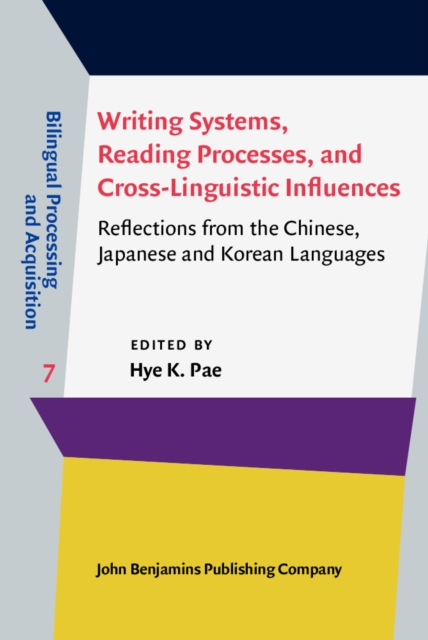
This book provides readers with a unique array of scholarly reflections on the writing systems of Chinese, Japanese, and Korean in relation to reading processes and data-driven interpretations of cross-language transfer.
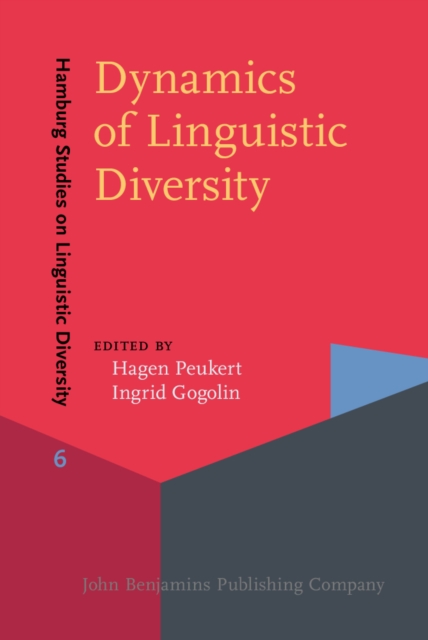
This volume emphasizes the energetic nature of linguistic diversity and its consequences of how we think about language, how it affects the individual, education in school, and urban spaces across the globe.
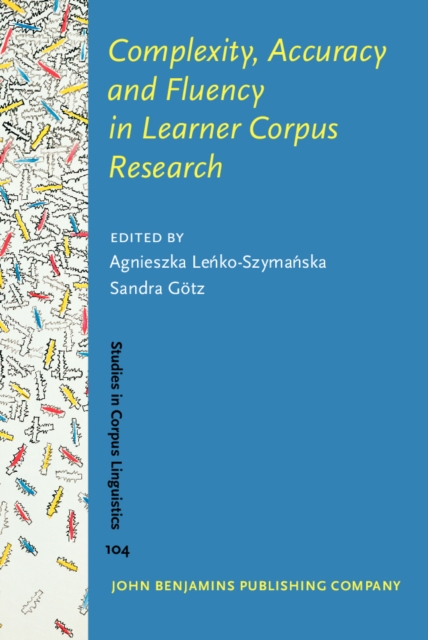
This volume illustrates the high potential of learner corpus investigations for research into the CAF triad by presenting eleven original learner corpus-based studies which are set within solid theoretical frameworks, examine learner corpora with state-of-the-art analytical techniques and yield highly interesting findings.
This book offers a comprehensive view of multimodal composing and literacies in multilingual contexts for ESL and EFL education in United States of America and globally.
This book, one of the few English language publications on indigenous languages spoken in East Africa, highlights theoretical contributions on understudied East Cushitic languages, based on extensive data.
This book describes the grammar of Chinese nominal groups for the purpose of text analysis, drawing upon Halliday's systemic functional linguistics (SFL) model.
This is the first book of its kind that explains the basic concepts, theoretical foundations and systematic research of linguistic semiotics, so as to establish a well-founded framework for linguistic semiotics as an independent discipline.
This book is the first in a three-volume set that celebrates the career and achievements of Cliff Goddard, a pioneer of the Natural Semantic Metalanguage approach in linguistics.
This book presents a case study on lexical error analysis in the translation products of Arab English majors at the university level with important implications for Arabic-speaking countries.
This book is the first edited book to cover a wide range of issues related to Chinese as a second language (CSL) speech, including tone and segment acquisition and processing, categorical perception of tones, CSL fluency, CSL intelligibility/comprehensibility and accentedness, and pronunciation pedagogy.
This book shines a light on novel and less familiar domains of early English language education for children aged 3 to 12, in mainstream and out-of-school settings.
This text offers pre-service and in-service teachers pragmatic strategies for teaching middle-grades literacy in culturally proactive and sustaining ways.
Drawing on experiences of ESOL teachers from around the world, this book provides insights into how peer learning is understood and used in real language classrooms.
Drawing on experiences of ESOL teachers from around the world, this book provides insights into how peer learning is understood and used in real language classrooms.