The tradition descending from Frege and Russell has typically treated theories of meaning either as theories of meanings (propositions expressed), or as theories of truth conditions.
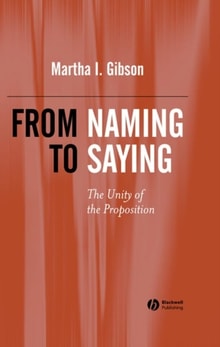
From Naming to Saying explores the classicquestion of the unity of the proposition, combining an historical approach with contemporary causal theories to offer a unique and novel solution.
This book studies the print culture of the nineteenth century as it shaped the meanings and the cultural significance of literary works by women writers - Mary Robinson, Felicia Hemans, Elizabeth Barrett Browning, Lady Blessington, Lady Morgan, Caroline Norton, Letitia Elizabeth Landon, and others.
Zutot: Perspectives on Jewish Culture aims to fill a gap that has become more and more conspicuous among the wealth of scholarly periodicals in the field of Jewish Studies.
Journeys to a Graveyard examines the descriptions provided by eight Russian writers of journeys made to western European countries between 1697 and 1880.
Zutot: Perspectives on Jewish Culture aims to fill a gap that has become more and more conspicuous among the wealth of scholarly periodicals in the field of Jewish Studies.
Timeless techniques of effective public speaking from ancient Rome's greatest oratorAll of us are faced countless times with the challenge of persuading others, whether we're trying to win a trivial argument with a friend or convince our coworkers about an important decision.
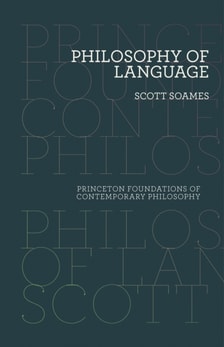
A masterful overview of the philosophy of language from one of its most important thinkersIn this book one of the world's foremost philosophers of language presents his unifying vision of the field-its principal achievements, its most pressing current questions, and its most promising future directions.
This book demonstrates the importance of understanding how political rhetoric, financial reporting and media coverage of austerity in transnational contexts is significant to the communicative, social and economic environments in which we live.
This book demonstrates the importance of understanding how political rhetoric, financial reporting and media coverage of austerity in transnational contexts is significant to the communicative, social and economic environments in which we live.
Featuring contributions from an international team of leading and up-and-coming scholars, this innovative volume provides a comprehensive sociolinguistic picture of current spoken British English based on the Spoken BNC2014, a brand new corpus of British speech.
Featuring contributions from an international team of leading and up-and-coming scholars, this innovative volume provides a comprehensive sociolinguistic picture of current spoken British English based on the Spoken BNC2014, a brand new corpus of British speech.
This collection of essays offers a multi-faceted exploration of audiovisual translation, both as a means of intercultural exchange and as a lens through which linguistic and cultural representations are negotiated and shaped.
This collection of essays offers a multi-faceted exploration of audiovisual translation, both as a means of intercultural exchange and as a lens through which linguistic and cultural representations are negotiated and shaped.
Anybody who reads or writes Chinese characters knows that they obey a grammar of sorts: though numerous, they are built out of a much smaller set of constituents, often interpretable in meaning or pronunciation, that are themselves built out of an even smaller set of strokes.
Anybody who reads or writes Chinese characters knows that they obey a grammar of sorts: though numerous, they are built out of a much smaller set of constituents, often interpretable in meaning or pronunciation, that are themselves built out of an even smaller set of strokes.
The Semantics of Chinese Classifiers and Linguistic Relativity focuses on the semantic structure of Chinese classifiers under the cognitive linguistics framework, and the implications thereof on linguistic relativity and language acquisition.
The Semantics of Chinese Classifiers and Linguistic Relativity focuses on the semantic structure of Chinese classifiers under the cognitive linguistics framework, and the implications thereof on linguistic relativity and language acquisition.