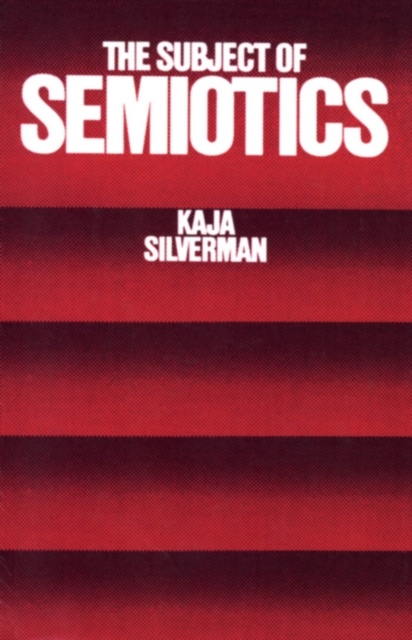
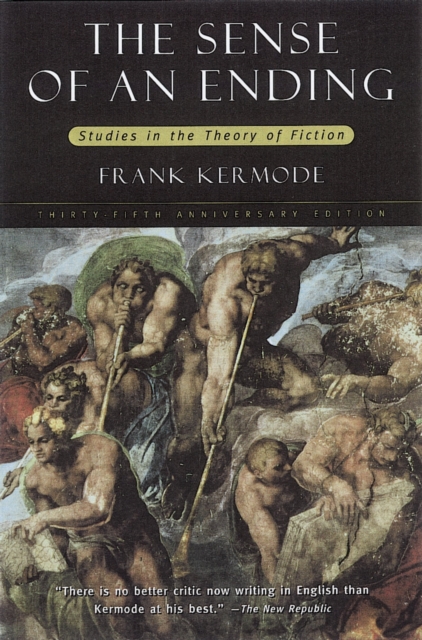
This provocative book undertakes a new and challenging reading of recent semiotic and structuralist theory, arguing that films, novels, and poems cannot be studied in isolation from their viewers and readers.
Deborah Tannen's You Just Don't Understand spent nearly four years (in cloth and paper) on The New York Times Best Seller list and has sold over a million and a half copies.
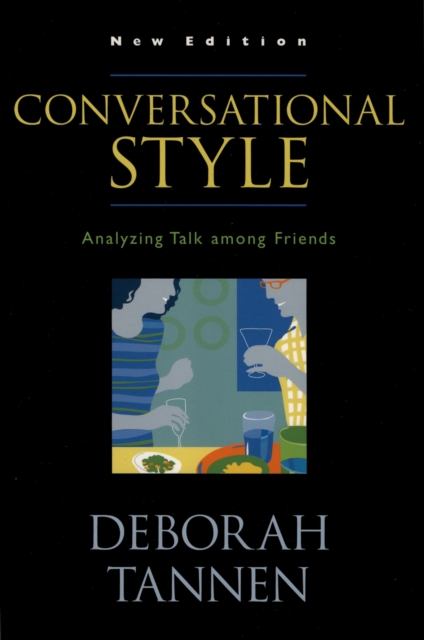
This revised edition of Deborah Tannen's first discourse analysis book, Conversational Style--first published in 1984--presents an approach to analyzing conversation that later became the hallmark and foundation of her extensive body of work in discourse analysis, including the monograph Talking Voices, as well as her well-known popular books You Just Don't Understand, That's Not What I Meant!
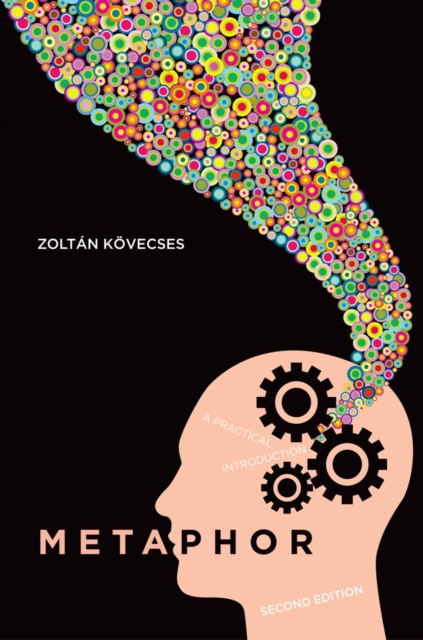
Combining up-to-date scholarship with clear and accessible language and helpful exercises, Metaphor: A Practical Introduction is an invaluable resource for all readers interested in metaphor.
This volume consists of nine original chapters on central issues in theoretical syntax, all written by distinguished authors who have made major contributions to generative syntax, plus an introductory chapter by the editor.
Imposters are third person DPs that are used to refer to the speaker/writer or addressee, such as :(i) Your humble servant finds the time before our next encounter very long.
From Truth to Technique addresses key questions raised by the burgeoning literature in what Philip Gaines calls advocacy advice texts-manuals, handbooks, and other how-to guides-written by lawyers for lawyers, both practicing and aspiring, to help them be as effective as possible in trial advocacy.
This volume is focused on understanding a key idea in modern semantics-direct reference-and its integration into a general semantics for natural language.
Adding a new introduction and two previously unpublished papers, Discourse and Practice: New Tools for Critical Discourse Analysis brings together van Leeuwen's methodological work on discourse analysis of the last 15 years.
In this short monograph, John Horty explores the difficulties presented for Gottlob Frege's semantic theory, as well as its modern descendents, by the treatment of defined expressions.
The vocabulary of wine is large and exceptionally vibrant -- from straight-forward descriptive words like "e;sweet"e; and "e;fragrant"e;, colorful metaphors like "e;ostentatious"e; and "e;brash"e;, to the more technical lexicon of biochemistry.
The Oxford Handbook of Cognitive Linguistics presents a comprehensive overview of the main theoretical concepts and descriptive/theoretical models of Cognitive Linguistics, and covers its various subfields, theoretical as well as applied.
The late 20th century saw great movement in the philosophy of language, often critical of the fathers of the subject--Gottlieb Frege and Bertrand Russell--but sometimes supportive of (or even defensive about) the work of the fathers.
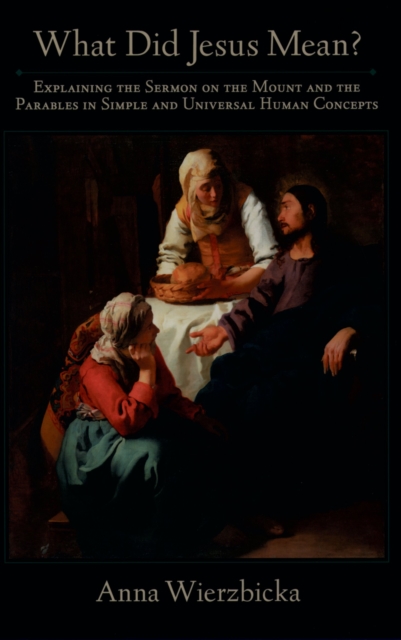
In this highly interdisciplinary work, linguist Anna Wierzbicka casts new light on the words of Jesus by taking her well-known semantic theory of "e;universal human concepts"e;- concepts which are intuitively understandable and self-explanatory across languages-and bringing it to bear on Jesus' parables and the Sermon on the Mount.
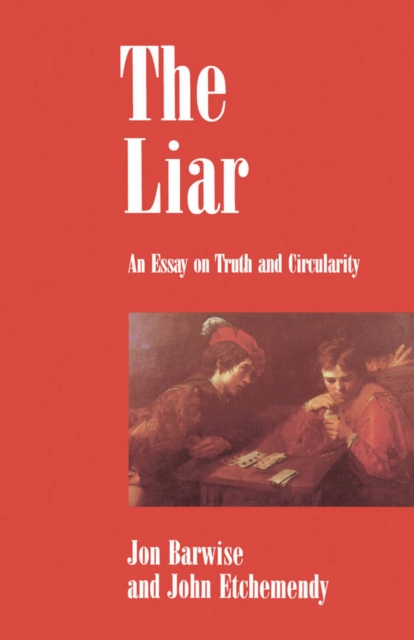
Bringing together powerful new tools from set theory and the philosophy of language, this book proposes a solution to one of the few unresolved paradoxes from antiquity, the Paradox of the Liar.
Over the past several decades, linguistic theorizing of tense, aspect, and mood (TAM), along with a strongly growing body of crosslinguistic studies, has revealed complexity in the data that challenges traditional distinctions and treatments of these categories.
Polarity sensitivity is a ubiquitous phenomenon involving expressions such as anybody, nobody, ever, never, somebody and their counterparts in other languages.
Polarity sensitivity is a ubiquitous phenomenon involving expressions such as anybody, nobody, ever, never, somebody and their counterparts in other languages.
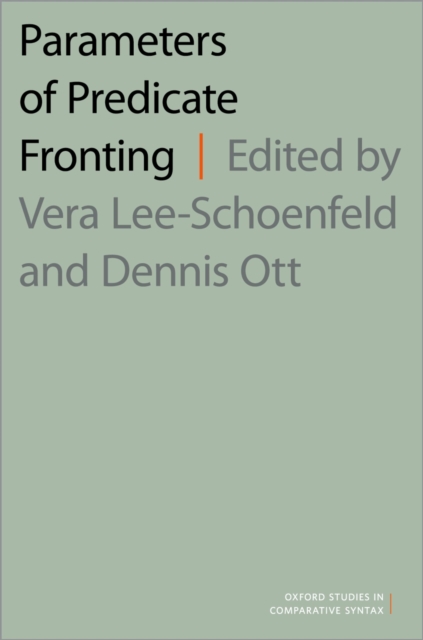
Many of the world's languages permit or require clause-initial positioning of the primary predicate, potentially alongside some or all of its dependents.
Many of the world's languages permit or require clause-initial positioning of the primary predicate, potentially alongside some or all of its dependents.
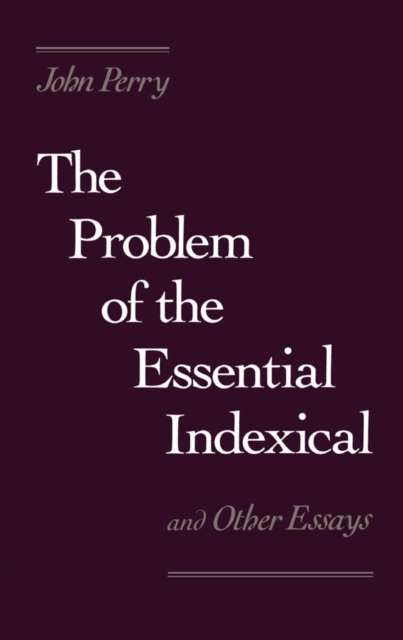
A collection of twelve essays by John Perry and two essays he co-authored, this book deals with various problems related to "e;self-locating beliefs"e;: the sorts of beliefs one expresses with indexicals and demonstratives, like "e;I"e; and "e;this.
This interdisciplinary volume of collected, mostly unpublished essays demonstrates how Mikhail Bakhtin's theory of dialogic meaning--and its subsequent elaborations--have influenced a wide range of critical discourses.
In Hearing Ourselves Think, cognitive process research moves from the laboratory to the college classroom, where its rich research tradition continues and an important new set of instructional approaches emerges.
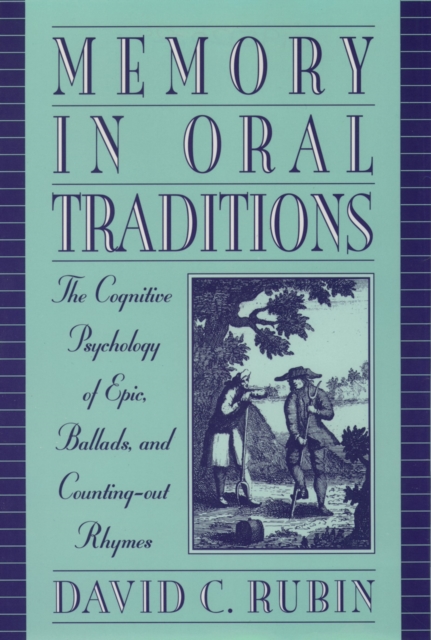
Long studied by anthropologists, historians, and linguists, oral traditions have provided a wealth of fascinating insights into unique cultural customs that span the history of humankind.
The authors bridge the gap between the semantic and syntactic properties of verb tense and aspect, and suggest a unified account of tense and aspect using Chomsky's Principles and Parameters Framework.
Meaning seems to shift from context to context; how do we know when someone says "e;grab a chair"e; that an ottoman or orange crate will do, but when someone says "e;let's buy a chair,"e; they won't?
Nancy Ainsworth-Vaughn studied stories, topic control, "e;true"e; questions, and rhetorical questions in 101 medical encounters in US private-practice settings.
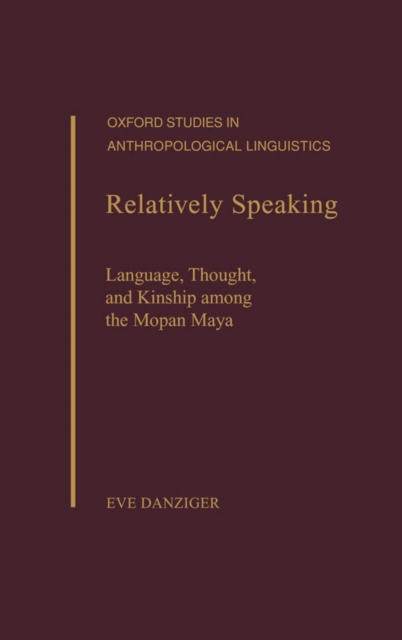
Based upon 14 months of ethnographic fieldwork among the Mopan Maya in Belize, Eve Danziger examines the semantic complexity of particular kinship terms used among Mopan women and children and shows that a culture-specific analysis of their terms is superior to other non-ethnographically-based methods.
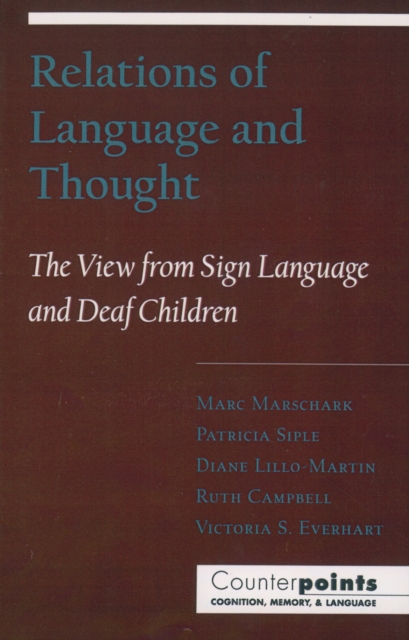
The relationship of language to cognition, especially in development, is an issue that has occupied philosophers, psychologists, and linguists for centuries.
Puckett takes a new look at the relationship between language, society, and economics by examining how people talk about work in a rural Appalachian community.