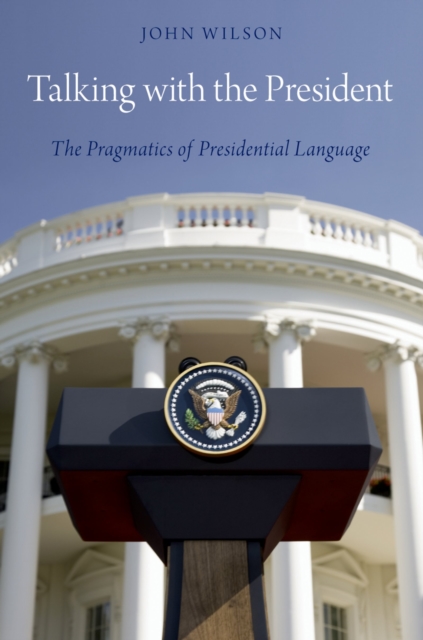
Despite popular perceptions, presidents rarely succeed in persuading either the public or members of Congress to change their minds and move from opposition to particular policies to support of them.
Since many legal disputes are battles over the meaning of a statute, contract, testimony, or the Constitution, judges must interpret language in order to decide why one proposed meaning overrides another.
Can language directly access what is true, or is the truth judgment affected by the subjective, perhaps even solipsistic, constructs of reality built by the speakers of that language?
We have only recently started to challenge the notion that "e;serious"e; inquiry can be free of rhetoric, that it can rely exclusively on "e;hard"e; fact and "e;cold"e; logic in support of its claims.
The Weimar origins of political theory is a widespread and powerful narrative, but this singular focus leaves out another intellectual history that historian David L.
On his famous walk to Vincennes to visit the imprisoned Diderot, Rousseau had what he called an "e;illumination"e;-the realization that man was naturally good but becomes corrupted by the influence of society-a fundamental change in Rousseau's perspective that would animate all of his subsequent works.
From Plato's contempt for "e;the madness of the multitude"e; to Kant's lament for "e;the great unthinking mass,"e; the history of Western thought is riddled with disdain for ordinary collective life.
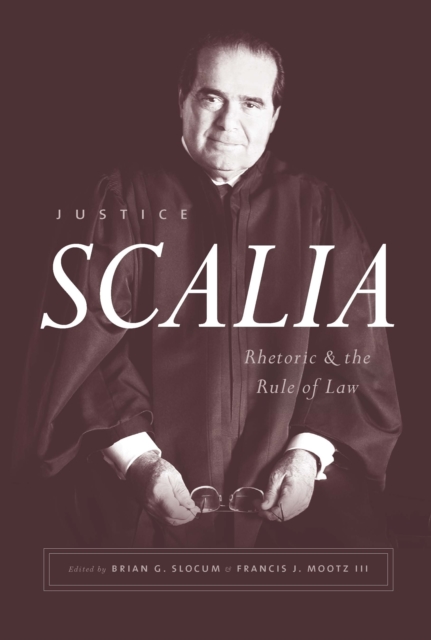
Justice Antonin Scalia (1936-2016) was the single most important figure in the emergence of the "e;new originalist"e; interpretation of the US Constitution, which sought to anchor the court's interpretation of the Constitution to the ordinary meaning of the words at the time of drafting.
Over the past several decades, linguistic theorizing of tense, aspect, and mood (TAM), along with a strongly growing body of crosslinguistic studies, has revealed complexity in the data that challenges traditional distinctions and treatments of these categories.
How do scientists persuade colleagues from diverse fields to cross the disciplinary divide, risking their careers in new interdisciplinary research programs?
The Knowledge Most Worth Having represents the essence of education at the University of Chicago-faculty and students grappling with key intellectual questions that span the humanities, while still acknowledging the need to acquire a depth of knowledge in one's chosen field.
Jody Azzouni argues that we involuntarily experience certain physical items, certain products of human actions, and certain human actions themselves as having meaning-properties.
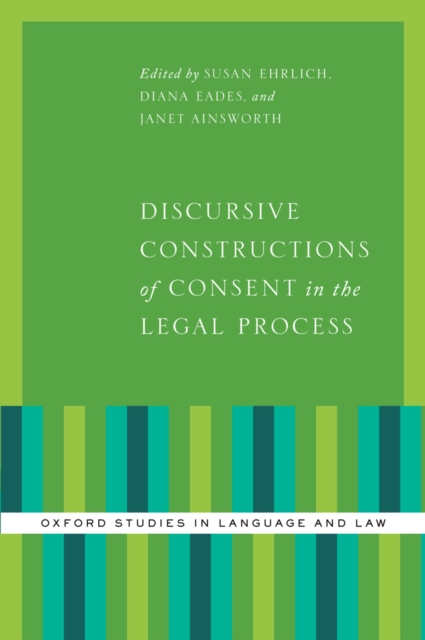
As a linguistically-grounded, critical examination of consent, this volume views consent not as an individual mental state or act but as a process that is interactionally-and discursively-situated.
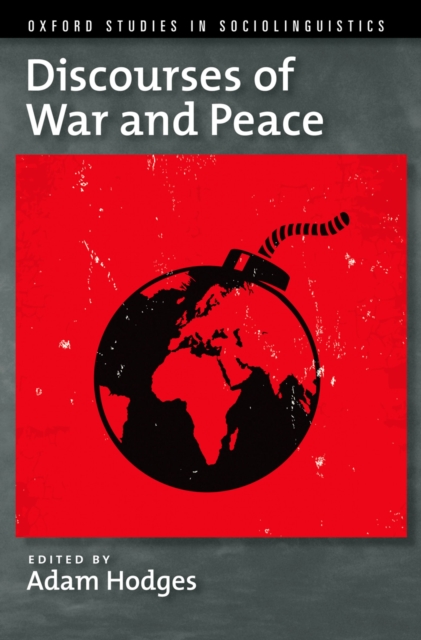
Given the prevalence of war around the world, it is vital to understand the way discourse contributes to the promotion and positioning of war as a natural or inevitable response to international problems.
Intercultural Pragmatics studies how language systems are used in social encounters between speakers who have different first languages and cultures, yet communicate in a common language.
The Oxford Handbook of Cognitive Linguistics presents a comprehensive overview of the main theoretical concepts and descriptive/theoretical models of Cognitive Linguistics, and covers its various subfields, theoretical as well as applied.
Combining up-to-date scholarship with clear and accessible language and helpful exercises, Metaphor: A Practical Introduction is an invaluable resource for all readers interested in metaphor.
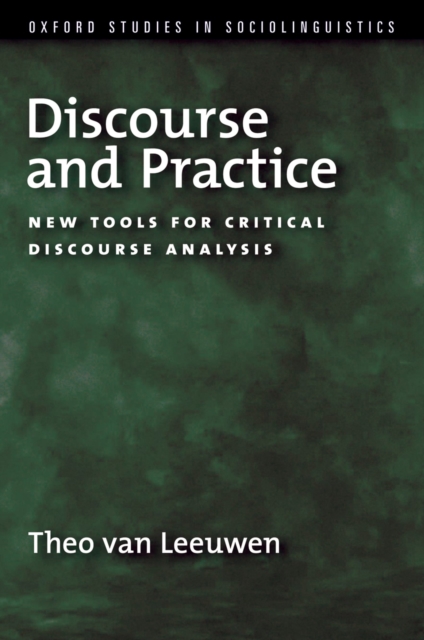
Adding a new introduction and two previously unpublished papers, Discourse and Practice: New Tools for Critical Discourse Analysis brings together van Leeuwen's methodological work on discourse analysis of the last 15 years.
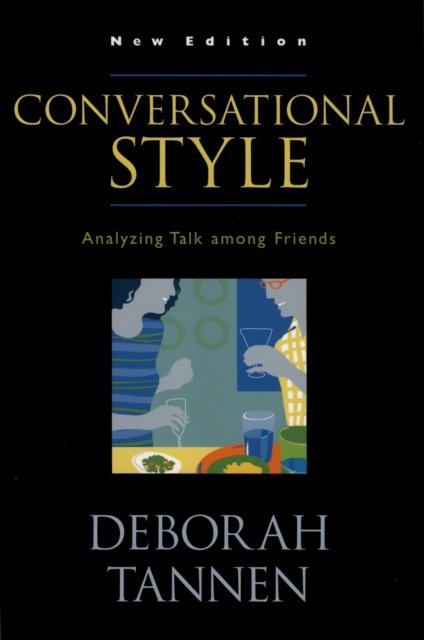
This revised edition of Deborah Tannen's first discourse analysis book, Conversational Style--first published in 1984--presents an approach to analyzing conversation that later became the hallmark and foundation of her extensive body of work in discourse analysis, including the monograph Talking Voices, as well as her well-known popular books You Just Don't Understand, That's Not What I Meant!
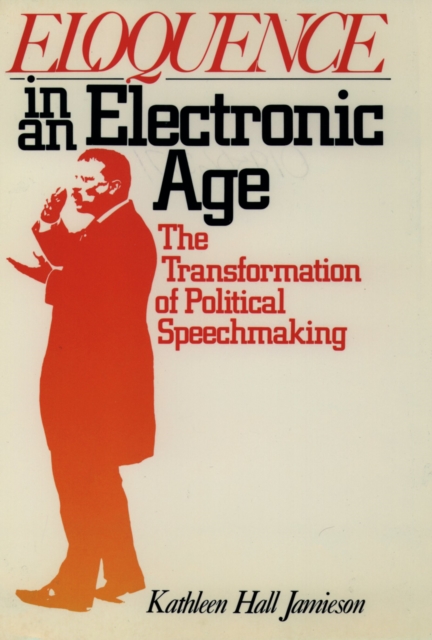
In a book that blends anecdote with analysis, Kathleen Hall Jamieson--author of the award-winning Packaging the Presidency--offers a perceptive and often disturbing account of the transformation of political speechmaking.
Focusing on the period known as the Second Sophistic (an era roughly co-extensive with the second century AD), this Handbook serves the need for a broad and accessible overview.
The Grammar of Q puts forth a novel syntactic and semantic analysis of wh-questions, one that is based upon in-depth study of the Tlingit language, an endangered and under-documented language of North America.
Comparisons and Contrasts collects eleven of Richard Kayne's recent articles in theoretical syntax, with an emphasis on comparative syntax, which uses syntactic differences among languages to probe the properties of the human language faculty.
The Early English Impersonal Construction aims to demonstrate that an understanding of the functional and semantic aspects of impersonal verbs in Old and Middle English can shed light on questions that remain about these verbs today.