This book is a composite of 40 purely scientific and peer-reviewed papers presented during the Seventh World Congress of African Linguistics (WOCAL7) at the University of Buea, Cameroon, in 2012.
This book is a composite of 40 purely scientific and peer-reviewed papers presented during the Seventh World Congress of African Linguistics (WOCAL7) at the University of Buea, Cameroon, in 2012.
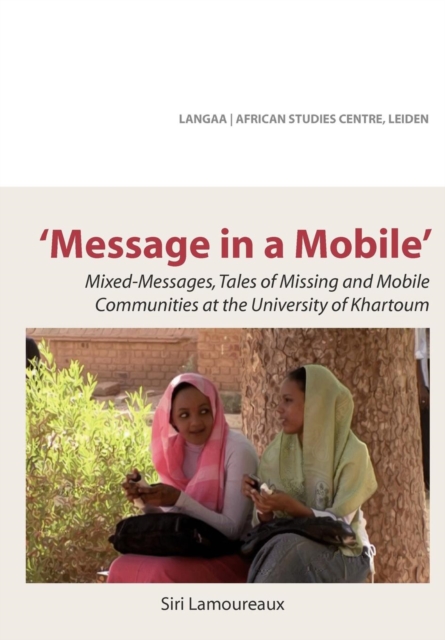
This detailed, meticulous ethnographic study on mobile phone use among Nuba students at the University of Khartoum in Sudan, distinguishes itself from other studies by taking a focused look at the linguistic content of mobile phone interactions via text-messaging, portraying it as a site for the expression of personalized and affective language.
The focus of this book is to assess, through language and literary studies in interpretation, the epistemic representation of frontiers in its shifting and fixing categories.
Este libro aborda el fenómeno lenguaje inclusivo desde una perspectiva integral, en base a un detallado análisis lingüístico, social y político, y con argumentos poco visitados en otros trabajos sobre el tema.
En este libro la psicopoética es entendida como un acontecimiento sociopsicológico que involucra de manera más o menos sutil o explícita deslices recreativos y que surge bajo determinadas condiciones culturales y de relaciones de poder en el contexto de la interacción cotidiana, así como a través de ciertos modos de dialogar y conversar.
El diagnóstico de época que se desprende de los testimonios de jóvenes populares en los que se basa este libro refiere al sentimiento de inexistencia de claras trayectorias institucionales que aseguren el tránsito entre los diferentes períodos etarios; en la imagen de una trama institucional globalmente abusiva y que sólo algunos individuos logran matizar; en la fuerza de las aspiraciones y de los sueños personales que no se abdican.
Este libro se enmarca en un área de la didáctica de las ciencias naturales que promueve la generación de una enseñanza de las ciencias que incluya las cosmovisiones de los pueblos originarios en su definición.
"Las reflexiones que, creo, disparará Vecinos Distantes en todos los lectores, hablan de la riqueza del libro y su alta densidad de ideas, unidas al placer que me produjo su lectura.
"El lenguaje es un amenazante peligro para la civilización mercantilista, por su estructura única e indestructible, que ningún mercado puede poner en jaque.
Virus significa en latín, a la vez, esperma y veneno; embarazada es la que no lleva cinto; hospital y hostilidad tienen orígenes comunes; el vocabulario de la Iglesia y del Ejército se entremezcla con el de la medicina.
"La antigua avenida poblada de diccionarios somnolientos ha desembocado en un tapiz formidable donde se entrecruzan sombras y colores, donde vibran recuerdos y se arrinconan en gamas grises los olvidos.
Hoy en día en los sectores acomodados la adolescencia se prolonga indefinidamente para los jóvenes, y los mayores se adolescentizan con las cirugías, las cremas, las tinturas, las gimnasias, las vestimentas.
This book is the first in a three-volume set that celebrates the career and achievements of Cliff Goddard, a pioneer of the Natural Semantic Metalanguage approach in linguistics.
This book proposes a critical public relations approach to analyzing crisis communication with Malaysia Airlines flight 370 (MH370) disappearance (2014-2018) as a case study.
This book provides readers with the latest research on the affective aspect of online interactions between doctors and e-patients in the context of China from a poststructuralist discourse analysis perspective.
This book explored interpreters' role when interpreting for Chinese government press conference and discovered the role deviation of conference interpreters in Chinese-English conference interpreting, by taking corpus-based approach to analyze hedges in interpreting discourse.
This book delivers essential skills in "e;spoken"e; professional communications, presenting theoretical and applied frameworks for business talk using English as a lingua franca.
This book documents the impact of Stephen Harris's works in Aboriginal education, Aboriginal learning styles, domains of language use and bilingual-bicultural education.
This book explores debaters' professional identity construction through implicit negation in televised debates from an interpersonal pragmatic perspective.
This book focuses on the dynamic nature of EAP (English for academic purposes) learners' beliefs about language learning in their shift from an EFL (English as a foreign language) environment to an EMI (English as the medium of instruction) setting in mainland China.
This book presents the results of a large-scale experiment into interpretations of the metaphor "e;the Nation as a Body"e; among 1,800+ respondents from 30 linguistic and cultural backgrounds.
This book explores how language ideologies have emerged for gangtaiqiang through a combination of indexical and ideological processes in televised media.
This book offers a novel perspective on the intersection of translation and narration in literary translation by investigating how three translations of Shuihu Zhuan present the original narrative mode to the target readership in terms of four narrative elements-voice, commentary, point of view and motif-in different periods of history.
Written with an emphasis on instruction, policy, practice, and assessment, this book focuses on English literacy at the pre-primary/primary, secondary, and university level, and discusses literacy policies in the region.
This book gathers international and interdisciplinary work on youth studies from the Global South, exploring issues such as continuity and change in youth transitions from education to work; contemporary debates on the impact of mobility, marginalization and violence on young lives; how digital technologies shape youth experiences; and how different institutions, cultures and structures generate a diversity of experiences of what it means to be young.
This book offers a bird's-eye view of the current trends, opportunities, and challenges related to Asian youth travellers, and it also presents a holistic framework for future research to build upon.
This book addresses basic issues in language education and explores how reading, with a focus on meaning, contributes to the development of all aspects of language including vocabulary, spelling, grammar, and syntax.