Nahum Sarna's distinctive and original scholarship has taken in a wide range of subject areas from work on Genesis and the Psalms to his Jewish Bible commentary and the English translation of the Ketuvim.
Given the extraordinary richness and range of contemporary theology, questions about the authority and inspiration of the Bible tend to garner ever increasing variety, complexity and controversy.
This volume had its origins in a session presented to the Society of Biblical Literature in Washington in 2006 in order to examine the legacy of Peter Ackroyd to the field of biblical studies.
Using a multi-level approach to Mark 15:34, and contra to the opinion of the majority of Markan scholarship, a contextual reading of Ps 22:2 does not serve to negate or dilute the presentation of Jesus as one in distress.
Insights gained from the study of metaphorical language in other fields, particularly New Testament parable research, are here applied to the tree metaphors in Isaiah 1-39.
This book examines the concept of 'zeal' in three Pauline texts (Rom 10:2; Gal 1:14; Phil 3:6) as a way-in to discussion of the 'New Perspective' on Paul.
The issue of community-identity construction in Galatians is considered using two methods: first, by applying anthropological theories to the mechanism and natures of community-identity and its construction, and second, by comparing the Galatian community with another minority religious community.
Arguing against restricting the meaning of purity language to the individual moral sphere (as many commentaries do), the central argument of Purity and Worldview in the Epistle of James is that purity language both articulates and constructs the worldview in James's epistle.
Originally published as part of the acclaimed Sheffield Guides series, this helpful study-guide is designed to meet the needs of students and general readers in a concise, accessible and affordable format.
This study argues that the book of Hosea ought to be understood and read as a text that was composed in Persian-period Yehud rather than in eight-century Israel.
Text, Context and the Johannine Community adopts a new approach to the social context of the Johannine writings by drawing on modern sociolinguistic theory.
Aernie examines the prophetic material in the Old Testament and its relationship with the prophetic material in Second Temple Judaism, Hellenism, and the early Christian movement.
Michael Theophilos investigates the term 'Abomination of desolation' in Matthew 24:15 proposing a revised model for understanding this enigmatic phrase.
Criteria of authenticity, whose roots go back to before the pioneering work of Albert Schweitzer, have become a unifying feature of the so-called Third Quest for the Historical Jesus, finding a prominent and common place in the research of otherwise differing scholars.
Having established the context of mockery and shame in Ancient Mediterranean cultures, Dietmar Neufeld shows how Mark presented Jesus as a person with a sense of honour and with a sense of shame, willing to accept the danger of being visible and the mockery it attracted.
The fifteen articles in this volume, arising from work in the Chronicles-Ezra-Nehemiah Section of the Society of Biblical Literature, engage with the author's thought and message through analysis of certain critical texts or by identifying and tracing larger themes through the work.
Douglas Campbell gives a clear account of why much current description of Paul's theology, and of his gospel and of his theory of salvation, is so confused.
Alistair May explores the part played by sexual ethics and the rhetoric of sexual morality in the formation of Christian identity by focusing on the longest discussion of sex in the New Testament - 1Corinthians 5-7.
This new work aimed at upper level undergraduates provides an invaluable handbook for students seriously engaging with Paul's life, letters and context.
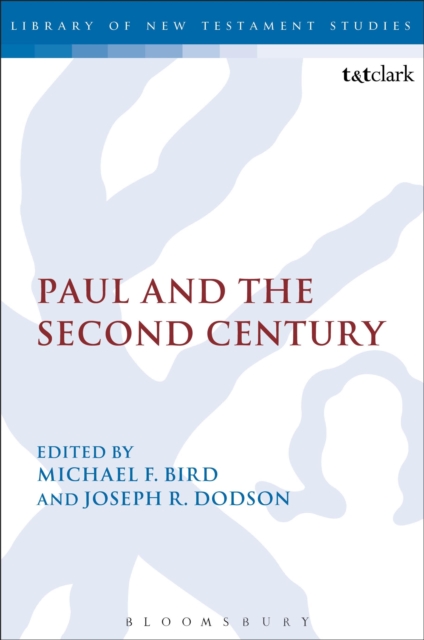
This volume looks at the imprint and influence that the writings of the Apostle Paul had in the second century, examining the Pauline corpus in conjunction with key second century figures and texts such as Ignatius, Polycarp, and the Epistle of Diognetus.
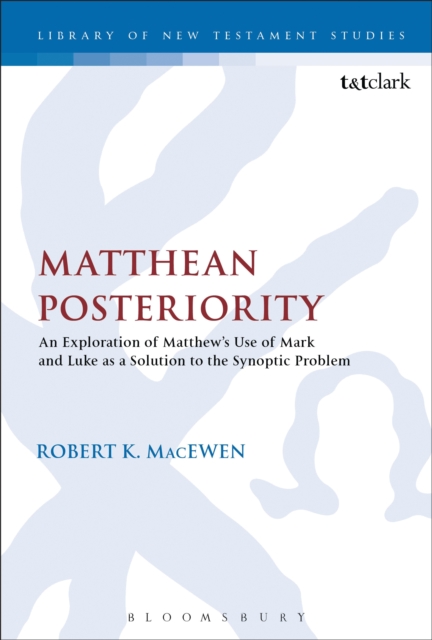
This book explores the Matthean Posteriority Hypothesis (MPH), a largely neglected solution to the Synoptic Problem which holds that the author of the Gospel of Luke used the Gospel of Mark as a source, and that the author of the Gospel of Matthew used both the Gospel of Mark and the Gospel of Luke as sources.
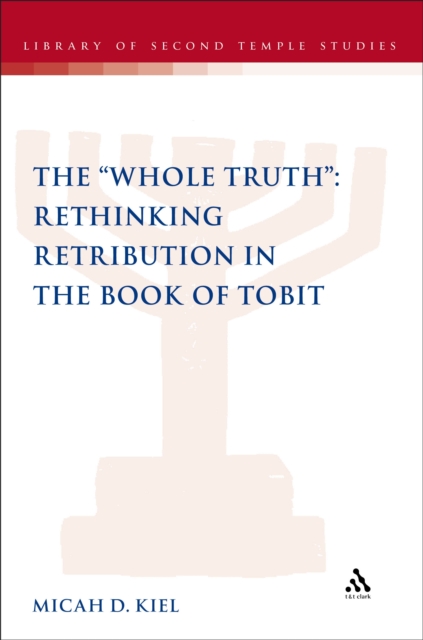
Micah Kiel discusses the overly simplistic nomenclature ('Deuteronomistic') given to Tobit's perspective on retribution and attempts to show, by coordinating it with Sirach and parts of 1 Enoch, how the book's view is much more complex than is normally asserted.
In Women in Their Place Jorunn kland takes the archaeological remains at Corinth as a starting point from which to develop an interdisciplinary, theoretically informed reading of Paul's utterances on women in 1 Corinthians 11-14.