In The Massachusetts State Constitution, Lawrence Friedman and Lynnea Thody present a comprehensive and accessible survey of Massachusetts constitutional history and constitutional law.
In Genocide Denials and the Law, Ludovic Hennebel and Thomas Hochmann offer a thorough study of the relationship between law and genocide denial from the perspectives of specialists from six countries.
American Indian tribes have long been recognized as "e;domestic, dependent nations"e; within the United States, with powers of self-government that operate within the tribes' sovereign territories.
Almost since the event itself in 1757, the English East India Company's victory over the forces of the nawab of Bengal and the territorial acquisitions that followed has been perceived as the moment when the British Empire in India was born.
Here is a vividly written and compact overview of the brilliant, flawed, and quarrelsome group of lawyers, politicians, merchants, military men, and clergy known as the "e;Founding Fathers"e;--who got as close to the ideal of the Platonic "e;philosopher-kings"e; as American or world history has ever seen.
This groundbreaking collection of essays shows that, from the moment European expansion commenced through to the twentieth century, indigenous peoples from America, Africa, Australia and New Zealand drafted legal strategies to contest dispossession.
In a stinging dissent to a 1961 Supreme Court decision that allowed the Illinois state bar to deny admission to prospective lawyers if they refused to answer political questions, Justice Hugo Black closed with the memorable line, "e;We must not be afraid to be free.
This book provides a thorough introduction to Roman property law by means of "e;cases,"e; consisting of brief excerpts from Roman juristic sources in the original Latin with accompanying English translations.
A Distinct Judicial Power: The Origins of an Independent Judiciary, 1606-1787, by Scott Douglas Gerber, provides the first comprehensive critical analysis of the origins of judicial independence in the United States.
Chief Justice John Marshall argued that a constitution "e;requires that only its great outlines should be marked [and] its important objects designated.
Chief Justice John Marshall argued that a constitution "e;requires that only its great outlines should be marked [and] its important objects designated.
In the updated, fourth edition of this classic text which has been translated into over a dozen languages, constitutional scholar and Columbia Law School professor E.
Corrective and Distributive Justice: From Aristotle to Modern Times retraces the intricate history of the distinction between corrective and distributive justice.
The Bush Administration has notoriously argued that detainees at Guantanamo do not enjoy constitutional rights because they are held outside American borders.
Auerbach here focuses on the elite nature of the profession, examining its emphasis on serving business interests and its attempts to exclude participation by minorities.
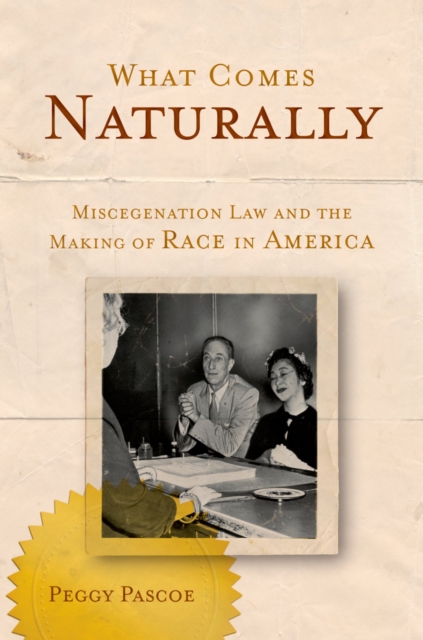
A long-awaited history that promises to dramatically change our understanding of race in America, What Comes Naturally traces the origins, spread, and demise of miscegenation laws in the United States--laws that banned interracial marriage and sex, most often between whites and members of other races.
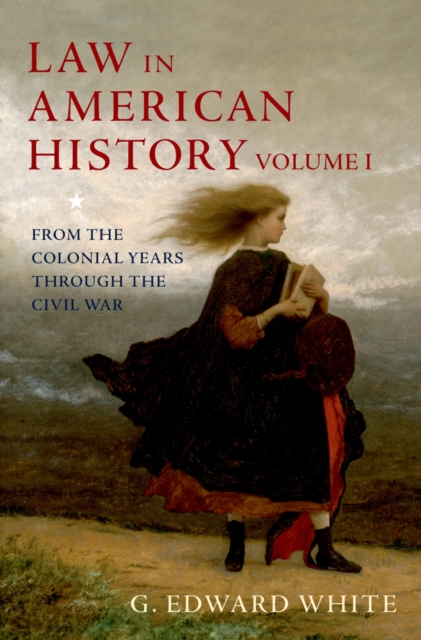
In the first of the three volumes of his projected comprehensive narrative history of the role of law in America from the colonial years through the twentieth century, G.
In a stinging dissent to a 1961 Supreme Court decision that allowed the Illinois state bar to deny admission to prospective lawyers if they refused to answer political questions, Justice Hugo Black closed with the memorable line, "e;We must not be afraid to be free.
The Bush Administration has notoriously argued that detainees at Guantanamo do not enjoy constitutional rights because they are held outside American borders.
Mechanical Witness is the first cultural and legal history charting the changing role and theoretical implications of film and video use as courtroom evidence.
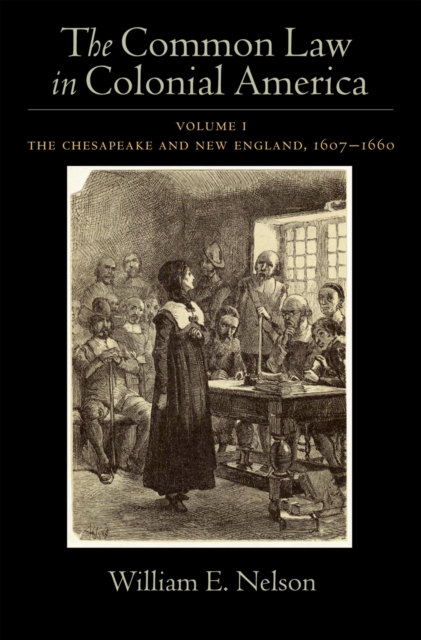
Drawing on groundbreaking and overwhelmingly extensive research into local court records, The Common Law in Colonial America proposes a "e;new beginning"e; in the study of colonial legal history, as it charts the course of the common law in Early America, to reveal how the models of law that emerged differed drastically from that of the English common law.
Creon's Ghost examines the enduring problem of the relationship between man's law and a "e;higher"e; law from the perspective of core humanities texts and through discussion of hotly debated contemporary legal conundrums.
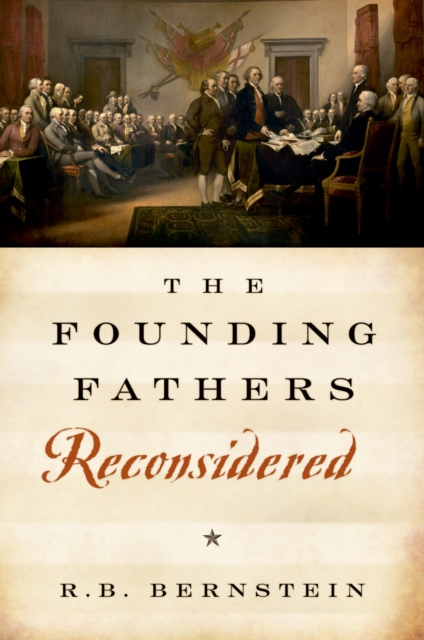
Here is a vividly written and compact overview of the brilliant, flawed, and quarrelsome group of lawyers, politicians, merchants, military men, and clergy known as the "e;Founding Fathers"e;--who got as close to the ideal of the Platonic "e;philosopher-kings"e; as American or world history has ever seen.
How did the United States, a nation known for protecting the "e;right to remain silent"e; become notorious for condoning and using controversial tactics like water boarding and extraordinary rendition to extract information?
The extraordinary recent increase in rates of cohabitation and non-marital birth presents a major challenge to traditional family law principles, and the legal rules governing cohabitation are thus among the most hotly contested areas of family law and policy today.
Broken Landscape is a sweeping chronicle of Indian tribal sovereignty under the United States Constitution and the way that legislators have interpreted and misinterpreted tribal sovereignty since the nation's founding.
The Ninth Amendment has had a remarkably robust history, playing a role in almost every significant constitutional debate in American history, including the controversy over the Alien and Sedition Acts, the struggle over slavery, and the constitutionality of the New Deal.