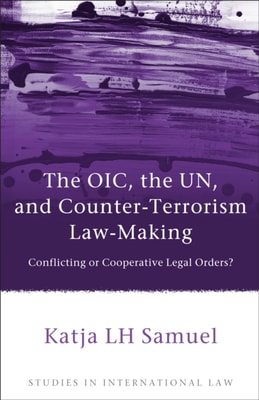
The increasingly transnational nature of terrorist activities compels the international community to strengthen the legal framework in which counter-terrorism activities should occur at every level, including that of intergovernmental organizations.
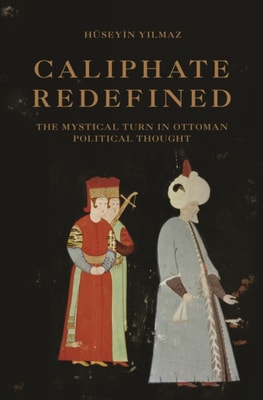
How the Ottomans refashioned and legitimated their rule through mystical imageries of authorityThe medieval theory of the caliphate, epitomized by the Abbasids (750-1258), was the construct of jurists who conceived it as a contractual leadership of the Muslim community in succession to the Prophet Muhammed's political authority.
Throughout the Middle East, and in the west as well, there has been much discussion concerning the notion of Islamic rule and the application of shari'ah by the state.
Gender equality is a modern ideal, which has only recently, with the expansion of human rights and feminist discourses, become inherent to generally accepted conceptions of justice.
The surprising similarities in the rise and fall of the Sunni Islamic and Roman Catholic empires in the face of the modern stateCoping with Defeat presents a historical panorama of the Islamic and Catholic political-religious empires and exposes striking parallels in their relationship with the modern state.
An accessible and accurate translation of the Quran that offers a rigorous analysis of its theological, metaphysical, historical, and geographical teachings and backgrounds, and includes extensive study notes, special introductions by experts in the field, and is edited by a top modern Islamic scholar, respected in both the West and the Islamic world.
Two veteran journalists tell the inside story of convicted hate-monger Abu Hamza, his infamous Finsbury Park Mosque and how it turned out a generation of militants willing to die - and kill - for their cause.
An important work of contemporary Islamic thought argues against the programmatic use of Islamic religious texts to support fundamentalist beliefs First published in Arabic in 1994, progressive Muslim scholar Nasr Hamid Abu Zayd’s controversial essay argued that conventional fundamentalist interpretations of the Quran and other Islamic religious texts are ahistorical and misleading.
A medieval Islam historian’s incisive portrait of ISIS, revealing the group’s deep ideological and intellectual roots in the earliest days of Islam With tremendous speed, the Islamic State has moved from the margins to the center of life in the Middle East.
Many Muslim societies are in the throes of tumultuous political transitions, and common to all has been heightened debate over the place of sharia law in modern politics and ethical life.
In Religious Liberty in Western and Islamic Law: Toward a World Legal Tradition, Kristine Kalanges argues that differences between Western and Islamic legal formulations of religious freedom are attributable, in substantial part, to variations in their respective religious and intellectual histories.
Constitutionalism in Islamic Countries: Between Upheaval and Continuity examines the question of whether something similar to an "e;Islamic constitutionalism"e; has emerged out of the political and constitutional upheaval witnessed in many parts of North Africa, the Middle East, and Central and Southern Asia.
This book seeks to open new lines of discussion about how Islamic law is viewed as a potential tool for programs of social transformation in contemporary Muslim society.
This book seeks to open new lines of discussion about how Islamic law is viewed as a potential tool for programs of social transformation in contemporary Muslim society.
Modern scholars of most major religious traditions, who seek gender egalitarian interpretations of their scriptural texts, confront a common dilemma: how can they produce interpretations that are at once egalitarian and authoritative, within traditions that are deeply patriarchal?
Modern scholars of most major religious traditions, who seek gender egalitarian interpretations of their scriptural texts, confront a common dilemma: how can they produce interpretations that are at once egalitarian and authoritative, within traditions that are deeply patriarchal?
Very Short Introductions: Brilliant, Sharp, Inspiring Islamic law is one of the major legal systems in the world today, yet it is often misunderstood, particularly in the West.
Very Short Introductions: Brilliant, Sharp, Inspiring Islamic law is one of the major legal systems in the world today, yet it is often misunderstood, particularly in the West.
In the critical period when Islamic law first developed, a new breed of jurists developed a genre of legal theory treatises to explore how the fundamental moral teachings of Islam might operate as a legal system.
In the critical period when Islamic law first developed, a new breed of jurists developed a genre of legal theory treatises to explore how the fundamental moral teachings of Islam might operate as a legal system.
A dynamic account of the practice of Islamic law, this book focuses on the actions of a particular legal official, the muhtasib, whose vast jurisdiction included all public behavior.
A dynamic account of the practice of Islamic law, this book focuses on the actions of a particular legal official, the muhtasib, whose vast jurisdiction included all public behavior.
This book provides an introduction to the laws of the Middle East, defining the contours of a field of study that deserves to be called 'Middle Eastern law'.
How should constitutional design respond to the opportunities and challenges raised by ethnic, linguistic, religious, and cultural differences, and do so in ways that promote democracy, social justice, peace and stability?