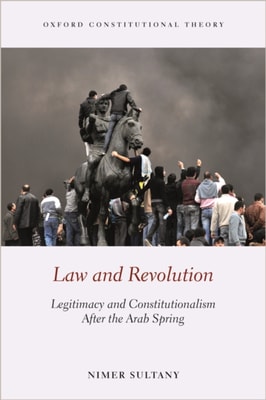
Taking the Arab Spring as its case study, this book explores the role of law and constitutions during societal upheavals, and critically evaluates the different trajectories they could follow in a revolutionary setting.
Taking the Arab Spring as its case study, this book explores the role of law and constitutions during societal upheavals, and critically evaluates the different trajectories they could follow in a revolutionary setting.
Based on a comparative analysis of several hundred religio-juristic treatises and fatwas (religious decisions), Shari'a and Muslim Minorities: The Wasati and Salafi Approaches to Fiqh al-Aqalliyyat al-Muslima offers the most systematic and comprehensive study to date of fiqh al aqalliyyat al-Muslima - the field in Islamic jurisprudence that treats issues that are unique to Muslims living in majority non-Muslim societies.
Based on a comparative analysis of several hundred religio-juristic treatises and fatwas (religious decisions), Shari'a and Muslim Minorities: The Wasati and Salafi Approaches to Fiqh al-Aqalliyyat al-Muslima offers the most systematic and comprehensive study to date of fiqh al aqalliyyat al-Muslima - the field in Islamic jurisprudence that treats issues that are unique to Muslims living in majority non-Muslim societies.
This book provides an introduction to the laws of the Middle East, defining the contours of a field of study that deserves to be called 'Middle Eastern law'.
How should constitutional design respond to the opportunities and challenges raised by ethnic, linguistic, religious, and cultural differences, and do so in ways that promote democracy, social justice, peace and stability?
The Anthropology of Islamic Law shows how hermeneutic theory and practice theory can be brought together to analyze cultural, legal, and religious traditions.
The Anthropology of Islamic Law shows how hermeneutic theory and practice theory can be brought together to analyze cultural, legal, and religious traditions.
This book presents the first comprehensive survey of the multiple versions of Islam propagated across geographical, political, and cultural boundaries during the era of modern globalization.
This book presents the first comprehensive survey of the multiple versions of Islam propagated across geographical, political, and cultural boundaries during the era of modern globalization.
In Crime and Punishment in Islamic Law: A Fresh Interpretation, Mohammad Kamali considers problems associated with and proposals for reform of the hudud punishments prescribed by Islamic criminal law, and other topics related to crime and punishment in Shariah.
In Crime and Punishment in Islamic Law: A Fresh Interpretation, Mohammad Kamali considers problems associated with and proposals for reform of the hudud punishments prescribed by Islamic criminal law, and other topics related to crime and punishment in Shariah.
While scholars have long looked at the role of political Islam in the Middle East, it has been assumed that domestic politics in the wealthy monarchical states of the Arabian Gulf, so-called "e;rentier states"e; where taxes are very low and oil wealth subsidizes the needs of citizens, are largely unaffected by such movements.
While scholars have long looked at the role of political Islam in the Middle East, it has been assumed that domestic politics in the wealthy monarchical states of the Arabian Gulf, so-called "e;rentier states"e; where taxes are very low and oil wealth subsidizes the needs of citizens, are largely unaffected by such movements.
The interest in improving Environmental, Social and Governance (ESG) outcomes among stakeholders of Islamic banking and finance has become front and centre in the discussions relating to Islamic sustainable finance.