Integrating American Indian law and Native American political and legal traditions, this encyclopedia includes detailed descriptions of nearly two dozen Native American Nations' legal and political systems such as the Iroquois, Cherokee, Choctaw, Navajo, Cheyenne, Creek, Chickasaw, Comanche, Sioux, Pueblo, Mandan, Wyandot, Powhatan, Mikmaq, and Yakima.
Ethnic identity groups-defined broadly to include ethnic, religious, linguistic, or racial identities-have long played a role in the formulation and implementation of U.
Micro, small, and medium-sized enterprises (MSMEs) play a significant role in economic development in Pacific island countries and offer pathways to women's leadership and economic empowerment.
This engaging textbook provides a broad and unique coverage of the key historical events that shaped ideas in criminology, criminal justice and policing from the late seventeenth century to the early twenty-first century in England and Wales.
By exploring Shakespeare's use of law and justice themes in the context of historical and contemporary criminological thinking, this book challenges criminologists to expand their spheres of inquiry to avenues that have yet to be explored or integrated into the discipline.
It is a commonplace of Schmitt scholarship that the controversial thinker sought to recapture some of the elan of the pre-Weimar state through his advocacy of effectively almost unlimited presidential government.
Using an innovative history of the constitutional right to privacy, and inspired by Emersonian Justices like Brandeis and Douglas, this book rescues the meaning of privacy from prevalent liberal thinking by proposing a general theory of rights based on a spiritual-ecological jurisprudence tradition at the heart of American law.
This study analyzes the process of constitutional interpretation, that is, the methodology by which the Supreme Court goes about interpreting the Constitution, and offers a comprehensive view of constitutional law through the lens of history, political science, and jurisprudence.
Drawn from the author's many years in training and developing junior associates, this book provides insight into some of the most common problems that can affect the career development of new lawyers, and offers practical advice for navigating the crucial first years.
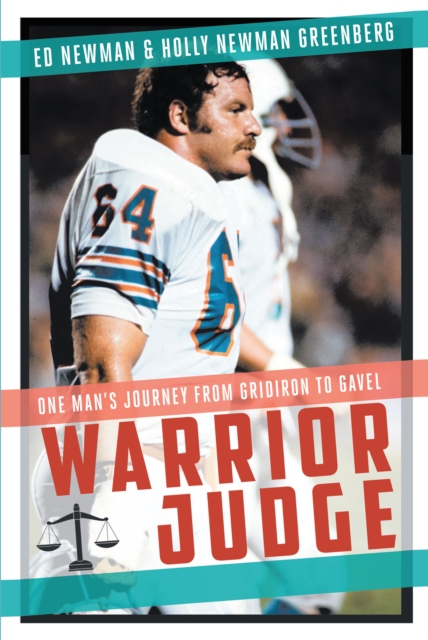
You can hear bodies collide and feel tendons pop as four-time All-Pro guard Ed Newman takes you inside one of the world's most unforgiving workplaces--the NFL.
Digital Diplomacy provides a comprehensive overview of the major milestones in United States international communications and information policy, from the early days of the Morse telegraph to the current Internet explosion.
Vaccine Law and Policy is the first book on vaccine law and policy written specifically for the general public or an educated lay audience without legal background.
First published in 1986, Jewish Jurisprudence is the second volume of an important series analysing and setting forth the substantive principles of Jewish jurisprudence.
First published in 1980, Jewish Jurisprudence is the first volume of an important series analysing and setting forth the substantive principles of Jewish jurisprudence.
First published in 1986, Jewish Jurisprudence is the second volume of an important series analysing and setting forth the substantive principles of Jewish jurisprudence.
First published in 1980, Jewish Jurisprudence is the first volume of an important series analysing and setting forth the substantive principles of Jewish jurisprudence.
Unlike other textbooks on the subject, this book presents a comprehensive and structured account of the process of administering planned change in the criminal justice system.
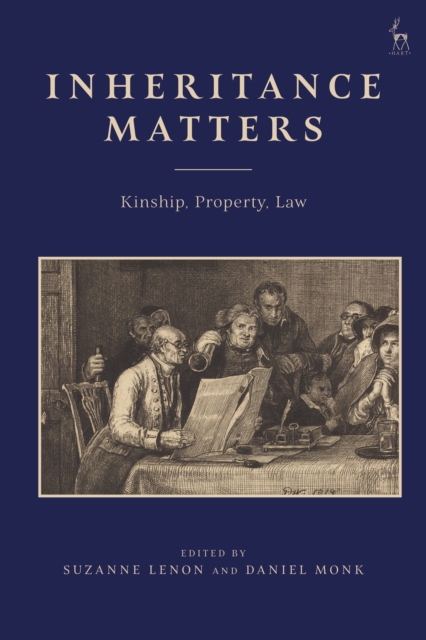
This book makes a compelling case for placing the social and legal practices of inheritance centre stage to make sense of fundamental questions of our time.
This book makes a compelling case for placing the social and legal practices of inheritance centre stage to make sense of fundamental questions of our time.
This book proposes an explicit recognition of criminology as a moral science: a philosophically textured appreciation of the presence and role of values in people's reasoning and motivation, set within an empirically rigorous social-scientific account.
A survey of the evolution of student rights, from children as property to free speech, prayer in the classroom, compulsory flag salutes, school searches, drug testing, and the right to equal education.
The third volume of the Vienna Lectures on Legal Philosophy series focuses on one of the most fiercely contested issues in contemporary legal philosophy: the question of the importance of legal reasoning and how to properly engage with it.
The third volume of the Vienna Lectures on Legal Philosophy series focuses on one of the most fiercely contested issues in contemporary legal philosophy: the question of the importance of legal reasoning and how to properly engage with it.
Despite clear evidence of a serious decline in morale, the major competitors in the law firm management marketplace have virtually ignored the motivational facet of current managerial theory and practice.
This book proposes an explicit recognition of criminology as a moral science: a philosophically textured appreciation of the presence and role of values in people's reasoning and motivation, set within an empirically rigorous social-scientific account.
Forty-three women who have made major contributions to the law through their work in the legal profession, scholarly legal research, and political activism directed at socio-legal reforms are profiled in this bio-bibliographical sourcebook.
An historical analysis of the development and reform of the law of prior obligations as expressed in preexisting duty rule and past consideration rule.
The issue of the imperial presidency, which is raised in connection with the Bush administration's response to the legal issues flowing from the 9/11 attacks, is one that now resonates broadly across the American political landscape: not just with Democrats, but with Republicans too; and not just with lawyers, but with the American public generally.
For over a century, many have struggled to turn the Constitution's prime goal "e;to establish Justice"e; into reality for Americans who cannot afford lawyers through civil legal aid.