Language ideology is a concept developed in linguistic anthropology to explain the ways in which ideas about the definition and functions of language can become linked with social discourses and identities.
A classic memoir of prison breaks and adventure - a bestselling phenomenon of the 1960sCondemned for a murder he had not committed, Henri Charriere (nicknamed Papillon) was sent to the penal colony of French Guiana.
In an extraordinary history of the criminal trial, Sadakat Kadri shows with wit, legal insight and a travel writer's eye for detail, how the irrationality of the past lives on in the legal systems of the present.
Now a major TV series'A masterpiece that reads like a thriller' Time OutA gripping and probing account of the biggest criminal manhunt in British history.
Diese deutschen Tatorte erlangten traurige Berühmtheit: Eppstein-Vockenhausen (Freiherr-von-Stein-Schule, 1983), Eching und Freising (staatliche Wirtschaftsschule, 2002), Erfurt (Gutenberg-Gymnasium, 2002), Emsdetten (Geschwister-Scholl-Realschule, 2006), Würzburg (Kaufhaus am Barbarossaplatz, 2021, Berlin (Weihnachtsmarkt am Breitscheidplatz, 2022), und jetzt schließlich auch Hamburg (Deelböge, Gemeindehaus der Zeugen Jehovas, 2023).
The New Phase of Global Terrorism explores the nuances of the shift in the organization, strategy, and operation of terrorist groups into smaller and more robust terror groups in both the United States and international levels.
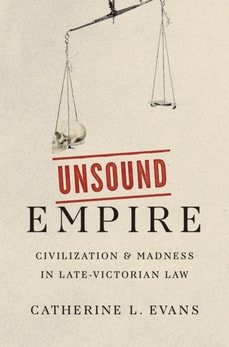
A study of the internal tensions of British imperial rule told through murder and insanity trialsUnsound Empire is a history of criminal responsibility in the nineteenth century British Empire told through detailed accounts of homicide cases across three continents.
The Psychology of Criminal Conduct, Seventh Edition, provides a psychological and evidence-informed perspective of criminal behavior that sets it apart from many criminological and mental health explanations of criminal behavior.
Now more than ever, the criminal justice system, and the programs, policies, and practices within it, are subject to increased public scrutiny, due to well-founded concerns over effectiveness, fairness, and potential unintended consequences.
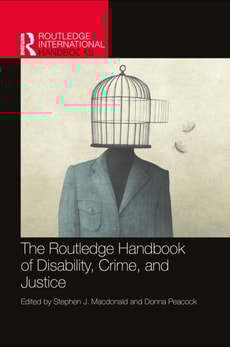
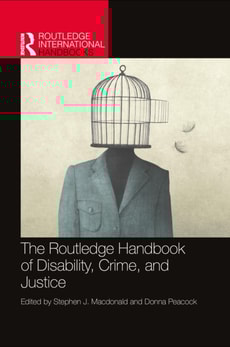
Offering an interdisciplinary exploration of the complex relationships between disability, crime, and victimisation, this comprehensive handbook gathers insights from leading scholars across diverse fields, including disability studies, criminology, history, sociology, forensic psychology, forensic psychiatry, and the neurosciences, who have conducted extensive research in these areas.
Offering an interdisciplinary exploration of the complex relationships between disability, crime, and victimisation, this comprehensive handbook gathers insights from leading scholars across diverse fields, including disability studies, criminology, history, sociology, forensic psychology, forensic psychiatry, and the neurosciences, who have conducted extensive research in these areas.
Moving beyond simplistic and sensationalist portrayals of kidnapping, this book offers a critical and interdisciplinary analysis that examines kidnapping as a social, historical, cultural, and political phenomenon.
Finally for the first time in over 40 years, the shocking true story behind the trial of most infamous serial killer in British criminal history comes to light.
This handbook provides a timely synthesis of the international literature that investigates men's experiences of intimate partner violence and help seeking behavior, and considers what the findings mean for research, practice, and policy.
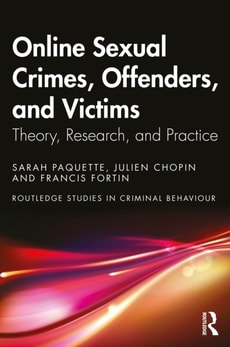
Adopting a multidisciplinary perspective, this volume explores contemporary knowledge regarding the online sexual exploitation of children and adolescents, and challenges prevailing myths perpetuated by society and the media concerning this form of violence, the offenders, and their victims.
Presenting cutting-edge research and scholarship, this extensive volume covers everything from abstract theorising about the meanings of responsibility and how we blame, to analysing criminal law and justice responses, and factors that impact individual responsibility.
This edited collection provides the reader with a comprehensive knowledge of automated decision-making, artificial intelligence (AI), and algorithms, and how they can be used in criminal proceedings.
This collection explores a variety of issues facing contemporary juries, bringing together innovative research from different disciplines and jurisdictions.
We speak of being 'free' to speak our minds, free to go to college, free to move about; we can be cancer-free, debt-free, worry-free, or free from doubt.
How can it be, in a nation that elected Barack Obama, that one third of African American males born in 2001 will spend time in a state or federal prison, and that black men are seven times likelier than white men to be in prison?
While the success of national and international law enforcement cooperation to suppress organized crime means that stable, large-scale criminal organizations like the Cosa Nostra or the Japanese Yakuza have seen their power reduced, organized crime remains a concern for many governments.
Imprisoned by the Past: Warren McCleskey and the American Death Penalty connects the history of the American death penalty to the case of Warren McCleskey.
Research on prisons prior to the prison boom of the 1980s and 1990s focused mainly on inmate subcultures, inmate rights, and sociological interpretations of inmate and guard adaptations to their environment, with qualitative studies and ethnographic methods the norm.
In the past two decades, many prevention and suppression programs have been initiated on a national and local level to combat street gangs--but what do we really know about them?
Oscar, physically and sexually abusive, stabbed his partner and two stepdaughters to death, buried the bodies, and fled the state with his two younger children.
In Genocide Denials and the Law, Ludovic Hennebel and Thomas Hochmann offer a thorough study of the relationship between law and genocide denial from the perspectives of specialists from six countries.
Focusing contemporary democratic theory on the neglected topic of punishment, Punishment, Participatory Democracy, and the Jury argues for increased civic engagement in criminal justice as an antidote to the American penal state.