Research on prisons prior to the prison boom of the 1980s and 1990s focused mainly on inmate subcultures, inmate rights, and sociological interpretations of inmate and guard adaptations to their environment, with qualitative studies and ethnographic methods the norm.
The American prosecutor plays a powerful role in the judicial system, wielding the authority to accept or decline a case, choose which crimes to allege, and decide the number of counts to charge.
How did the United States, a nation known for protecting the "e;right to remain silent"e; become notorious for condoning and using controversial tactics like water boarding and extraordinary rendition to extract information?
Although white-collar crime has caused a substantial amount of damage on both the individual and societal levels, it often ranks below street crime as a matter of public concern.
It is no secret that America's sentencing and corrections systems are in crisis, and neither system can be understood or repaired fully without careful consideration of the other.
In the past two decades, many prevention and suppression programs have been initiated on a national and local level to combat street gangs--but what do we really know about them?
Highly popular with both the public and political leaders, community policing is the most important development in law enforcement in the last twenty-five years.
Prisoners' Self-Help Litigation Manual, in its much-anticipated fourth edition, is an indispensable guide for prisoners and prisoner advocates seeking to understand the rights guaranteed to prisoners by law and how to protect those rights.
Oscar, physically and sexually abusive, stabbed his partner and two stepdaughters to death, buried the bodies, and fled the state with his two younger children.
Across America today gated communities sprawl out from urban centers, employers enforce mandatory drug testing, and schools screen students with metal detectors.
At no time in history, and certainly in no other democratic society, have prisons been filled so quickly and to such capacity than in the United States.
This first volume in the four-volume series The Moral Limits of the Criminal Law focuses on the "e;harm principle,"e; the commonsense view that prevention of harm to persons other than the perpetrator is a legitimate purpose of criminal legislation.
In this illuminating history that spans past campaigns against piracy and slavery to contemporary campaigns against drug trafficking and transnational terrorism, Peter Andreas and Ethan Nadelmann explain how and why prohibitions and policing practices increasingly extend across borders.
In Genocide Denials and the Law, Ludovic Hennebel and Thomas Hochmann offer a thorough study of the relationship between law and genocide denial from the perspectives of specialists from six countries.
Anti-Bribery Laws in Common Law Jurisdictions provides a comprehensive analysis of the foreign bribery laws and of related laws and regulations in key common law jurisdictions.
Focusing contemporary democratic theory on the neglected topic of punishment, Punishment, Participatory Democracy, and the Jury argues for increased civic engagement in criminal justice as an antidote to the American penal state.
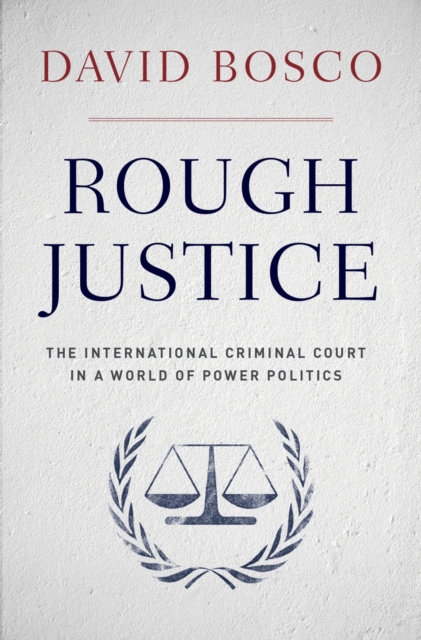
Ten years ago, in the wake of massive crimes in central Africa and the Balkans, the first permanent international criminal court was established in The Hague despite resistance from some of the world's most powerful states.
For nearly two centuries in the United States, the punishment of crime was largely aimed, in theory and in practice, at prevention, rehabilitation or incapacitation, and deterrence.
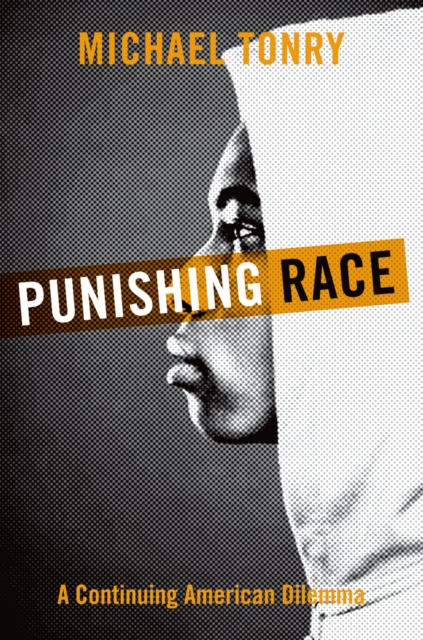
How can it be, in a nation that elected Barack Obama, that one third of African American males born in 2001 will spend time in a state or federal prison, and that black men are seven times likelier than white men to be in prison?
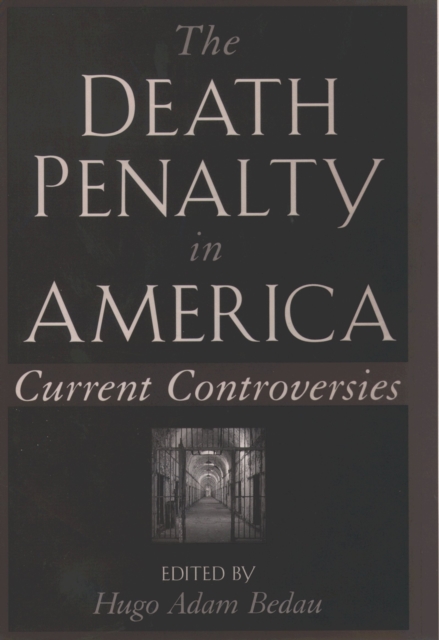
InThe Death Penalty in America: Current Controversies, Hugo Adam Bedau, one of our preeminent scholars on the subject,provides a comprehensive sourcebook on the death penalty, making the process of informed consideration not only possible but fascinating as well.
When news breaks that a convicted murderer, released from prison, has killed again, or that an innocent person has escaped the death chamber in light of new DNA evidence, arguments about capital punishment inevitably heat up.
When news breaks that a convicted murderer, released from prison, has killed again, or that an innocent person has escaped the death chamber in light of new DNA evidence, arguments about capital punishment inevitably heat up.