Recent financial crisis and the global financial impacts of the COVID-19 pandemic have brought renewed interest to the regulation and practice of corporate insolvency and restructuring.
This book provides systematic comparative research of antifraud laws and context at EU countries using a Artificial Neural Network (ANN) model to predict illegal activities in ERDF and CF.
FinTech is an emerging field and most of the existing literature appears in the form of industry reports, consulting reports, working papers, and policy recommendations.
This book offers the first original study on banking crises management in Italy from 2014 to 2020 with a comprehensive overview of the resolution tools used.
Since the 2008 Global Financial Crisis the prevailing economic development model based on an assumption of unlimited resources and, therefore, unlimited growth has been increasingly put into question by academics, policy-making agencies and even industry leaders themselves.
Equivalence in Financial Services offers a comprehensive and cross-industry examination of the rules and procedures under EU financial legislation dedicated to third-country market actors.
This book deals with some aspects of the future shape of the socio-economic order which would be founded on sustainability principles and the role of law therein, instead of on the prevailing capitalist economic order.
The aim of this edited volume is to bring together the views of expert academics and practitioners on the latest regulatory developments in sustainable finance in Europe.
This book explains the consequences of global policy initiatives against money laundering, terrorist financing, and tax evasion on financial centres located in offshore jurisdictions in the Caribbean region.
This book analyses elements of international finance, comparing the regulation of hedge funds in United States, Europe, the UK, and off-shore jurisdictions in the aftermath of the financial crisis.
Although the concept "e;Cash is King"e; is today widely recognized, the cash flow statement was rather neglected until the EU accounting regulators discovered its relevance in explaining the real value of the business.
This book focuses on the impact of the disclosure of non-financial risk, which could be seen as the most relevant non-financial information (NFI), in the aftermath of the 2014/95/EU Directive.
This second edition brings together the views of expert academics and practitioners on the latest regulatory developments in sustainable finance in Europe and includes 5 new chapters on sustainable remuneration, reporting, lending, green monetary policy and ESG.
Up to date for the 2023 SQE1 specification, this book enables candidates for SQE1 to develop their knowledge and understanding of Solicitors' Accounts as assessed in the SQE1 exam.
The Eurozone crisis which started in spring 2010 as a Greek budget crisis has alerted Europeans that the issue of defaulting sovereigns is not one reserved just for the poor and poorest countries on this globe.
The Eurozone crisis which started in spring 2010 as a Greek budget crisis has alerted Europeans that the issue of defaulting sovereigns is not one reserved just for the poor and poorest countries on this globe.
This book offers the first comprehensive analysis of the national and international legal issues surrounding digital assets in enforcement and insolvency.
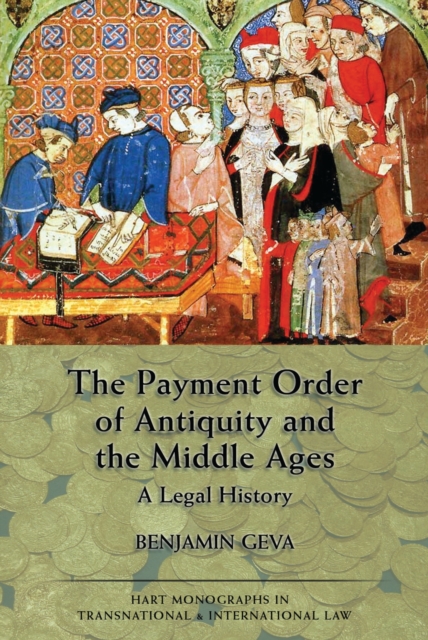
Examining the legal history of the order to pay money initiating a funds transfer, the author tracks basic principles of modern law to those that governed the payment order of Antiquity and the Middle Ages.
Globally, there has been a shift from securities being held directly by an investor, to a situation in which many securities are held via an intermediary.
Corporate Finance is an area of law which is obviously of significant practical importance, but the academic analysis of this area of law has also been increasingly recognised.
The Future of Financial Regulation is an edited collection of papers presented at a major conference at the University of Glasgow in spring 2009, co-sponsored by the Economic and Social Research Council World Economy and Finance Programme and the the Australian Research Council Governance Research Network.
The Law and Regulation of Central Counterparties provides a detailed analysis of the legal and regulatory aspects of Central Counterparties (CCPs) with an introduction to their role and functions in modern financial markets.
This timely book explores the developing nature of international trade law,with particular emphasis on World Trade Organization law and its effects within the European Union.
The essays in this work offer a high-level examination of the most important issues facing financial services regulation,and the far-reaching effects of the Financial Services and Markets Act 2000 on the UK financial sector in the context of rapid global change.
EU investment in China has increased dramatically since the early 1990s and is poised to increase further in light of Chinas recent accession to the World Trade Organisation.
This book provides a much-needed analysis of this very important subject for international business lawyers,including discussion of the jurisdictional and choice of laws issues arising from cross-border contracts of insurance and reinsurance concluded by electronic means.
Recent developments in law, public policy, and regulation have ensured that questions regarding the relationship between banks and their customers have seldom been out of the spotlight.
A systemic risk event that leads to significant losses in banks that are significant financial institutions can expose them to insolvency, significant volatility and impose serious negative impact on a country's economy, as witnessed during the 2008 financial crash.