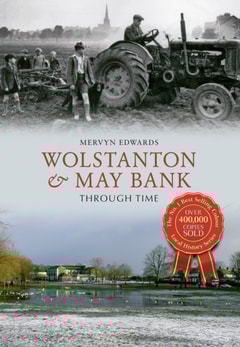
The impact of people and places in Wolstanton and May Bank is recorded in this pictorial record that recognises the contribution of village notables, dear old friends and long-gone institutions.
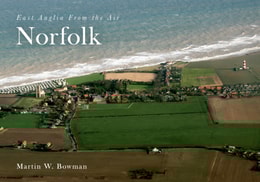
It is from the air that the full majesty of the Norfolk countryside unfolds, and in this book acclaimed aerial photographer Martin Bowman takes us on a series of airborne journeys across his native county from the city of Norwich itself with its wonderful castle and cathedral, Elm Hill and the meandering River Wensum to the outlying towns and villages nestling in the furthest corners of Nelson's County.
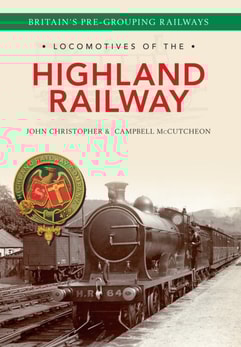
Formed from the merger of the Inverness & Aberdeen Junction and the Inverness & Perth Junction railways in 1865, the Highland ran from Perth in Central Scotland north to Inverness and then on up to Wick and Thurso.
Redhill, a commuter town in Surrey, is located close to the North Downs, a ridge of chalk hills stretching from Farnham in Surrey to the White Cliffs of Dover in Kent.
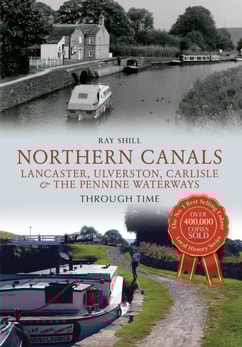
North East Canals Through Time follows on from previous titles by specialist author and canal historian Ray Shill, notably North West Canals Through Time: Manchester, Irwell & the Peaks.
Northern Canals Through Time follows on from the previous title by well-known author Ray Shill, North West Canals Through Time: Manchester, Irwell & the Peaks, as a study of waterway infrastructure, in this case focusing particularly on Lancaster, Ulverston, Carlisle, and the Pennine Waterways from west to east, including from Nelson to Leeds on the Leeds & Liverpool, the canal from Rochdale to Sowerby Bridge on the Rochdale and the Huddersfield (Narrow) from Ashton to Huddersfield.
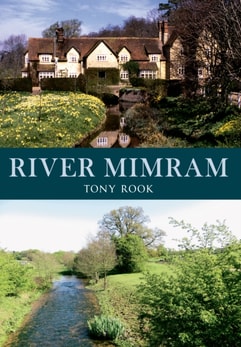
The River Mimram rises from a spring to the north-west of Whitwell in North Hertfordshire and makes its confluence with the River Lea near Horn's Hill.
London has been an irresistible subject for generations of artists and draughtsmen, who have captured scenes of everyday life as well as the grand occasions in a variety of moods and weather.
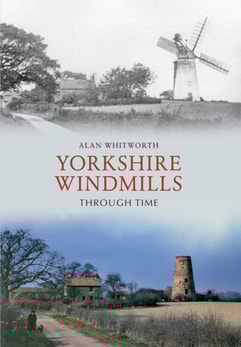
The author's interest in windmills reaches back well over ten years and culminated in Yorkshire Windmills, published in 1991, and the foundation of the Yorkshire Windmill Society.
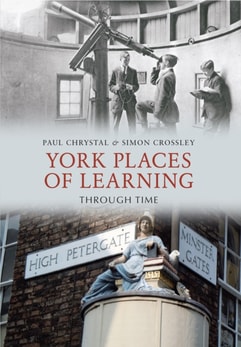
The foundations of York's commercial identity lie in the powerful medieval guilds that controlled and organised business development here until the nineteenth century.
In the Yeovil Corporation's Official Guide Yeovil With its Surroundings, published in 1906, Chapter II entitled 'Describes Yeovil in the Past' begins: 'It has been said, and that, in Yeovil itself, that Yeovil has no history, and in a sense, no past i.
Yeovil Memories covers a wide range of stories, from a tragic drowning in the River Yeo in 1856, the hardships of the savage winter of 1861 and that of two families who lost their cottages in a fire in February 1906, the lucky escape of a Westland test pilot as his aircraft broke up in mid-air in August 1934, and the top of the music charts of August 1952, to pop concerts in the Liberal Hall in 1965.
Today Warrington is a thriving business and commercial centre where its workers might be found sitting at computer terminals in offices and business parks, building societies, call centres and travel agents; or scanning goods at supermarket checkouts and super stores; frothing cappuccinos in cafe bars or delivering pizzas.
Witney grew up as the result of deliberate planning on the part of successive Bishops of Winchester, a spacious, wedge-shaped market area being laid out parallel to the river Windrush.
Wiltshire is one of the largest counties in southern England and has a wide variety of landscapes, from river valleys lined with picturesque villages to the expanses and open skies of Salisbury Plain.
Always known as the Wilts & Berks Canal, never Wiltshire and Berkshire, the W&B has been derelict and abandoned for over a century, but plans exist to restore the waterway.
Rhondda' - even now, the name evokes the turbulent times when Rhondda (actually two valleys, the Fawr and Fach) was synonymous with the deep-mining of steam coal.
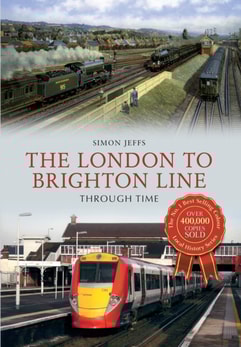
The London to Brighton Line was opened in 1841 by the London & Brighton Railway, providing a service between London Bridge Station and the fashionable South Coast.