Very Short Introductions: Brilliant, Sharp, Inspiring Almost everything we know about the Universe has come from studying the messages carried by light from outer space.
This is the story of Bernie Mills, Chris Christiansen, Paul Wild and Ron Bracewell, members of a team of radio astronomers that would lead Australia, and the world, into this new field of research.
Mit diesem Buch begeben Sie sich auf die spannende Suche nach der Dunklen Materie, die nach dem aktuellen Stand der Forschung den Großteil der Masse unseres Universums ausmacht.
This book, the first of a two-volume set, focuses on the basic physical principles of blackbody radiometry and describes artificial sources of blackbody radiation, widely used as sources of optical radiation, whose energy characteristics can be calculated on the base of fundamental physical laws.
Uncover the Secrets of the Universe Hidden at Wavelengths beyond Our Optical GazeWilliam Herschel's discovery of infrared light in 1800 led to the development of astronomy at wavelengths other than the optical.
El 11 de febrero de 2016, el anuncio de un descubrimiento sacudió el mundo y fue tapa de los principales diarios: por primera vez se habían detectado ondas gravitacionales.
This workshop brought together the leaders in the field of education in astronomy and explored the newly available technologies that can make astronomy a powerful teaching tool for high school and undergraduate college students.
These proceedings sample new results derived from extended-objected IR observations and explore the capabilities of large-aperture, low-scattered-light instrumentation.
Since the successful refurbishment mission, the Hubble Space Telescope has made dramatic and exciting progress in unravelling the nature of sources at high redshift.
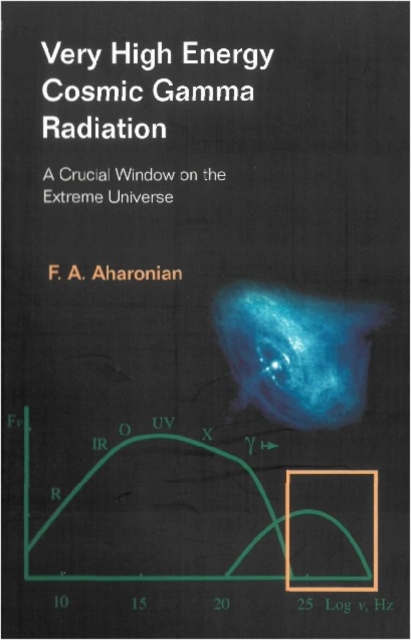
Gamma ray astronomy, the branch of high energy astrophysics that studies the sky in energetic y-ray photons, is destined to play a crucial role in the exploration of nonthermal phenomena in the Universe in their most extreme and violent forms.
This book deals with the fundamentals of wave optics, polarization, interference, diffraction, imaging, and the origin, properties, and optical effects of turbulence in the Earth's atmosphere.
This proceedings volume contains results presented at the Sixth International Workshop on Data Analysis in Astronomy - "e;Modeling and Simulation in Science"e; held on April 15-22, 2007, at the Ettore Majorana Foundation and Center for Scientific Culture, Erice, Italy.
This revised edition places a unique emphasis on all the new results from ground-based, satellites and space missions - detection of molecule H2 and prompt emission lines of OH for the first time; discovery of X-rays in comets; observed diversity in chemical composition among comets; the puzzle of the constancy of spin temperature; the well-established mineralogy of cometary dust; extensive theoretical modeling carried out for understanding the observed effects; the similarity in the mineralogy of dust in circumstellar shell of stars, comets, meteorites, asteroids and IDPs, thus indicating the generic relationship between them.
The exploration of the subnuclear world is done through increasingly complex experiments covering a wide range of energy and performed in a large variety of environments ranging from particle accelerators, underground detectors to satellites and the space laboratory.
This book introduces the Five-hundred-meter Aperture Spherical Radio Telescope (FAST), also known as the "e;The Sky Eye"e;, one of the China's big science facilities.
This book presents the basic fundamentals of descriptive archaeoastronomy and its application to the astronomical descriptions found in ancient Indian scriptures.
High-temperature superconducting (HTS) materials are becoming more and more attractive in the context of designing RF/microwave filters because of their lower losses and excellent performance.
This book includes 58 selected articles that highlight the major contributions of Professor Radha Charan Gupta-a doyen of history of mathematics-written on a variety of important topics pertaining to mathematics and astronomy in India.
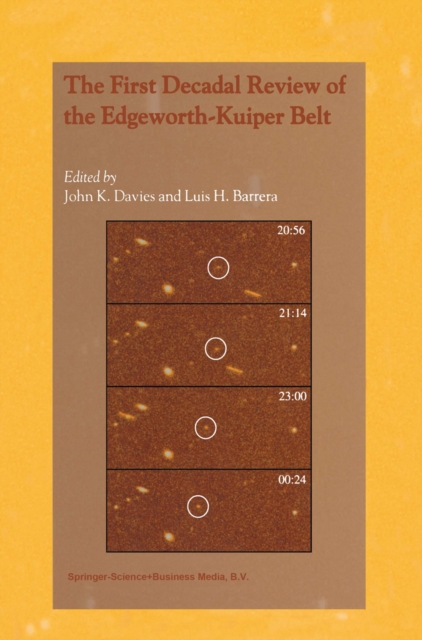
A decade after the confirmation of the Kuiper Belt's existence, 80 of the world's experts gathered in Chile to review what has been learned since 1992.
The workshop on The Cosmology of Extra Dimensions and Varying Fundamental Constants, which was part of JENAM 2002, was held at the Physics Department of the University of Porto (FCUP) from the 3rd to the 5th of September 2002.
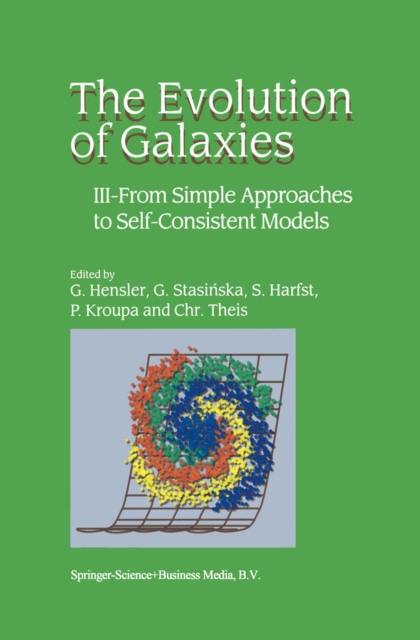
Recent advances in our understanding of instabilities in galactic type systems have led to an unravelling of some of the mysteries of what determines the form galaxies take.
Over the last decade we entered a new exploration phase of solar flare physics, equipped with powerful spacecraft such as Yohkoh, SoHO, and TRACE that pro- vide us detail-rich and high-resolution images of solar flares in soft X-rays, hard X -rays, and extreme-ultraviolet wavelengths.
It is now a well-established tradition that every four years, at the end of winter, a group of 'celestial mechanicians' from all over the world gather in the Austrian Alps at the invitation of R.