Astrobiology is a very broad interdisciplinary field covering the origin, evolution, distribution, and destiny of life in the universe, as well as the design and implementation of missions for solar system exploration.
In this XVII Course of the International School of Cosmology and Gravitation devoted to "e;ADVANCES IN THE INTERPLAY BETWEEN QUANTUM AND GRAVITY PHYSICS"e; we have considered different aspects of the influence of gravity on quantum systems.
One of the most attractive features of the young discipline of Space Science is that many of the original pioneers and key players involved are still available to describe their field.
A broad range of topics of current interest are discussed, from nuclear structure at the edge of stability to nuclear astrophysics and cosmic ray physics at the highest energies.
The Third Microquasar Workshop (or the 'Fifth' Workshop on Galactic Relativ- istic Jet Sources), was held in Granada, Andalucia (Spain) on 11-13 September 2000.
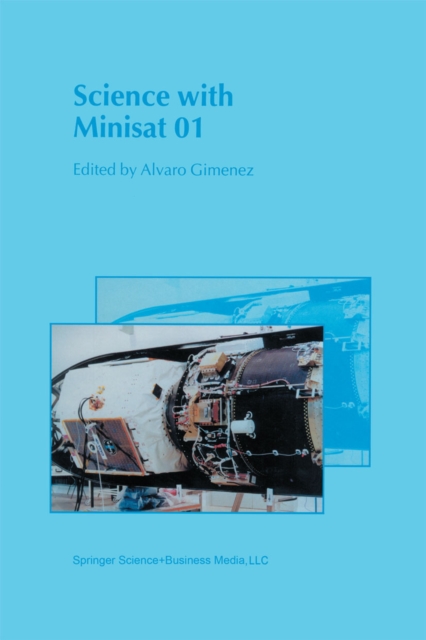
This book includes the proceedings of the Workshop held in Madrid, April 1999 to celebrate 2 years of successful operation of the first Spanish small scientific satellite in orbit.
Seated in a sun-lit corner of his 17th century Dutch house, his hand touching a celestial globe, Johannes Vermeer's "e;Astronomer"e; seems to pon- der about the mysteries of the universe.
Non-accelerator particle physicists, especially those studying neutrino oscillation experiments, will read with profit the in-depth discussions of new results and their interpretations.
Optics of Cosmic Dust describes what we currently know about cosmic dust, how we know it, and the research efforts undertaken to provide that knowledge.
Photobiology - the science of light and life - begins with basic principles and the physics of light and continues with general photobiological research methods, such as generation of light, measurement of light, and action spectroscopy.
An expert and illuminating review of the leading models of nuclear structure: effective field theories based on quantum chromodynamics; ab initio models based on Monte Carlo methods employing effective nucleon-nucleon interactions; diagonalization and the Monto Carlo shell model; non-relativistic and relativistic mean-field theory and its extensions; and symmetry-dictated approaches.
The Energetic Gamma-Ray Experiment Telescope (EGRET) instru- ment on the Compton Gamma-Ray Observatory left as a legacy its Third Catalog of High Energy Gamma-Ray Sources, whose detections include a large number of blazars, some pulsars, the Large Magellanic Cloud and a solar flare.
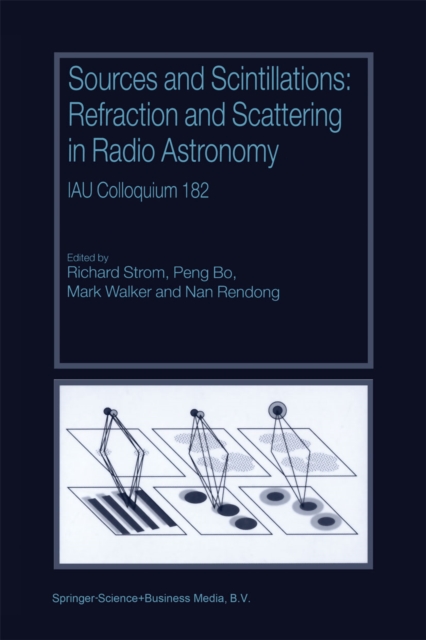
The genesis of IAU Colloquium 182, 'Sources and scintillations: refraction and scattering in radio astronomy,' can be traced to the desire, on the one hand, of Beijing Astronomical Observatory radio astronomers to organize a conference which would highlight the need for high sensitivity - as a way ofpromoting their own project to build the world's largest telescope (FAST) - and to a suggestion from Ron Ekers on the other.
Space storms, the manifestation of bad weather in space, have a number of physical effects in the near-Earth environment: acceleration of charged particles in space, intensification of electric currents in space and on the ground, impressive aurora displays, and global magnetic disturbances on the Earth's surface.
The fundamental role that Astrochemistry plays into regulating the processes that in interstellar clouds lead to the formation of stars, and how these processes concur into affecting the shape and the dynamics of galaxies and hence into showing the Universe in the way it appears to us is well established.
I am most grateful to Andr' e Heck for his invitation to write a foreword to OSA Volume 4 - I will use this valued opportunity to emphasise those topics in Vol.
This volume contains a series of lectures presented at the 4th Course of the International School of Astrophysics, held in Erice (Sicily) from July 9 - July 20, 1977 at the "e;E.
The aim of the present book will be to provide a comprehensive account of our present knowledge of the theory of dynamical phenomena exhibited by elose binary systems; and on the basis of such phenomena as have been attested by available observations to outline probable evolutionary trends of such systems in the course of time.
(Opening Address of 13th ESLAB Symposium) With GEOS and ISEE occupying a major part of the ESA scientific programme it was clear several years ago that a 'natural' basis for the 1978 ESLAB Annual Symposium would be the early data from these two spacecraft.
The purpose of this textbook is to provide a basic knowledge of the main parts of modern astrophysics for all those starting their studies in this field at the undergraduate level.
Eclipsing Variables - What They can Tell Us and What We can do with Them The aim of the present book will be to provide an introduction to the inter- pretation of the observed light changes of eclipsing binary stars and their analysis for the elements of the respective systems.
Informal discussions in 1977 among a number of scientists asso- ciated with solar and interplanetary physics revealed a need for a dialogue between the two often-divergent groups.