In order to outline possible future directions in galaxy research, this book wants to be a short stopover, a moment of self-reflection of the past century of achievements in this area.
This fascinating portrait of an amateur astronomy movement tells the story of how Charles Olivier recruited a hard-working cadre of citizen scientists to rehabilitate the study of meteors.
Thisbook provides the reader with a detailed and captivating account of the storywhere, for the first time, physicists ventured into proposing a new force ofnature beyond the four known ones - the electromagnetic, weak and strongforces, and gravitation - based entirely on the reanalysis of existingexperimental data.
This thesis describes the physics and computational aspects of an end-to-end simulator to predict the performance of a Space-based Far Infrared Interferometer.
In this book Astronomy Magazine editor Michael Bakich presents all the information you'll need to be ready for the total solar eclipse that will cross the United States on August 21, 2017.
This thesis discusses the evolution of galaxies through the study of the morphology, kinematics, and star formation properties of a sample of nearby galaxies.
Taking inspiration from Siv Cedering's poem in the form of a fictional letter from Caroline Herschel that refers to "e;my long, lost sisters, forgotten in the books that record our science"e;, this book tells the lives of twenty-five female scientists, with specific attention to astronomers and mathematicians.
In this book, Warren Keller reveals the secrets of astro-image processing software PixInsight in a practical and easy to follow manner, allowing the reader to produce stunning astrophotographs from even mediocre data.
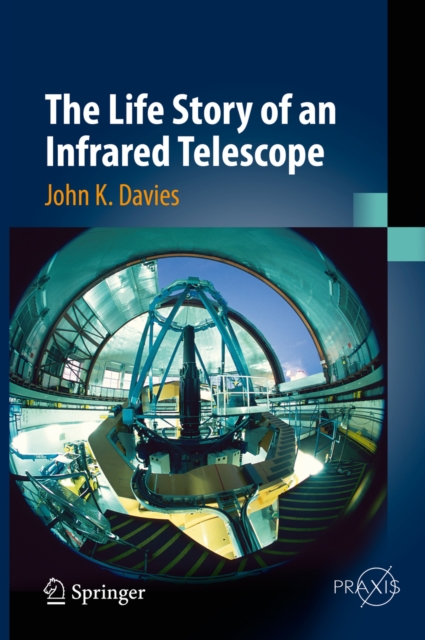
Written by one of the astronomers who 'lived the dream' of working there this book is a restrospectively expanded diary featuring the 'birth and long life' of what was a truely innovative telescope.
This book presents lecture materials from the Third LOFAR Data School, transformed into a coherent and complete reference book describing the LOFAR design, along with descriptions of primary science cases, data processing techniques, and recipes for data handling.
This book makes use of the LISP programming language to provide readers with the necessary background to understand and use fuzzy logic to solve simple to medium-complexity real-world problems.
Presenting spectacular photographs of astronomical objects of the southern sky, all taken by author Stephen Chadwick, this book explores what peoples of the South Pacific see when they look up at the heavens and what they have done with this knowledge.
Sets out a simple month-by-month program to reveal all of the night sky's biggest and most beautiful secrets in just one year - and with only a few hours of stargazing each month By investing just an hour a week and $50 in binoculars, it's possible to learn a few simple techniques and quickly gain a real insight into the night sky's ever-changing patterns - and what they tell us about Earth, the seasons and ourselves.
Amateur astronomers who want to enhance their capabilities to contribute to science need look no farther than this guide to using remote observatories.
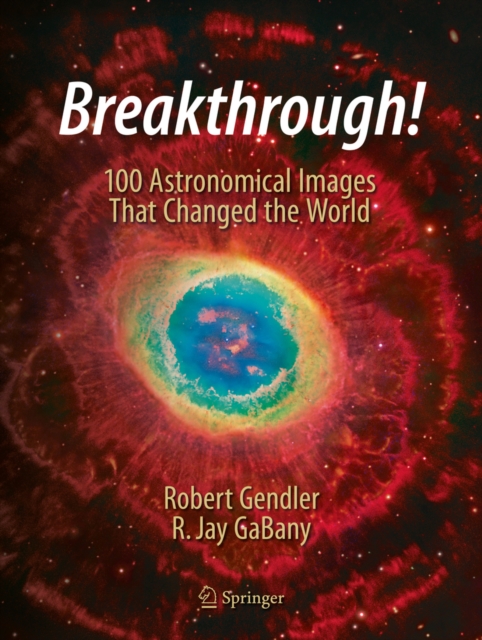
This unique volume by two renowned astrophotographers unveils the science and history behind 100 of the most significant astronomical images of all time.
Based on extensive primary sources, many never previously translated into English, this is the definitive account of the origins of Ceres as it went from being classified as a new planet to reclassification as the first of a previously unknown group of celestial objects.
The thesis describes the development of receiver technologies for sub-millimetre astronomy instruments, focusing on high performance coherent cryogenic detectors operating close to the superconductor gap frequency.
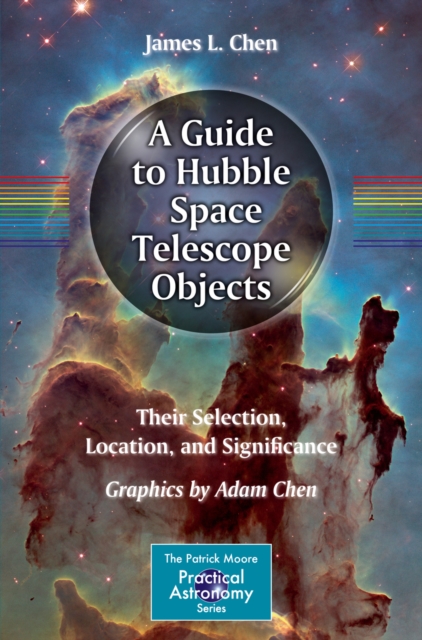
From the authors of "e;How to Find the Apollo Landing Sites,"e; this is a guide to connecting the view above with the history of recent scientific discoveries from the Hubble Space Telescope.
Amateur astronomers who have been disappointed by the results of an observing session can take comfort in the guidance of this book, which advises how to still gain useful experience in seemingly "e;failed"e; nights at the telescope.
Observers no longer need to wonder what they will turn their attention to each night of the year with this updated text of a beloved favorite from Sir Partick Moore.
You too can follow in the steps of the great astronomers such as Hipparchus, Galileo, Kepler and Hubble, who all contributed so much to our modern understanding of the cosmos.
The detection of radial and non-radial solar-like oscillations in thousands of G-K giants with CoRoT and Kepler is paving the road for detailed studies of stellar populations in the Galaxy.
This book offers review chapters written by invited speakers of the 3rd Session of the Sant Cugat Forum on Astrophysics - Gravitational Waves Astrophysics.
This book reviews the phenomenology displayed by relativistic jets as well as the most recent theoretical efforts to understand the physical mechanisms at their origin.
This book, which is a reworked and updated version of Steven Bloemen's original PhD thesis, reports on several high-precision studies of compact variable stars.