In the two decades since the development of the first eclipsing-binary modeling code, new analytic techniques and the availability of powerful, sometimes dedicated computing facilities have made possible vastly improved determinations of fundamental and even transient stellar parameters.
Supernova explosions are not only important to the ecology of the universe, seeding it, among other things, with the heavy elements necessary for the existence of life, but they are also a natural laboratory in which a host of unique physical phenomena occur.
For every astronomical topic that I have approached there has turned out to be a broader realm of possibilities than is commonly accepted or acknowledged.
This Festschrift is a collection of essays contributed by students, colleagues, and ad- mirers to honor an eminent scholar on a special anniversary: Charles Hard Townes on the occasion of his 80th birthday, July 28, 1995.
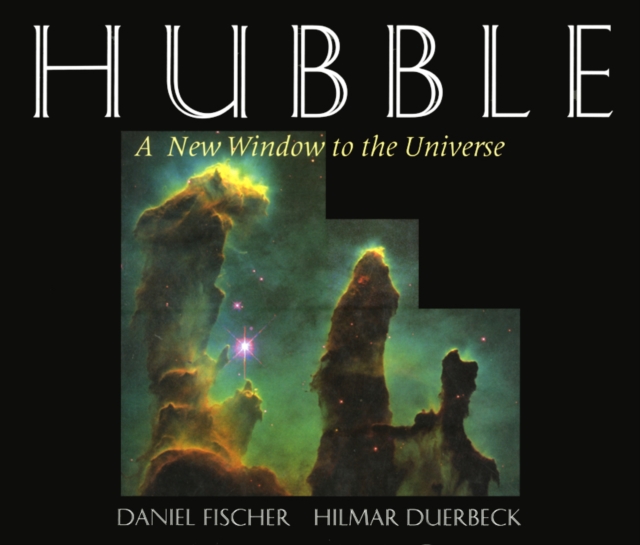
- 7 Astronomy is not confined to the exploration of the "e;courage of omission"e; and concentrate on those visible sky: Since the fifties, scientists have opened areas that can be conveyed without substantial more and more new windows to the universe, prerequisites; but we have tried to take into making it possible to study numerous new aspects account all crucial aspects and have striven for of cosmic events.
In this, the first history of artifical satellites and their uses, Helen Gavaghan shows how the idea of putting an object in orbit around the earth changed from science fiction to indespensible technology in the twinkling of an eye.
Friends and colleagues of Engelbert Schucking came together in a symposium on the 12th and 13th of December 1996 at New York University to celebrate and express to him their respect, admiration, and affection.
On two days in 1761 and 1769 hundreds of astronomers pointed their telescopes towards the skies to observe a rare astronomical event: the transit of Venus across the face of the sun.
Sir Patrick Moore, CBE, FRS has long been the scourge of those people selling low-cost astronomical telescopes via mail-order catalogues and non-specialist stores.
The aim of the IV International Symposium on Hamiltonian Systems and Celestial Mechanics, HAMSYS-2001 was to join top researchers in the area of Celestial Mechanics, Hamiltonian systems and related topics in order to communicate new results and look forward for join research projects.
In the 1960's, American amateur astronomer, John Dobson, designed a revolutionary kind of astronomical telescope featuring a lightweight large-aperture reflecting system on a simple mounting, using the then-revolutionary material called teflon.
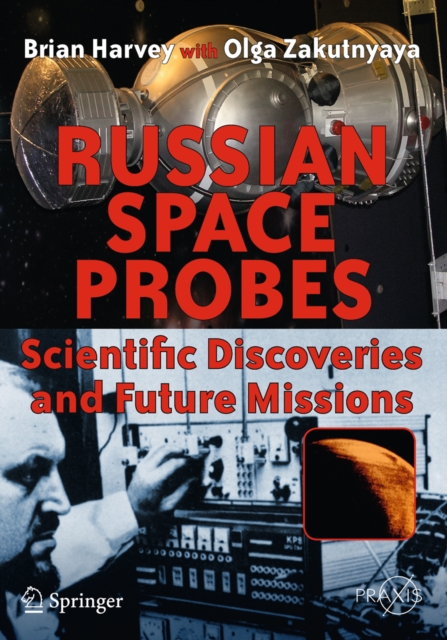
Brian Harvey recounts for the first time the definitive history of scientific Russian space probes and the knowledge they acquired of the Earth, its environment, the Moon, Mars and Venus.
Exploring Ancient Skies brings together the methods of archaeology and the insights of modern astronomy to explore the science of astronomy as it was practiced in various cultures prior to the invention of the telescope.
Over the last 15 years or so there has been a huge increase in the popularity of astrophotography with the advent of digital SLR cameras and CCD imagers.
Stung by the pioneering space successes of the Soviet Union - in particular, Gagarin being the first man in space, the United States gathered the best of its engineers and set itself the goal of reaching the Moon within a decade.
I have spent many wonderful nights observing at a variety of places around the world, but many of my fondest memories come from those made at the Custer Observatory in Southold on Long Island, where I grew up.
Faint Objects and How to Observe Them is for visual observers who are equipped with a 10-inch or larger astronomical telescope and who want to "e;go deep"e; with their observing.
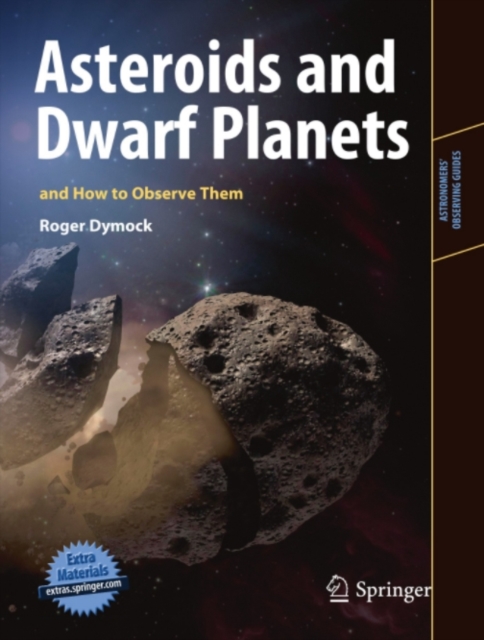
Dwarf planets (which were formerly called asteroids except for the planet Pluto), and the smaller Solar System bodies still called asteroids today, are making front page news, particularly those that are newly discovered and those that might present a hazard to life on Earth by impacting our planet.
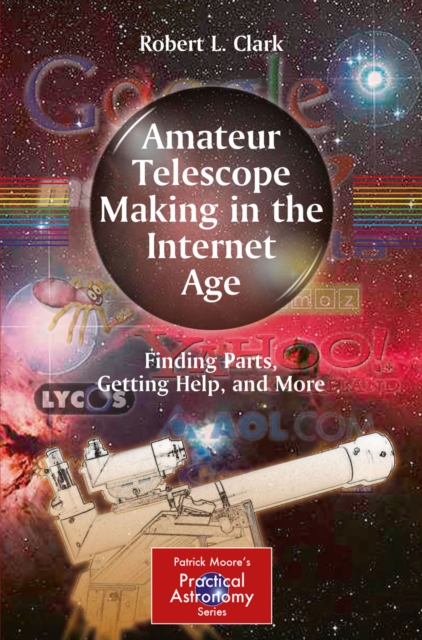
Building an astronomical telescope offers the amateur astronomer an exciting challenge, with the possibility of ending up with a far bigger and better telescope than could have been afforded otherwise.
The Hill-Brown theory of the Moon's motion was constructed in the years from 1877 to 1908, and adopted as the basis for the lunar ephemerides in the nautical almanacs of the US, UK, Germany, France, and Spain beginning in 1923.
In 1609 Galileo first used his telescope to kick start the science of observational astronomy - an event that proved to be of enormous historic, scientific, and cultural importance.
In The Earth as a Distant Planet, the authors become external observers of our solar system from a distance and try to determine how one can understand how Earth, the third in distance to the central star, is essentially unique and capable of sustaining life.
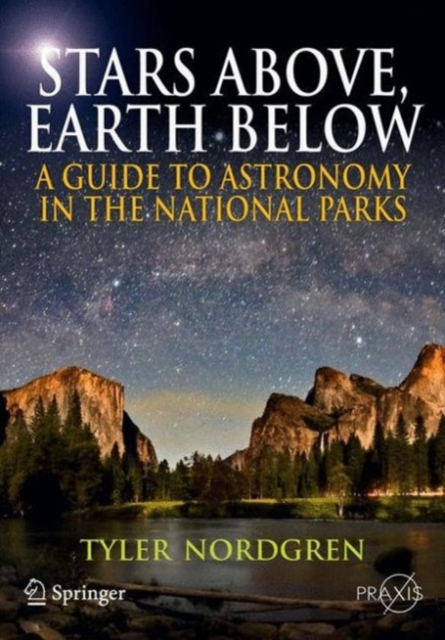
Stars Above, Earth Below uses photographs and sky charts to form a connection between what is seen on the ground and in the sky, and looks at the deeper scientific meaning behind these sights.
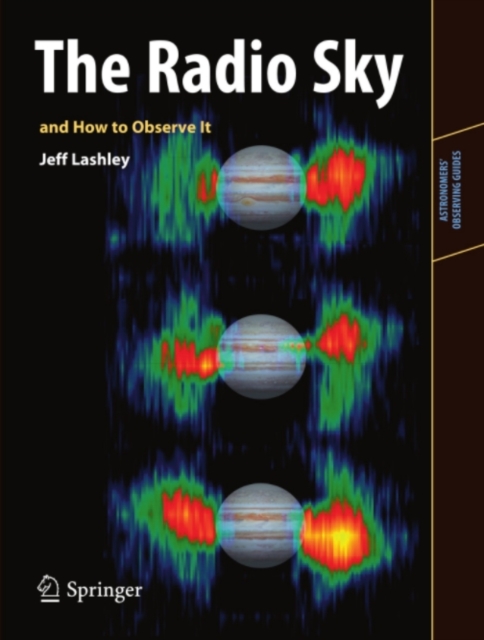
Radio astronomy is far from being beyond the scope of amateurs astronomers, and this practical, self-contained guide for the newcomer to practical radio astronomey is an ideal introduction.
Any amateur astronomer who is interested in astrophotography, particularly if just getting started, needs to know what objects are best for imaging in each month of the year.
Offering practical advice on a range of wavelengths, this highly accessible and self-contained book presents a broad overview of astronomical instrumentation, techniques, and tools.