This book is the result of a working group sponsored by ISSI in Bern, which was initially created to study possible ways to calibrate a Far Ultraviolet (FUV) instrument after launch.
"e;Orrery"e; appeals to almost anyone interested in popular astronomy, astronomical mechanical devices, scientific instruments, the history of clocks - and even the history of aristocratic and prestigious families!
ESA's Venus Express Mission has monitored Venus since April 2006, and scientists worldwide have used mathematical models to investigate its atmosphere and model its circulation.
"e;Telescopes and Techniques"e; has proved itself in its first edition, having become probably one of the most widely used astronomy texts, both for numerate amateur astronomers and for astronomy and astrophysics undergraduates.
Viewing and Imaging the Solar System: A Guide for Amateur Astronomers is for those who want to develop their ability to observe and image Solar System objects, including the planets and moons, the Sun, and comets and asteroids.
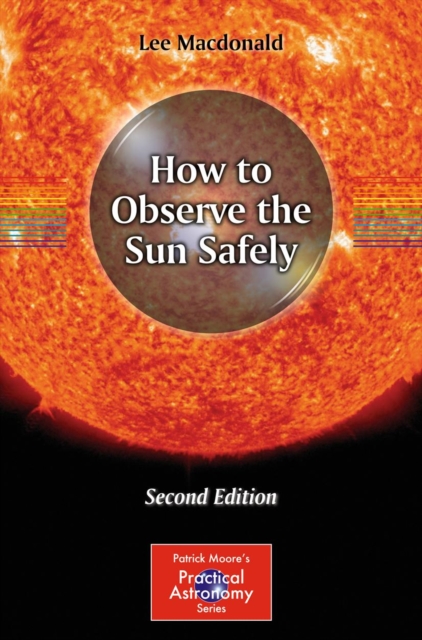
"e;How to Observe the Sun Safely, 2nd Edition"e; gives all the basic information and advice the amateur astronomer needs to get started in observing our own ever-fascinating star.
There have been many developments in the field of light pollution over the last few years, and this second edition of 'Light Pollution - Responses and Remedies' will introduce them in detail.
This book contains new translations and a new analysis of the procedure texts of Babylonian mathematical astronomy, the earliest known form of mathematical astronomy of the ancient world.
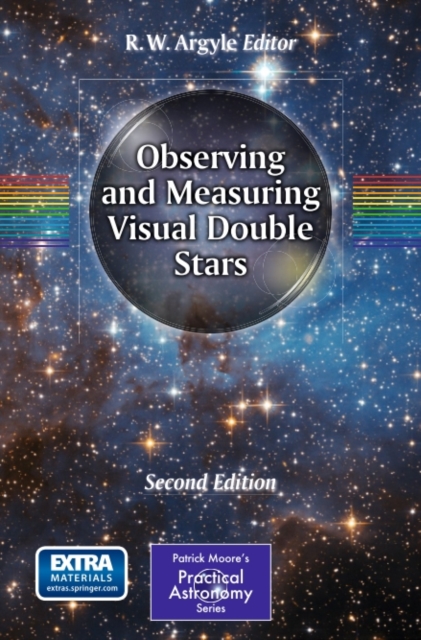
The second edition of Observing and Measuring Visual Double Stars (2004) is the definitive book for those who are serious about this fascinating aspect of astronomy.
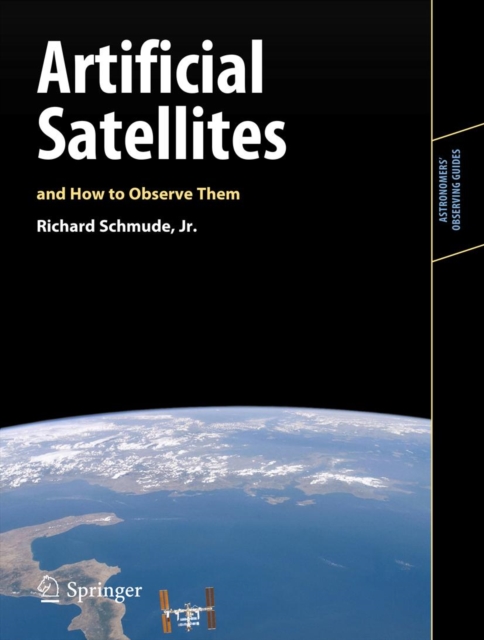
Every amateur astronomer - and many non-astronomers - will be familiar with seeing a "e;star"e; that shows that characteristic steady slide across the starry background of the sky.
"e;New Eyes on the Universe - Twelve Cosmic Mysteries and the Tools We Need to Solve Them"e; gives an up-to-date broad overview of some of the key issues in modern astronomy and cosmology.
Mars, popularly known as the Red Planet because of its distinct color, is visible with the naked eye and is one of very few planets in the Solar System in which it is possible to see weather phenomena and surface features and thus is a favorite for amateur and practical astronomers.
This book shows amateur astronomers how to use one-shot CCD cameras, and how to get the best out of equipment that exposes all three color images at once.
The discovery of a gradual acceleration in the moon's mean motion by Edmond Halley in the last decade of the seventeenth century led to a revival of interest in reports of astronomical observations from antiquity.
Every amateur astronomer has at least heard of the many different catalogs of deep-sky objects; the most well known are the Messier, the Caldwell, the Herschel, and the NGC.
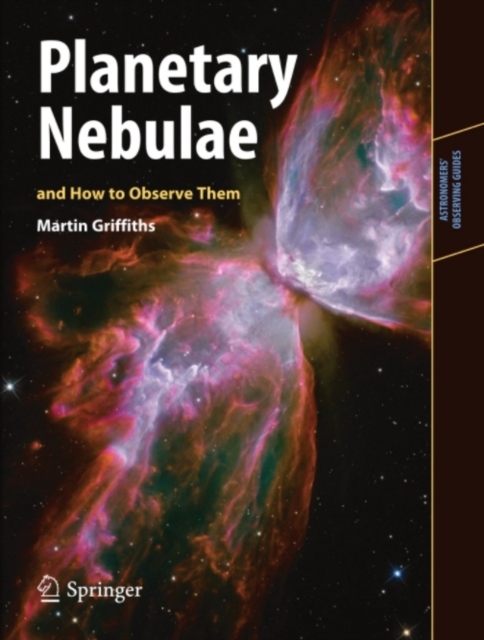
Planetary Nebulae and How to Observe Them is for amateur astronomers who want to go beyond the Messier objects, concentrating on one of the most beautiful classes of astronomical objects in the sky.
The Casual Sky Observer's Pocket Guide offers an observing program for occasional amateur observers looking for some quick, fun astronomy adventures under the stars.
This star guide enables amateur astronomers to focus on a class of object, and using an observation list that begins with the easiest object, find and move progressively over a period of months to more difficult targets.
Conventional star atlases are great for locating constellations and individual stars but The Star Atlas Companion goes one step further and describes the physical properties of more than 1,100 stars.
From 12 April to 14 April 1988, 120 of Gerard and Antoinette de Vaucouleurs's friends and colleagues gathered at the Institut d' Astrophysique in Paris to cel- ebrate Gerard's 70th birthday and his remarkable career in Astronomy.
Before streets were brightly illuminated at night, astronomy was accessible to everyone and was a matter of great importance: for divination; for setting appropriate dates for planting, harvest, and festivals; for regulating lives.
The collection of papers assembled here on a variety of topics in ancient and medieval astronomy was originally suggested by Noel Swerdlow of the University of Chicago.
THE MOON IX PREFACE TO THE SPRINGER EDITION When this collection of Babylonian astronomical purpose of column of the lunar ephemerides (by texts was published in 1955 (a date omitted by Aaboe) and the explanation of the method of computing the eclipse text ACT No.
The purpose of this volume is to present the latest planetary studies of an international body of scientists concerned with the physical and chemical aspects of terrestrial planets.
Historically, the discovery of tools, or evidence that tools have been used, has been taken as proof of human activity; certainly the invention and spread of new tools has been a critical marker of human progress and has increased our ability to observe, measure, and understand the physical world.
For millennia mankind has watched as the heavens move in their stately progression from night to night and from year to year, presaging with their changes the changing seasons.