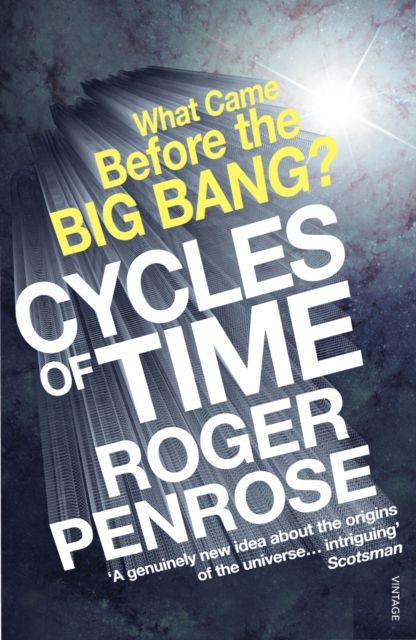
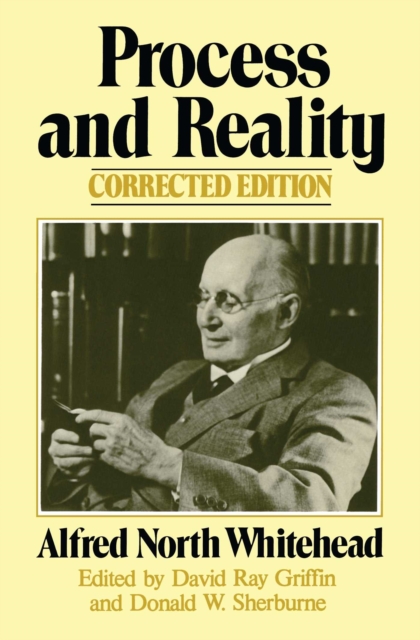
One of the major philosophical texts of the 20th century, Process and Reality is based on Alfred North Whiteheads influential lectures that he delivered at the University of Edinburgh in the 1920s on process philosophy.
'You cannot burn awayWhat has always been aflame'WILD EMBERS explores the fire that lies within every soul, weaving words around ideas of feeling at home in your own skin, allowing yourself to heal and learning to embrace your uniqueness with love from the universe.
A sweeping tour of the infrared universe as seen through the eyes of NASA's Spitzer Space TelescopeAstronomers have been studying the heavens for thousands of years, but until recently much of the cosmos has been invisible to the human eye.
Like prior editions of the book - but even more so - A Briefer History of Time will guide non-scientists everywhere in the ongoing search for the tantalizing secrets at the heart of time and space .
The New York Times bestselling tour of the cosmos from three of today's leading astrophysicistsWelcome to the Universe is a personal guided tour of the cosmos by three of today's leading astrophysicists.
Since Einstein first described them nearly a century ago, gravitational waves have been the subject of more sustained controversy than perhaps any other phenomenon in physics.
From two of the world's great physicists-Stephen Hawking and Nobel laureate Roger Penrose-a lively debate about the nature of space and timeEinstein said that the most incomprehensible thing about the universe is that it is comprehensible.
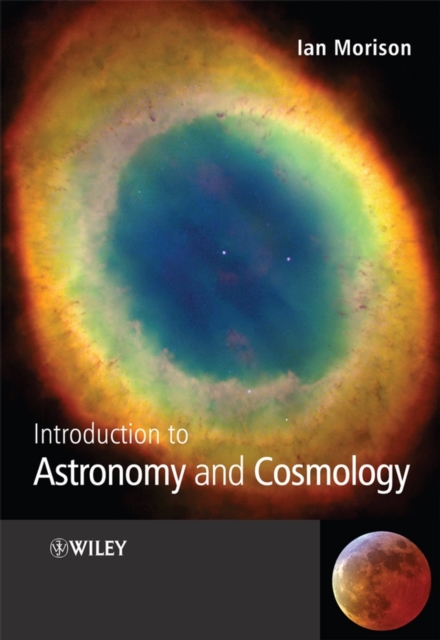
Introduction to Astronomy & Cosmology is a modern undergraduate textbook, combining both the theory behind astronomy with the very latest developments.
An accessible look at the mysteries that lurk at the edge of the known universe and beyondThe observable universe, the part we can see with telescopes, is incredibly vast.
Die großen Mysterien des Weltalls und unserer Erde: faszinierende Rätsel der Wissenschaft vom Autor des Sachbuch-Bestsellers »(Fast) Alles einfach erklärt«, Niklas Kolorz Was war vor dem Urknall?
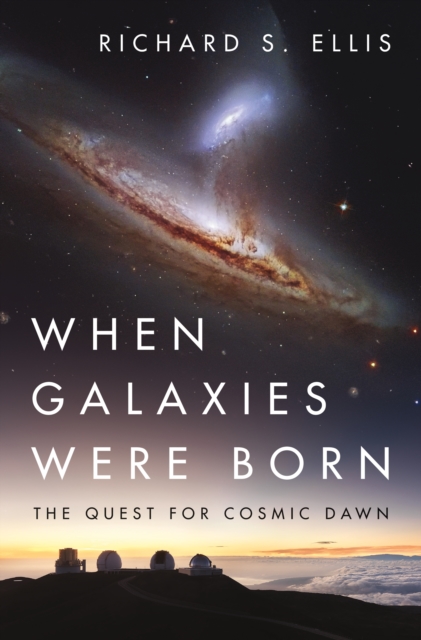
One of today's leading astronomers takes readers inside the decades-long search for the first galaxies and the origin of starlightAstronomers are like time travelers, scanning the night sky for the outermost galaxies that first came into being when our universe was a mere fraction of its present age.
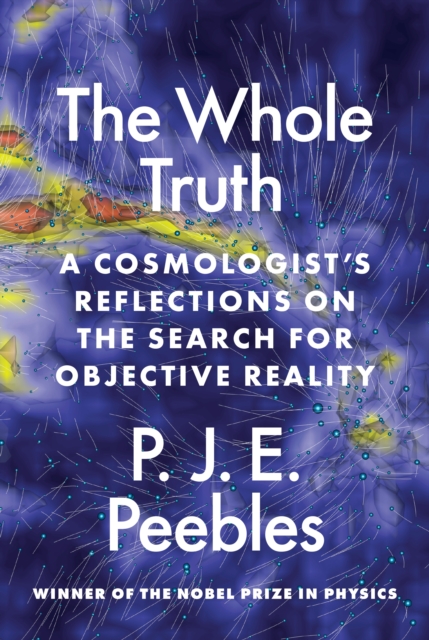
From the Nobel Prizewinning physicist, a personal meditation on the quest for objective reality in natural scienceA century ago, thoughtful people questioned how reality could agree with physical theories that kept changing, from a mechanical model of the ether to electric and magnetic fields, and from homogeneous matter to electrons and atoms.
A pocket-style edition based on the New York Times bestsellerA Brief Welcome to the Universe offers a breathtaking tour of the cosmos, from planets, stars, and galaxies to black holes and time loops.
The cutting-edge science that is taking the measure of the universeThe Little Book of Cosmology provides a breathtaking look at our universe on the grandest scales imaginable.
From the Nobel Prizewinning physicist, a personal meditation on the quest for objective reality in natural scienceA century ago, thoughtful people questioned how reality could agree with physical theories that kept changing, from a mechanical model of the ether to electric and magnetic fields, and from homogeneous matter to electrons and atoms.
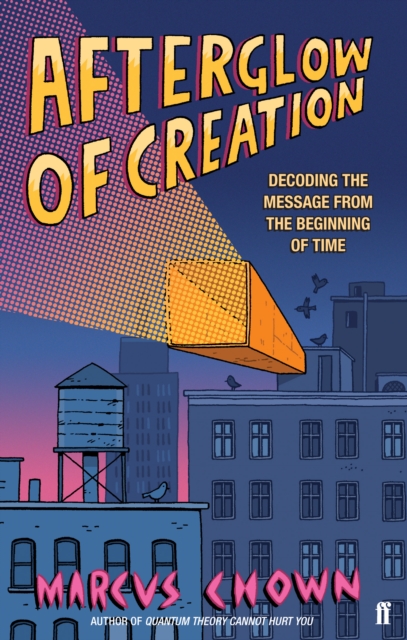
Stephen Hawking described it as 'the discovery of the century, if not of all time', yet the scientists who first detected the cosmic radiation that was identified as the afterglow of the big bang had to admit that it was more by accident than intention.
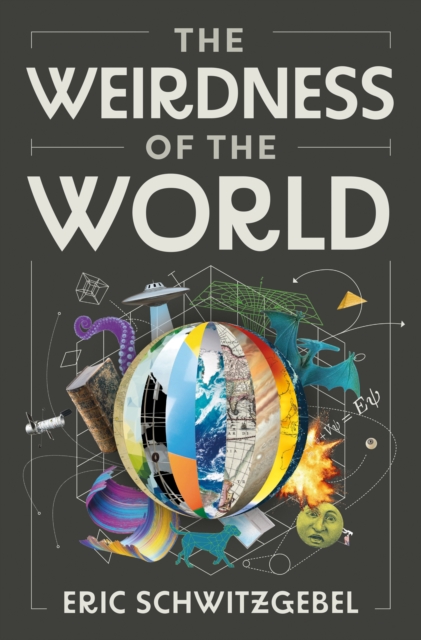
How all philosophical explanations of human consciousness and the fundamental structure of the cosmos are bizarreand why that's a good thingDo we live inside a simulated reality or a pocket universe embedded in a larger structure about which we know virtually nothing?
How all philosophical explanations of human consciousness and the fundamental structure of the cosmos are bizarreand why that's a good thingDo we live inside a simulated reality or a pocket universe embedded in a larger structure about which we know virtually nothing?
Introduction to Astronomy & Cosmology is a modern undergraduate textbook, combining both the theory behind astronomy with the very latest developments.
It has always been assumed that an Electric field shines from out the charge of an Electron, that Electrons are thus creating the Electric field, when in fact it is the other way around, it is a Universal field that is projecting Electrons.
Inflation and Quantum Cosmology discusses the inflationary universe scenario, including the problems of the standard big bang theory and the interplay between elementary-particle theory and cosmology.
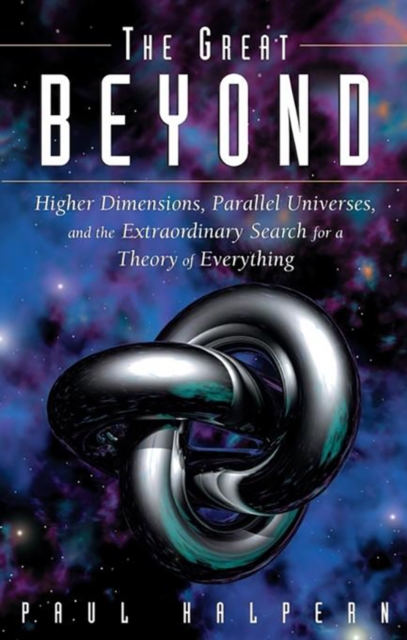
Though the concept of "e;the universe"e; suggests the containment of everything, the latest ideas in cosmology hint that our universe may be just one of a multitude of others-a single slice of an infinity of parallel realities.
Explores how the Universe, our planet, ourselves, and everything in existence has inherent meaning and evolutionary purpose*; 2023 Nautilus Gold Award*; Examines our emergence as self-aware members of a Universe that is itself a unified and innately sentient entity that exists TO evolve*; Shares leading-edge scientific breakthroughs and shows how they support traditional visions of Earth as a living being--Gaia*; Rewrites evolution as not driven by random occurrences and mutations but by intelligently informed and meaningful information flows and processesExploring our emergence as self-aware members of a planetary home and entire Universe that is a unified and innately sentient entity, Jude Currivan, Ph.
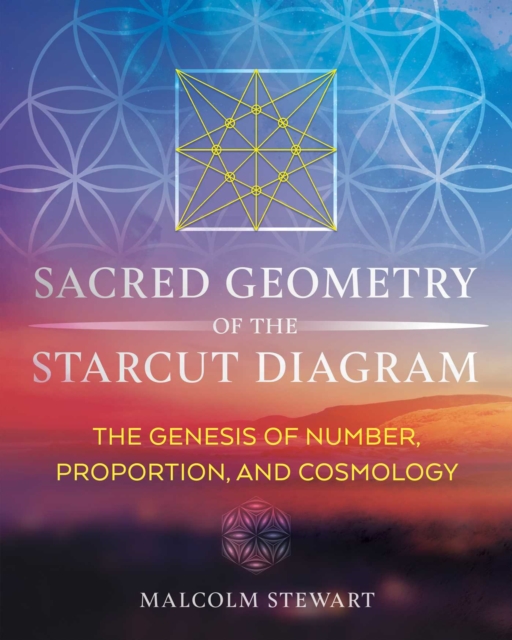
*; Lavishly illustrated with hundreds of detailed diagrams and technical illustrations exploring the evolution and importance of the starcut diagram *; Shows how the starcut diagram underlies the shaman's dance in China, the Vedic Fire Altar in India, Raphael frescoes, labyrinth designs, the Great Pyramid in Egypt, and the building of ancient cities *; Explains how the starcut diagram was used in building and design, how it relates to Pythagoras's Tetrakys, and how it contains knowledge of the Tree of Life As Malcolm Stewart reveals in this lavishly illustrated study, the simplesquare figure of the Starcut diagram, created only with circles, has extraordinary geometric properties.
Examines how the similarities of symbols and wisdom across many cultures point to an ancient civilizing plan and system of ancient instruction *; Reveals the shared cosmological knowledge of Dogon and Maori cultures, ancient Egypt, Gobekli Tepe, Vedic India, the pre-Indian Sakti civilization, Buddhism, the Tibetan Bon religion, and the kabbalistic tradition of the Hebrews *; Explores symbols and techniques used to frame and preserve instructed knowledge as it was transmitted orally from generation to generation *; Explains how this shared ancient knowledge relates to the precessional year and the cycles of time known as the yugas Exploring the mystery of why so many ancient cultures, separated by time and distance, share remarkably similar cosmological philosophies and religious symbolism, Laird Scranton reveals how this shared creation tradition upholds the idea that ancient instruction gave birth to the great civilizations, each of which preserves fragments of the original knowledge.
From the cutting edge of science and living spirituality: a guide to understanding our identity and purpose in the world *; Outlines the new understanding of matter and mind coming to light at the cutting edge of physics and consciousness research *; Explains how we can evolve consciously, become connected with each other, and flourish on this planet *; Includes contributions from Maria Sagi, Kingsley L.
How holographic patterns of information underlie our physical reality*; 2017 Nautilus Silver Award*; Includes myriad evidence from a wide range of cutting-edge scientific discoveries showing our Universe is an interconnected hologram of information*; Explains how consciousness is a major component of the cosmic hologram of information, making us both manifestations and co-creators of our reality*; Reconciles Quantum Mechanics and Einstein's Theory of Relativity by showing that energy-matter and space-time are complementary expressions of informationOur understanding of the Universe is about to transform at all levels, from the tiniest Planck scale to the vast reaches of space.