During the past decade our understanding of plasma physics has witnessed an explosive growth due to research in two areas: work directed toward controlled nuclear fusion and work in space physics.
The most thrilling, genre-busting, unlikely science book you ll ever read, from the world-renowned, multi-award-winning, superstar physicist Lisa Randal.
On 14 March 1964 Richard Feynman, one of the greatest scientific thinkers of the 20th Century, delivered a lecture entitled 'The Motion of the Planets Around the Sun'.
In anaesthetist Dr Kevin Fong's television programmes he has often demonstrated the impact of extremes on the human body by using his own body as a 'guinea pig'.
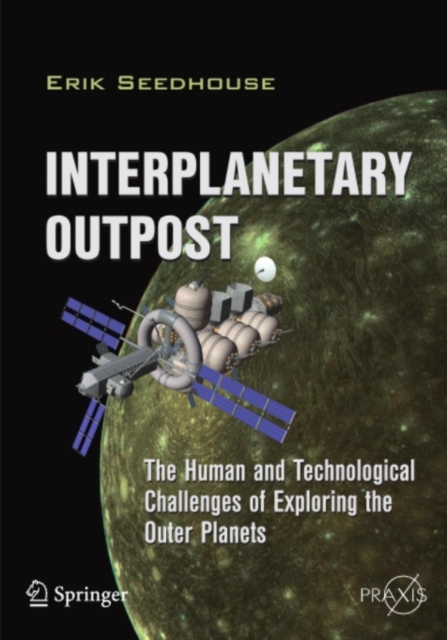
"e;Interplanetary Outpost"e; follows the mission architecture template of NASA's plan for Human Outer Planet Exploration (HOPE), which envisions sending a crew to the moon Callisto to conduct exploration and sample return activities.
If you have ever wondered how we get from the awesome impersonality of the Big Bang universe to the point where living creatures can start to form, and evolve into beings like you, your friends and your family, wonder no more.
This volume, like the others, not only focuses upon the individual missions within the decade but also upon key challenges facing human space exploration at specific points within those years - from the problems of simply breathing and eating in space to the challenges of venturing outside in a pressurized spacesuit, the development of newer and better space toilets, and the difficulties of locomotion on the Moon.
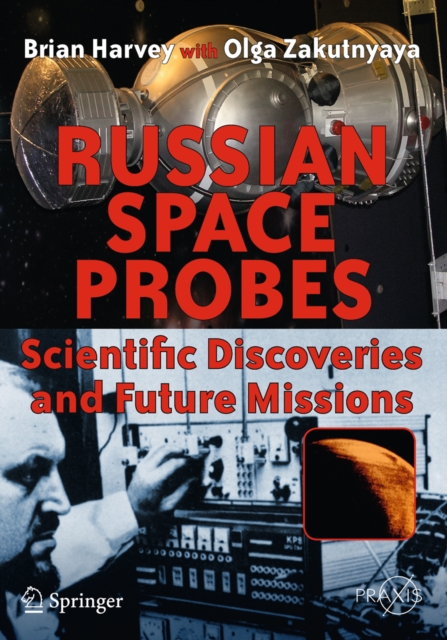
Brian Harvey recounts for the first time the definitive history of scientific Russian space probes and the knowledge they acquired of the Earth, its environment, the Moon, Mars and Venus.
Stung by the pioneering space successes of the Soviet Union - in particular, Gagarin being the first man in space, the United States gathered the best of its engineers and set itself the goal of reaching the Moon within a decade.
Dwarf planets (which were formerly called asteroids except for the planet Pluto), and the smaller Solar System bodies still called asteroids today, are making front page news, particularly those that are newly discovered and those that might present a hazard to life on Earth by impacting our planet.
Foothold in the Heavens, the second volume in the A History of Human Space Exploration series, focuses upon the 1970s, the decade in which humanity established real, longterm foothold in the heavens with the construction and operation of the first space stations.
In The Earth as a Distant Planet, the authors become external observers of our solar system from a distance and try to determine how one can understand how Earth, the third in distance to the central star, is essentially unique and capable of sustaining life.
In Cosmic Biology, Louis Irwin and Dirk Schulze-Makuch guide readers through the range of planetary habitats found in our Solar System and those likely to be found throughout the universe.
In the last thirty years humans have probed the Universe, explored the Solar System and visited with spacecraft some of the most incredible places humans have ever laid eyes upon.
Knowledge about the outer heliosphere and the interstellar medium, which were long treated as two separate fields, has improved dramatically over the past 25 years as a consequence of recent developments: The discovery of interstellar pickup ions and neutral helium inside the heliosphere, the determination of the interstellar hydrogen distribution in the heliosphere obtained using backscattered solar Lyman-alpha radiation, the prediction and subsequent detection of the hydrogen wall just outside of the heliopause, the development of detailed global models for the interaction of solar wind plasma with the interstellar medium, and most recently, direct in-situ plasma and field measurements inside of the heliosheath.
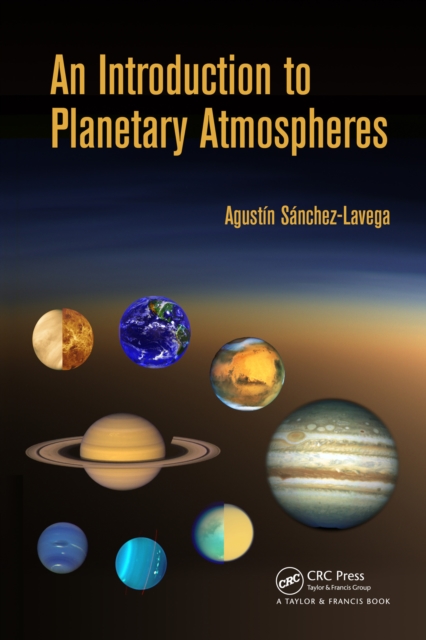
Planetary atmospheres is a relatively new, interdisciplinary subject that incorporates various areas of the physical and chemical sciences, including geophysics, geophysical fluid dynamics, atmospheric science, astronomy, and astrophysics.
Reflecting a rich technical and interdisciplinary exchange of ideas, Water and Life: The Unique Properties of H20 focuses on the properties of water and its interaction with life.
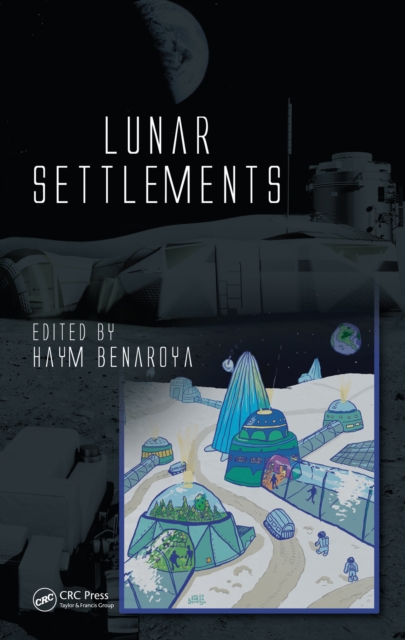
Bringing together some of the most recognized and influential researchers and scientists in various space-related disciplines, Lunar Settlements addresses the many issues that surround the permanent human return to the Moon.
Long established as one of the premier references in the fields of astronomy, planetary science, and physics, the fourth edition of Orbital Motion continues to offer comprehensive coverage of the analytical methods of classical celestial mechanics while introducing the recent numerical experiments on the orbital evolution of gravitating masses and the astrodynamics of artificial satellites and interplanetary probes.
Although the origin of Earth's and other celestial bodies' magnetic fields remains unknown, we do know that the motion of electrically conducting fluids generates and maintains these fields, forming the basis of magnetohydrodynamics (MHD) and, to a larger extent, dynamo theory.
An entertaining, instructive, diverse, and unusual book, Light and Dark: An Exploration in Science, Nature, Art and Technology encompasses a wide range of topics not normally found in one book.
Solar-terrestrial physics deals with phenomena in the region of space between the surface of the Sun and the upper atmosphere of the Earth, a region dominated by matter in a plasma state.
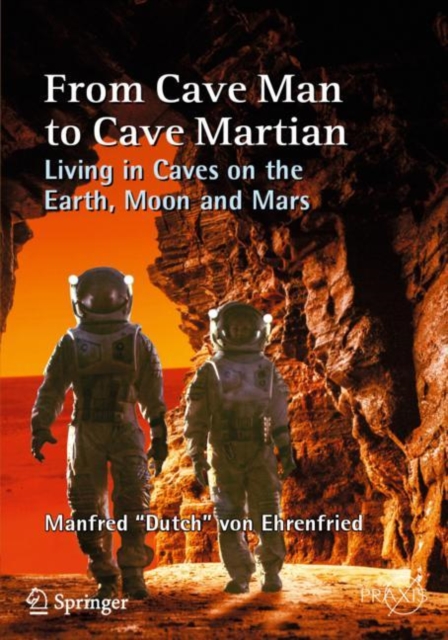
This book explores the practicality of using the existing subsurface geology on the Moon and Mars for protection against radiation, thermal extremes, micrometeorites and dust storms rather than building surface habitats at great expense at least for those first few missions.
High Time Resolution Astrophysics (HTRA) is an important new window to the universe and a vital tool in understanding a range of phenomena from diverse objects and radiative processes.
The 6th IAA Symposium on Small Satellites for Earth Observation, initiated by the International Academy of Astronautics (IAA), was again hosted by DLR, the German Aerospace Center.