XI ACKNOWLEDGMENTS xiii INTRODUCTION XV CHAPTER 1: THE HISTORICAL AND PHILOSOPHICAL PERSPECTIVES 1 The Magical Vision of the Nonhuman 1 Ancient Philosophy 2 Medieval Philosophy 6 The Renaissance 8 The Birth of Modern Science 10 First Attempts at Contact 16 Cosmism 17 From Enthusiasm to Disenchantment 18 CHAPTER 2: THE RELIGIOUS PERSPECTIVE 23 Is Extraterrestrial Life a Threat to Religion?
CHAPTER 1: INTRODUCTION 1 From the Ground Up 3 Rockets and Satellites 4 To the Moon 15 Humans versus Robots 18 CHAPTER 2: A SPACE ROBOT IS BORN 23 Scientific Conception 25 Proving Technology 33 The Political Push 36 Paper Spacecraft 38 It'sJust a Phase I'm Going Through 48 CHAPTER 3: ANATOMY OF A SPACE PROBE 53 Bits and Pieces 55 Power 57 Vll Contents Communication 65 Structures 70 Thermal Control 73 Attitude Control 77 Propulsion 86 Data Handling 89 Mechanisms 93 The Kidnap ofLuna 1 95 CHAPTER 4: BUILDING AND TESTING 97 The Spacecraft Garage 97 Keep it Clean 100 Planetary Protection 102 Shake, Rattle 'n' Roll 108 Shaken, not stirred 110 Canned space 112 Antenna testing 112 Special cases 113 Breaking the software 114 CHAPTER 5: INSTRUMENTS OFS CIENCE 115 The More we Learn, the More we Don't Know 116 Let's get Physical 118 It's All in the Data 121 Many Eyes 122 123 Visible light instruments There is more than meets the eye 126 Messenger's Instruments 129 Roving Around 132 Diving through an Atmosphere 140 142 Primeval soup Going down 142 CHAPTER 6: LAUNCH 149 On the Road 149 Spaceports 150 Preparing for Launch 153 Up and Away 156 Rockets 159 162 Orbits Vlll Contents CHAPTER 7: DISTANT DESTINATIONS 167 To the Moon 170 The first visits 170 Preparing for Apollo 172 Robot rovers 175 Modern missions 176 A new Moon 177 Unromantic Venus 179 Greenhouse nightmare 179 Into the unknown 180 Magellan 186
The aim of State of the Universe 2007 (and subsequent volumes issued annually) is to provide an annual astronomy review suitable for the popular science level reader to be published every year in September in a format that will be suitable for an appeal to the Christmas market.
The Wheels of Apollo and the Quest for Mars fills a need for a complete history of the Lunar Roving Vehicle used on Apollo 15, 16 and 17, drawing on many photographs never before published.
For the majority of amateur astronomers, who live at the latitudes of North America, the British Isles and Australia, the aurora is a relatively infrequent visitor to the night sky.
In 'Paving the Way for Apollo 11' David Harland explains the lure of the Moon to classical philosophers, astronomers, and geologists, and how NASA set out to investigate the Moon in preparation for a manned lunar landing mission.
Mounting pressure in the early 1960s from the National Academy of Sciences (NAS) to study ways of expanding the role of astronauts to conduct science on future space missions led to NASA's conclusion that flying scientifically trained crewmembers would generate greater returns from each mission.
Public interest in the first lunar landing transcended political, economic and social borders - the world was briefly united by the courage of the crew, and the wonder of the accomplishment.
The aim of the Space Exploration - 2007 is to provide an annual update on recent space launches, missions and results, to be published every year in September.
This volume on the Solar Radiation and Climate Experiment (SORCE) mission continues a Solar Physics tradition of special topical issues dedicated to major solar space missions.
The impact of Einstein's relativity is perhaps most dramatic in astronomy, radically altering our interpretation of the observations of the stars and galaxies.
Mars has long been believed to have been cold, dead and dry for aeons, but there is now striking new proof that not only was Mars a relatively warm and wet place in geologically recent times, but that even today there are vast reserves of water frozen beneath the planet's surface.
Former NASA Astronaut Harrison Schmitt advocates a private, investor-based approach to returning humans to the Moon-to extract Helium 3 for energy production, to use the Moon as a platform for science and manufacturing, and to establish permanent human colonies there in a kind of stepping stone community on the way to deeper space.
Currently, a first generation of dedicated satellite missions for the precise mapping of the Earth's gravity field is in orbit (CHAMP, GRACE, and soon GOCE).
The last two years have witnessed a continuation in the breakthrough shift toward pulse tube cryocoolers for long-life, high-reliability cryocooler applications.
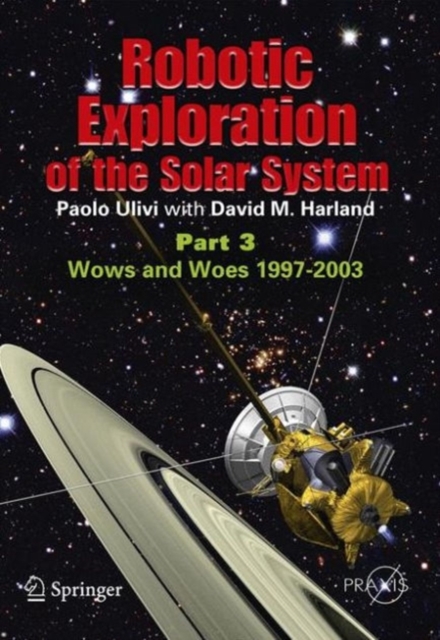
Paolo Ulivi and David Harland provide in Robotic Exploration of the Solar System a detailed history of unmanned missions of exploration of our Solar System.
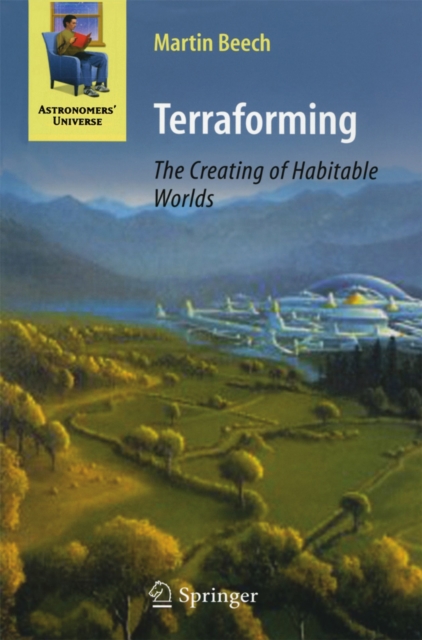
The word 'terraforming' conjures up many exotic images and p- hapsevenwildemotions,butatitscoreitencapsulatestheideathat worldscanbechangedbydirecthumanaction.
Digital sky surveys, high-precision astrometry from satellite data, deep-space data from orbiting telescopes, and the like have all increased the quantity and quality of astronomical data by orders of magnitude per year for several years.
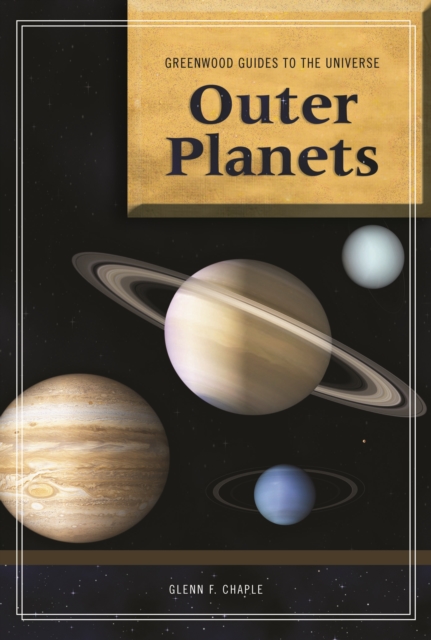
A long-time avid amateur astronomer living in Massachusetts, Chaple profiles the Jovian planets, that is the gas giants and their many moons, but not the former planet Pluto.
An expert in planetary sciences offers an accessible synopsis of scientific knowledge about the celestial bodies with which we are most familiar-Mercury, Venus, Earth, and Mars.
Astronauts, cosmonauts, and a very limited number of people have experienced eating space food due to the unique processing and packaging required for space travel.