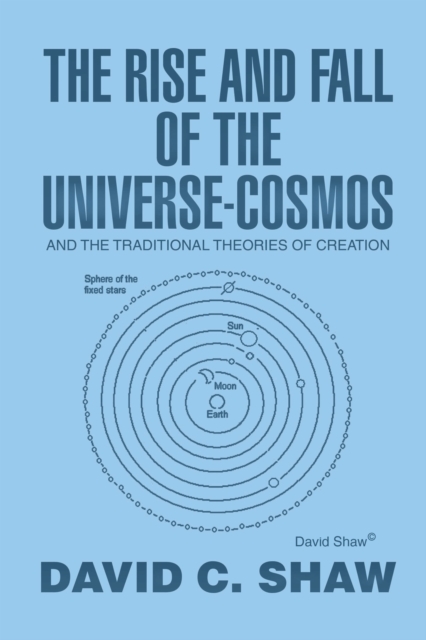
Since the introduction of indisputable proof by the scientific world confirming an expanding universe/solar system, many inconsistencies in the accretion theory, which are all now discredited, have come to light.
Multibang Cosmos invites you to replace the big bang paradigm of a mysterious and unique cosmic origin and expansion by the observed local multibang expansions within a permanent cosmic recycling of all electronuclear material.
This Second Edition is a comprehensive update, integrating the latest research and theoretical advancements in the field of de Sitter (dS) group representations.
This book describes a great variety of significant space plasma processes and the eminent influence that in particular magnetic processes have on the formation, structure and development of objects in our solar system.
Today we hear renewed calls for a dialogue between science and religion: why has the old question of the relations between science and religion now returned to the public domain and what is at stake in this debate?
Discover the amazing wonders of the night sky with this expanded edition to 100 Things to See in the Night Sky, perfect for every amateur stargazer and armchair astronomer!
Science meets fantasy in this behind-the-scenes look at the Marvel Cinematic Universenow you can experience the magic of the movies, and learn how to replicate it in real-life.
This book is about the following topics: Temporary aspersion and new theories of the universe time and space The location of time in the future and past universe and dimensions Alternate dimensions and parallel universes Dimensions and time in the cosmicSee how black holes could work by compressing stellar walls, like springs stretched to the back of the deep universe of dimensions, parallel and no.
Willkommen zu einer faszinierenden Reise in die Tiefen der Existenz, wo die Grenzen zwischen Wissenschaft und Philosophie verschwimmen und die Grundfesten unserer Vorstellung von Zeit, Raum und Unsterblichkeit in Frage gestellt werden.
The remarkable story of how our solar system came to beThe birth and evolution of our solar system is a tantalizing mystery that may one day provide answers to the question of human origins.
A fresh and more capacious reading of the Western religious tradition on nature and creation, Thinking Nature and the Nature of Thinking puts medieval Irish theologian John Scottus Eriugena (810-877) into conversation with American philosopher Ralph Waldo Emerson (1803-1882).
The definitive story of the making of 2001: A Space Odyssey, acclaimed today as one of the greatest films ever made, and of director Stanley Kubrick and writer Arthur C.
CHOICE: Highly RecommendedQuarks, Leptons and The Big Bang, Third Edition, is a clear, readable and self-contained introduction to particle physics and related areas of cosmology.
Written by an award-winning cosmologist, this brand new textbook provides advanced undergraduate and graduate students with coverage of the very latest developments in the observational science of cosmology.
Written by an award-winning cosmologist, this brand new textbook provides advanced undergraduate and graduate students with coverage of the very latest developments in the observational science of cosmology.
Expose Your Students to the Elegant World of Physics in an Enticing WayPhysics from Planet Earth - An Introduction to Mechanics provides a one-semester, calculus-based introduction to classical mechanics for first-year undergraduate students studying physics, chemistry, astronomy, or engineering.
With the accelerating pace of genomic analysis and space exploration, the field of prebiotic evolution and astrobiology is poised for a century of unprecedented advances ahead, and there is a need for textbooks for students.
Interest in and knowledge of the techniques utilised to investigate our solar system has been growing rapidly for decades and has now reached a stage of maturity.
This book highlights the basic theories and technical principles of the synthetic aperture radar (SAR), aiming to bridge theories and applications for readers.
Unidentified phenomena in space, in the Earth's atmosphere, and in waters are too important to leave their exploration to the military and scientific laypersons.
A space enthusiast goes inside mission control with a motley crew of rocket scientists in this "e;fascinating journey of discovery peppered with humor"e; (Publishers Weekly).
A space enthusiast goes inside mission control with a motley crew of rocket scientists in this "e;fascinating journey of discovery peppered with humor"e; (Publishers Weekly).
This book has three major themes: the nature of the universe, what the nature of the universe tells us about God, and in using our understanding of the universe and the nature of God, we conjecture a life after death or immortality.
Cosmology: Scientific Study of the Universe For thousands of years, humankind has gazed up into the heavens at the beautiful Milky Way galaxy and pondered From where did it come?
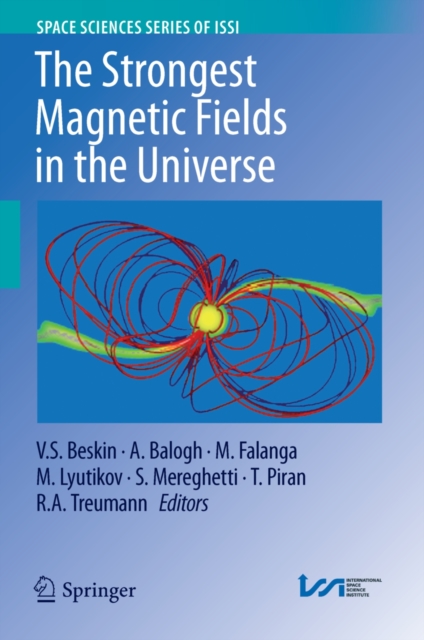
This volume extends the ISSI series on magnetic fields in the Universe into the domain of what are by far the strongest fields in the Universe, and stronger than any field that could be produced on Earth.
Readers will find grouped together here the most recent observations, current theoretical models and present understanding of the coupled atmosphere, magnetosphere and solar wind system.
Many breakthroughs in biological research and translational healthcare advancements have been achieved by studying the response of biological systems to extreme environments.
From the authors of Sketching the Moon comes a comprehensive guide filled with richly illustrated, detailed drawing tutorials that cover a variety of solar phenomena.
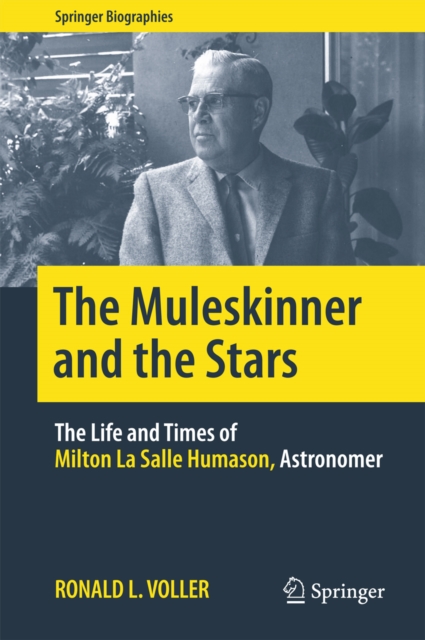
This is the story of the astronomer Milton La Salle Humason, whose career was integral to developing our understanding of stellar and universal evolution and who helped to build the analytical basis for the work of such notable astronomers and astrophysicists as Paul Merrill, Walter Adams, Alfred Joy, Frederick Seares, Fritz Zwicky, Walter Baade and Edwin Hubble.