Meteorites - as well as shooting stars and meteors - result from a collision of a solid body from space with our Earth, but only meteorites are able to penetrate the Earth's protective shield, the atmosphere, and fall to the Earth's surface.
In the last hundred years, modern physics and cosmology have shown that there exist regions of the universe forever beyond our reach, hidden by truly ultimate horizons.
This book describes how to predict and forecast the state of planet Earth's ionosphere under quiet and disturbed conditions in terms of dynamical processes in the weakly ionized plasma media of the upper atmosphere and their relation to available modern measurements and modelling techniques.
Extraterrestrial Altruism examines a basic assumption of the Search for Extraterrestrial Intelligence (SETI): that extraterrestrials will be transmitting messages to us for our benefit.
New observations of the period between the cosmic recombination and the end of reionization are posing intriguing questions about where the first generations of stars were formed, how the first galaxies were assembled, whether these galaxies have low redshift counterparts, and what role the early galaxies played in the reionization process.
The millimeter and sub-millimeter wavebands are unique in astronomy in containing several thousands of spectral lines of molecules as well as the thermal continuum spectrum of cold dust.
The millimeter and sub-millimeter wavebands are unique in astronomy in containing several thousands of spectral lines of molecules as well as the thermal continuum spectrum of cold dust.
In this book, the author leads the reader, step by step and without any advanced mathematics, to a clear understanding of the foundations of modern elementary particle physics and cosmology.
This contributed monograph is the first work to present the latest results and findings on the new topic and hot field of planetary exploration and sciences, e.
This thesis presents an in-depth, high-resolution observational study on the very beginning of the formation process: the fragmentation of dense molecular clouds known as infrared dark clouds (IRDCs).
What does existing scientific knowledge about physics, chemistry, meteorology and biology tell us about the likelihood of extraterrestrial life and civilizations?
"e;General Relativity Without Calculus"e; offers a compact but mathematically correct introduction to the general theory of relativity, assuming only a basic knowledge of high school mathematics and physics.
For decades experiments conducted on space stations like MIR and the ISS have been gathering data in many fields of research in the natural sciences, medicine and engineering.
This book addresses all scientists and others interested in the origins, development and fate of intelligent species in the observable part of our universe.
This volume of lecture notes brings together the knowledge on pulsations of the Sun and the stars, with a particular emphasis on recent observations and modelling, and on the influence of pulsations of other physical processes.
As one of the eighteen field-specific reports comprising the comprehensive scope of the strategic general report of the Chinese Academy of Sciences, this sub-report addresses long-range planning for development of large research infrastructures in China.
Physics and mathematics students are as eager as ever to become acquainted withthefoundationsofgeneralrelativityandsomeofitsmajorapplicationsin astrophysics and cosmology.
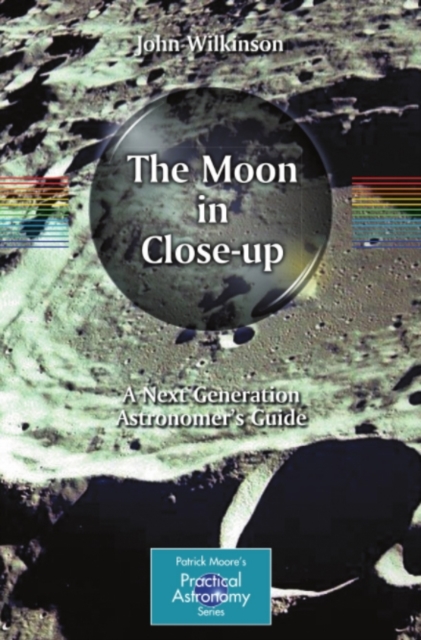
Information collected by recent space probes sent to explore the Moon by the USA, the European Space Agency, Japan, China and India has changed our knowledge and understanding of the Moon, particularly its geology, since the Apollo missions.
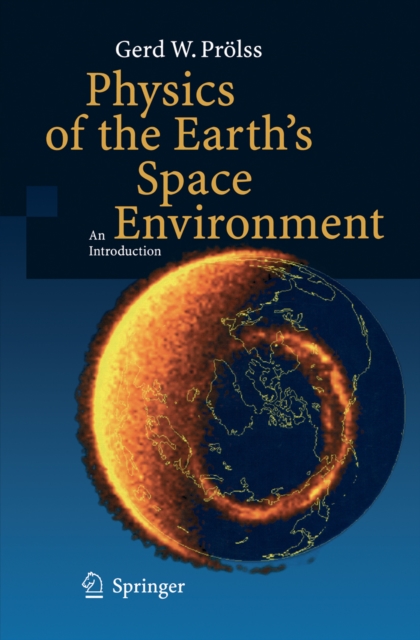
This book was written for readers interested in learning about the disciplines, methods and results of space research, perhaps because they happened upon the field during the course of their higher education or professional career, or perhaps because they simply feel an urge to know more about the space environment of the Earth.
It would seem that any specialist in plasma physics studying a medium in which the interaction between particles is as distance-dependent as the inter- action between stars and other gravitating masses would assert that the role of collective effects in the dynamics of gravitating systems must be decisive.
Lectures on Non-linear Plasma Kinetics is an introduction to modern non-linear plasma physics showing how many of the techniques of modern non-linear physics find applications in plasma physics and how, in turn, the results of this research find applications in astrophysics.
The purpose of this reference and handbook is to describe and to derive the analytic solutionsoftheequationsofsatellitemotionperturbedbyextraterrestrialandgeo- tential disturbances of the second order.
Based on a university course, this book provides an exposition of a large spectrum of geological, geochemical and geophysical problems that are amenable to thermodynamic analysis.