The study of the magnetic fields of the Earth and Sun, as well as those of other planets, stars, and galaxies, has a long history and a rich and varied literature, including in recent years a number of review articles and books dedicated to the dynamo theories of these fields.
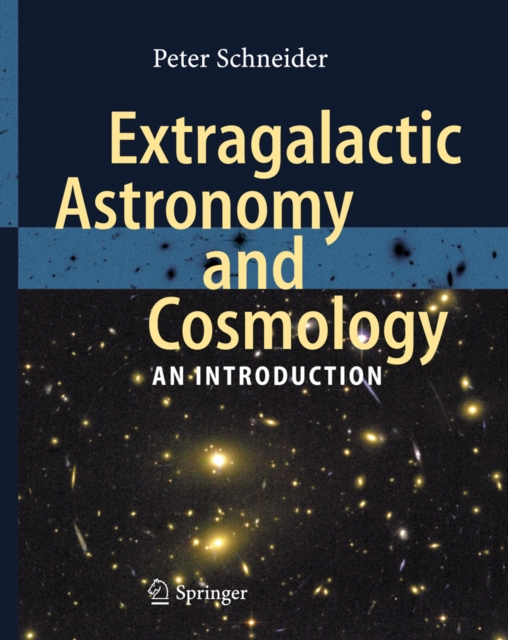
Starting with the description of our home galaxy the Milky Way, this cogently written textbook introduces the reader to the astronomy of galaxies, their structure, active galactic nuclei, evolution and large scale distribution.
This book addresses all scientists and others interested in the origins, development and fate of intelligent species in the observable part of our universe.
Zwischen 1904 und 1907 nahm Friedrich Küstner Spektren verschiedener Sterne auf, um mithilfe des Doppler-Effekts die Astronomische Einheit zu bestimmen und auf diesem Weg die Genauigkeit seines Spektrographen zu testen.
Zwischen 1904 und 1907 nahm Friedrich Küstner Spektren verschiedener Sterne auf, um mithilfe des Doppler-Effekts die Astronomische Einheit zu bestimmen und auf diesem Weg die Genauigkeit seines Spektrographen zu testen.
Originally published in 1988, this dictionary explores the origins of a large number of astronomical names, including the better-known stars, the constellations, all the planets and many of their satellites.
Originally published in 1988, this dictionary explores the origins of a large number of astronomical names, including the better-known stars, the constellations, all the planets and many of their satellites.
Dictionary of Minor Planet Names, fifth edition, is the official reference for the field of the IAU, which serves as the internationally recognised authority for assigning designations to celestial bodies and any surface features on them.
This richly illustrated book is unique in bringing Einstein's relativity to a higher level for the non-specialist than has ever been attempted before, using nothing more than grade-school algebra.
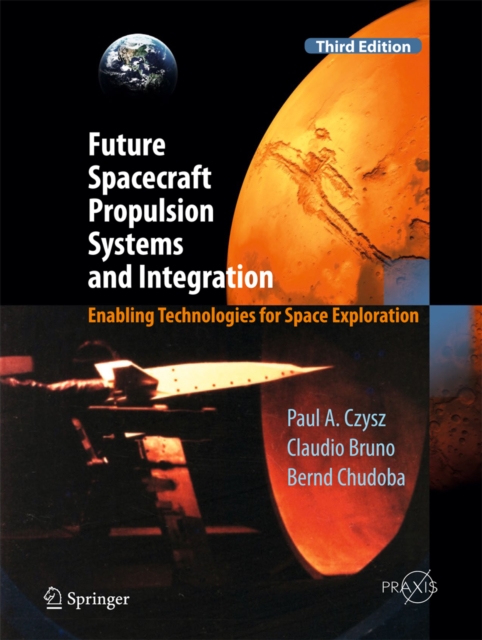
The updated and expanded third edition of this book focuses on the multi-disciplinary coupling between flight-vehicle hardware alternatives and enabling propulsion systems.
Expanding on the concept of the authors' previous book "e;Electroweak Processes in External Electromagnetic Fields, this new book systematically describes the investigation methods for the effects of external active media, both strong electromagnetic fields and hot dense plasma, in quantum processes.
Essential Astrophysics is a book to learn or teach from, as well as a fundamental reference volume for anyone interested in astronomy and astrophysics.
The updated and expanded third edition of this book focuses on the multi-disciplinary coupling between flight-vehicle hardware alternatives and enabling propulsion systems.
The existence of blue straggler stars, which appear younger, hotter, and more massive than their siblings, is at odds with a simple picture of stellar evolution.
The book describes current mission analysis and design techniques that may be applied to a very wide range of interplanetary missions from those targeting the inner planets to those destined for the outer planets and Solar System escape trajectories.
Einstein's Enigma or Black Holes in My Bubble Bath is a humourous and informal rendition of the story of gravitation theory from the early historic origins to the latest developments in astrophysics, focusing on Albert Einstein's theory of general relativity and black-hole physics.
The first book on the subject, this monograph examines the phenomenon of a huge sealed, freshwater lake, isolated from the rest of the world by kilometers' thick ice.
Analyses of photometric time series obtained from the MOST, CoRoT and Kepler space missions were presented at the 20th conference on Stellar Pulsations (Granada, September 2011).
Engineers need to acquire "e;Back-of-the-Envelope"e; survival skills to obtain rough quantitative answers to real-world problems, particularly when working on projects with enormous complexity and very limited resources.
This is the eleventh volume in the series Light Scattering Reviews, devoted to current knowledge of light scattering problems and both experimental and theoretical research techniques related to their solution.
In Future Spacecraft Propulsion Systems the authors demonstrate the need to break free from the old established concepts of expendable rockets, using chemical propulsion, and to develop new breeds of launch vehicle capable of both launching payloads into orbit at dramatically reduced cost, and for sustained operations in low-Earth orbit.
The revised edition of this practical, hands-on book discusses the range of launch vehicles in use today throughout the world, and includes the very latest details of some of the advanced propulsion systems currently being developed.