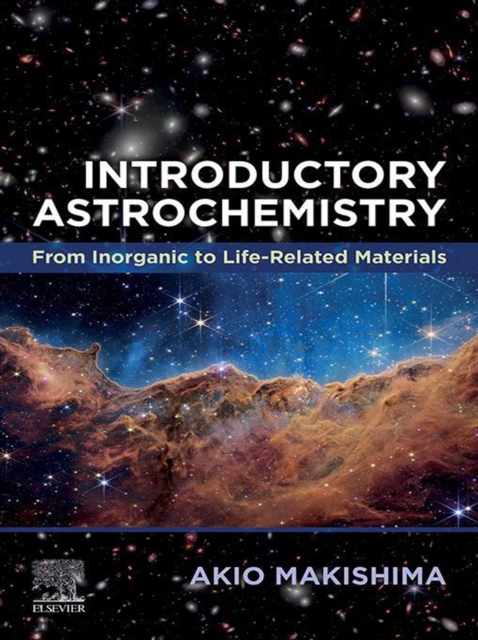
Introductory Astrochemistry: From Inorganic to Life-Related Materials provides a detailed examination of the origins of planets, their satellites, and the conditions that led to life itself.
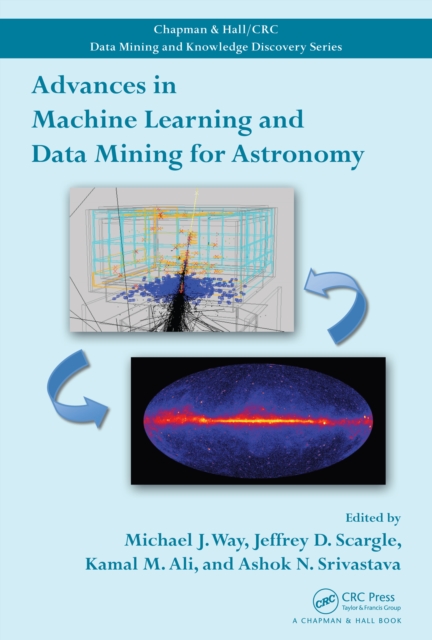
Advances in Machine Learning and Data Mining for Astronomy documents numerous successful collaborations among computer scientists, statisticians, and astronomers who illustrate the application of state-of-the-art machine learning and data mining techniques in astronomy.
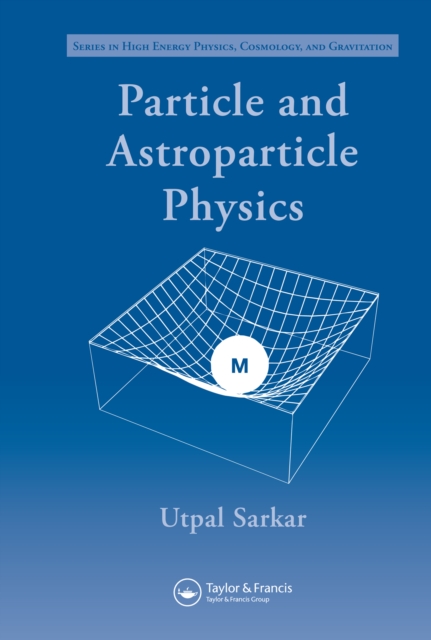
From superstring theory to models with extra dimensions to dark matter and dark energy, a range of theoretically stimulating ideas have evolved for physics beyond the standard model.
The increasing power of computer resources along with great improvements in observational data in recent years have led to some remarkable and rapid advances in astrophysical fluid dynamics.
Up to date and comprehensive in its coverage, Neutrinos in Particle Physics, Astrophysics and Cosmology reviews the whole landscape of neutrino physics, from state-of-the-art experiments to the latest phenomenological and theoretical developments to future advances.
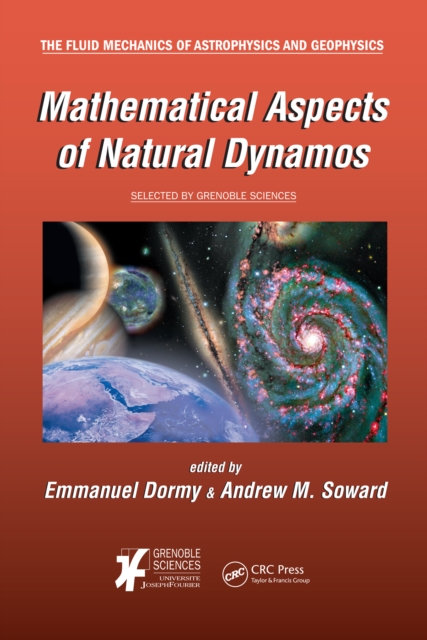
Although the origin of Earth's and other celestial bodies' magnetic fields remains unknown, we do know that the motion of electrically conducting fluids generates and maintains these fields, forming the basis of magnetohydrodynamics (MHD) and, to a larger extent, dynamo theory.
The Dictionary of Geophysics, Astrophysics, and Astronomy provides a lexicon of terminology covering fields such as astronomy, astrophysics, cosmology, relativity, geophysics, meteorology, Newtonian physics, and oceanography.
The revolution in twentieth-century physics has offered answers to many of the big questions of existence, such as the ultimate nature of things and how the universe came into being.
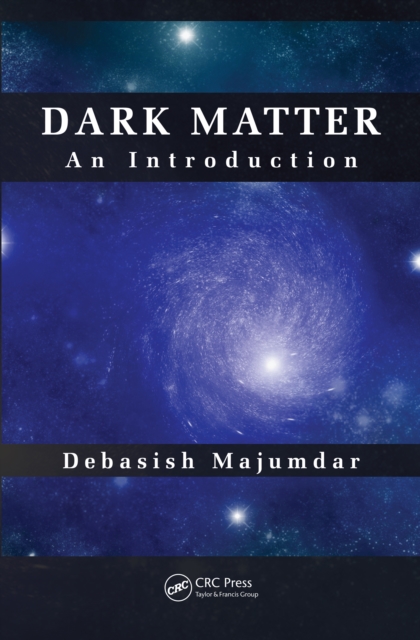
Dark Matter: An Introduction tackles the rather recent but fast-growing subject of astroparticle physics, encompassing three main areas of fundamental physics: cosmology, particle physics, and astrophysics.
Geophysical and Astrophysical Convection collects important papers from an international group of the world's foremost researchers in geophysical and astrophysical convection to present a concise overview of recent thinking in the field.
Copernicus (1938) presents an account of the astronomer Copernicus, and of the historic book in which he laid the foundations of the heliocentric theory of the planetary motions.
Copernicus (1938) presents an account of the astronomer Copernicus, and of the historic book in which he laid the foundations of the heliocentric theory of the planetary motions.
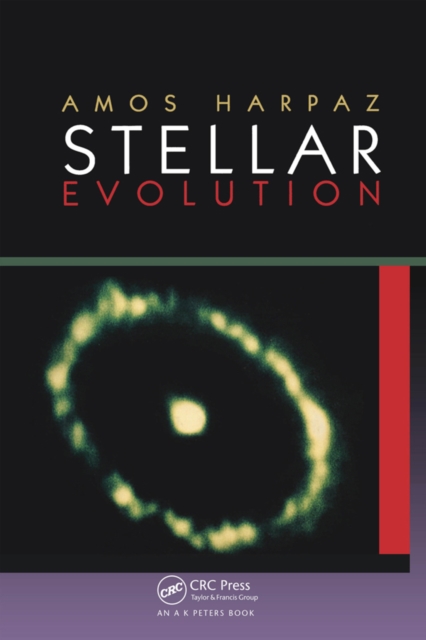
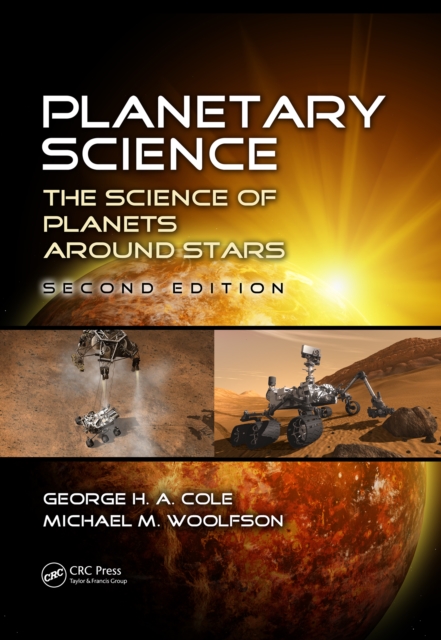
Since the publication of the popular first edition, stellar and planetary scientists have produced numerous new observations, theories, and interpretations, including the "e;demotion"e; of our former ninth planet Pluto as a dwarf planet.
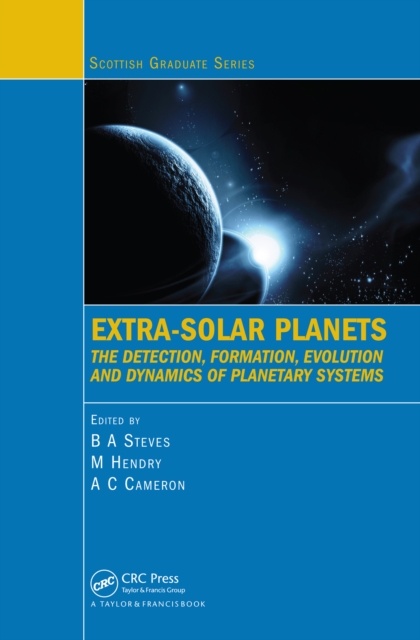
Since the discovery of the first exoplanet orbiting a main sequence star in 1995, nearly 500 planets have been detected, with this number expected to increase dramatically as new ground-based planetary searches begin to report their results.
How the groundbreaking science of body clocks can help you sleep better, feel happier and improve your overall health'The Inner Clock explores the strange new science of why your circadian rhythms fall out of sync and how to get them back on track to live a happier, healthier life' JAMES NESTOR, BESTSELLING AUTHOR OF BREATH'Secrets to better sleep .
عندما شرعت في كتابة "e;الطريق إلى الحقيقة"e; كان لابد أن تكون نقطة البداية هي الكون، فليس منطقيًا أن نكون جزءًا من هذا الكون و لا نتعرف عليه قدر المستطاع، كيف كانت بدايته؟ و كيف يعمل؟ وكيف يمكن أن تكون نهايته؟، فمما لا شك فيه أن الإجابات على هذه الأسئلة وغيرها ليست فقط نوع من الفضول الفطري، بل إنها بلا شك تحدد نظرتنا للحياة و فلسفة وجودنا على هذه الأرض.