This volume aims to make Stephen of Pisa and Antioch's work on the celestial sciences accessible to a wider readership, providing not just the text but a translation and introduction as well.
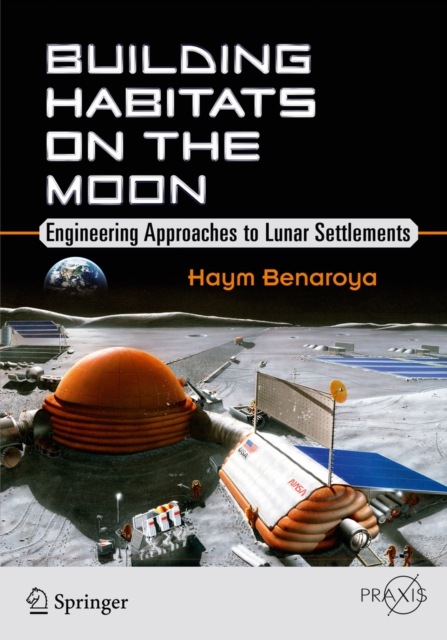
This book provides an extensive overview of the protection of cultural heritages sites on the Moon (humanity's lunar heritage) and the various threats they face.
This book reports on the extraordinary observation of TeV gamma rays from the Crab Pulsar, the most energetic light ever detected from this type of object.
Despite the success of general relativity in explaining classical gravitational phenomena, several problems at the interface between gravitation and high energy physics still remain open.
This book presents the fundamental principles of Classical thermodynamics, supplemented by an overview of Statistical Thermodynamics, and explores their applications to a wide variety of problems in the Earth and Planetary sciences, spanning the range from the Earth's core, mantle and crust, aqueous solutions and fluid-rock interactions to solar nebula, terrestrial planets and asteroids.
This textbook develops Special Relativity in a systematic way and offers problems with detailed solutions to empower students to gain a real understanding of this core subject in physics.
This book provides a comprehensive overview of the chemistry of CO2 in relation to surface interactions and photocatalytic transformation by UV radiation.
Based on a Simons Symposium held in 2018, the proceedings in this volume focus on the theoretical, numerical, and observational quest for dark matter in the universe.
In this comprehensive and interdisciplinary volume, former NASA Chief Historian Steven Dick reflects on the exploration of space, astrobiology and its implications, cosmic evolution, astronomical institutions, discovering and classifying the cosmos, and the philosophy of astronomy.
Written by a leading expert on comets, this textbook is divided into seven main elements with a view to allowing advanced students to appreciate the interconnections between the different elements.
This book explores the dynamics of planetary and stellar fluid layers, including atmospheres, oceans, iron cores, and convective and radiative zones in stars, describing the different theoretical, computational and experimental methods used to study these problems in fluid mechanics, including the advantages and limitations of each method for different problems.
This book derives and analyzes all solutions to the Kepler problem with dark energy (DE), presenting significant results such as: (a) all radial infinite motions obey Hubble's law at large times; (b) all orbital infinite motions are asymptotically radial and obey Hubble's law; (c) infinite orbital motions strongly dominate the finite ones.
After an extensive introduction to the asymptotic safety approach to quantum gravity, this thesis explains recent key advances reported in four influential papers.
This book explains how the achievements of the Space Shuttle, the world's first reusable manned spacecraft, were built on the foundation of countless technical challenges.
This volume collects both essays and fictional material around two core topics in the long career of the Serbian writer, essayist, researcher, publisher and translator.
This book is for the aging amateur astronomy population, including newcomers to astronomy in their retirement and hobbyists who loved peering through a telescope as a child.
This book is a distinctively original biography of Galileo Galilei, probably the last eclectic genius of the Italian Renaissance, who was not only one of the greatest scientists ever, but also a philosopher, a theologian, and a man of great literary, musical, and artistic talent - "e;The Tuscan Artist"e;, as the poet John Milton referred to him.
On the occasion of the 50th anniversary of the Outer Space Treaty this book gives a first insight into where the next generation considers room for further improvement of the Outer Space Treaty in order to cope with upcoming aspects such as providing solutions for the emerging commercial, economic, environmental and social questions.
Here is an accurate and readable translation of a seminal article by Henri Poincare that is a classic in the study of dynamical systems popularly called chaos theory.