Resulting from the authors' deep research into these two pre-Shuttle astronaut groups, many intriguing and untold stories behind the selection process are revealed in the book.
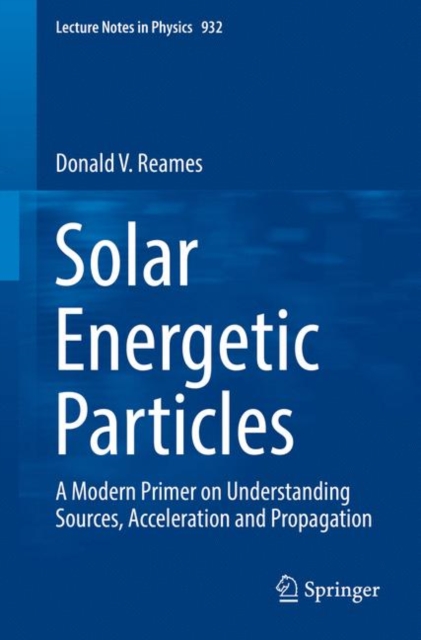
This concise primer introduces the non-specialist reader to the physics of solar energetic particles (SEP) and systematically reviews the evidence for the two main mechanisms which lead to the so-called impulsive and gradual SEP events.
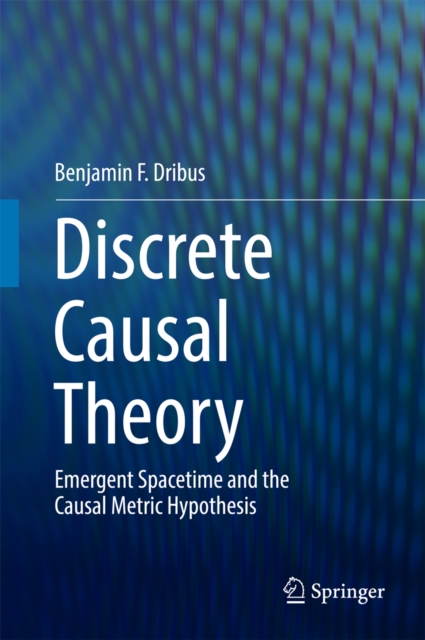
This book evaluates and suggests potentially critical improvements to causal set theory, one of the best-motivated approaches to the outstanding problems of fundamental physics.
This thesis focuses on the very high Mach number shock wave that is located sunward of Saturn's strong magnetic field in the continuous high-speed flow of charged particles from the Sun (the solar wind).
This volume contains selected and expanded contributions presented at the 3rd Symposium on Space Optical Instruments and Applications in Beijing, China June 28 - 29, 2016.
This second edition of Mike Inglis's classic guide to observing the Milky Way in the Northern Hemisphere updates all of the science with new findings from the astrophysics field, as well as featuring a larger format with entirely re-drawn maps.
Radio astronomy was born during the Second World War, but as this book explains, the history of early Dutch radio astronomy is in several respects rather anomalous in comparison to the development of radio astronomy in other countries.
The thesis presents a tool to create rubble pile asteroid simulants for use in numerical impact experiments, and provides evidence that the asteroid disruption threshold and the resultant fragment size distribution are sensitive to the distribution of internal voids.
This book acts as a manual for the ancient methods of navigating by the stars, which continue to provide the sailor or pilot with a timeless means of determining location.
This brief presents a concise description of the existing spaceport market, the technologies being tested and developed at them, and the private companies that are making them possible.
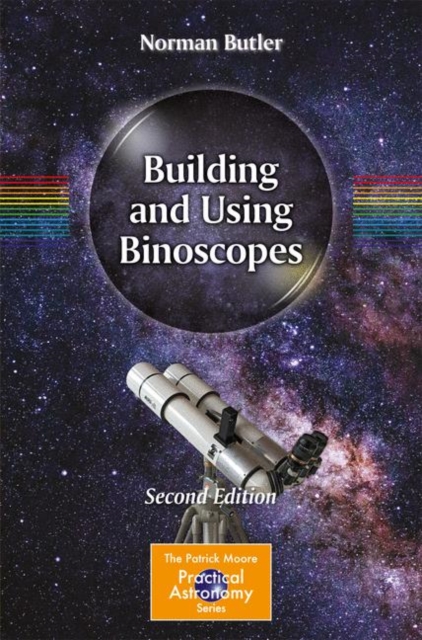
Covering both homemade and commercial products, this book provides the reader with simple and straightforward information about the modeling, building, and use of binoscopes.
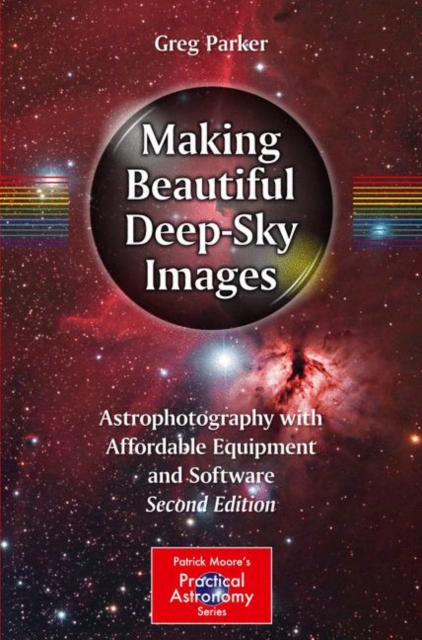
In this updated version of his classic on deep-sky imaging, astrophotographer Greg Parker describes how the latest technology can help amateur astronomers process their own beautiful images.
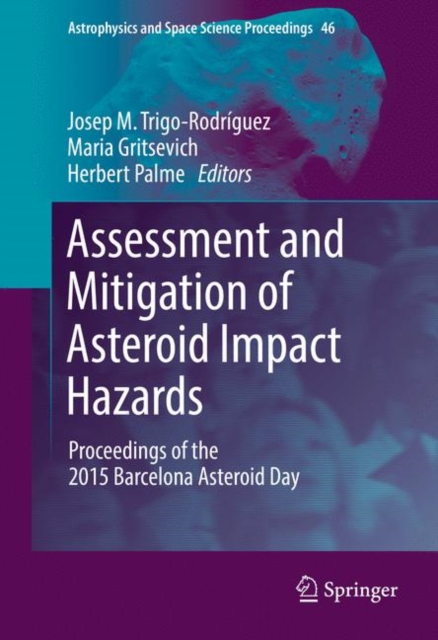
This volume is a compilation of the research presented at the International Asteroid Day workshop which was celebrated at Barcelona on June 30th, 2015.
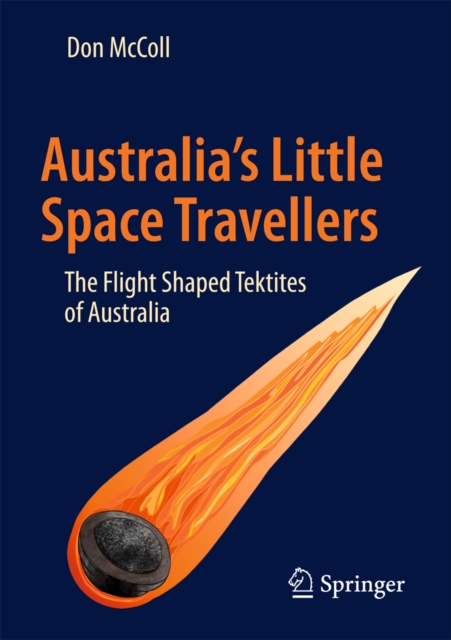
This book provides a showcase for the incredibly well-preserved flight-textured tektites of southern Australia, which are the world's finest known examples.
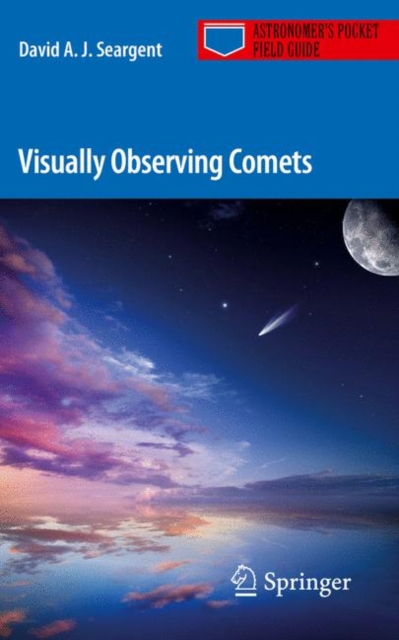
In these days of computers and CCD cameras, visual comet observers can still contribute scientifically useful data with the help of this handy reference for use in the field.
The series of texts composing this book is based on the lectures presented during the II Jose Plinio Baptista School of Cosmology, held in Pedra Azul (Espirito Santo, Brazil) between 9 and 14 March 2014.
This thesis is a comprehensive work that addresses many of the open questions currently being discusssed in the very-high-energy (VHE) gamma-ray community.
This textbook presents the established sciences of optical, infrared, and radio astronomy as distinct research areas, focusing on the science targets and the constraints that they place on instrumentation in the different domains.
This textbook presents ultraviolet and X-ray astronomy, gamma-ray astronomy, cosmic ray astronomy, neutrino astronomy, and gravitational wave astronomy as distinct research areas, focusing on the astrophysics targets and the requirements with respect to instrumentation and observation methods.
This thesis studies various aspects of non-critical strings both as an example of a non-trivial and solvable model of quantum gravity and as a consistent approximation to the confining flux tube in quantum chromodynamics (QCD).
This book sheds new light on topological defects in widely differing systems, using the Velocity-Dependent One-Scale Model to better understand their evolution.
This book marks the centennial of Tebbutt's death with a major biographical account surveying his scientific contributions to astronomy, prefaced with a foreword by Sir Patrick Moore.
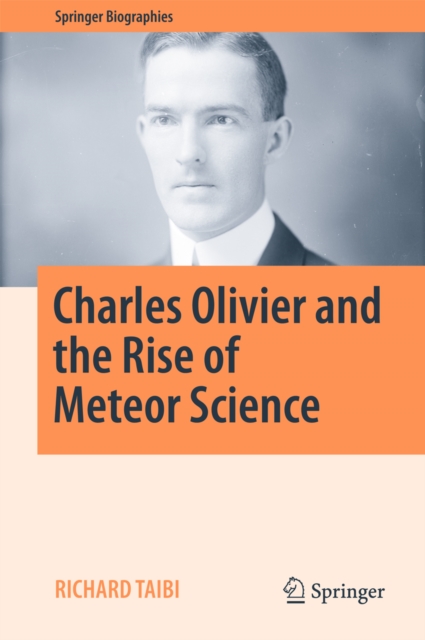
This fascinating portrait of an amateur astronomy movement tells the story of how Charles Olivier recruited a hard-working cadre of citizen scientists to rehabilitate the study of meteors.
This thesis describes the search for Dark Matter at the LHC in the mono-jet plus missing transverse momentum final state, using the full dataset recorded in 2012 by the ATLAS Experiment.
In this compendium of essays, some of the world's leading thinkers discuss their conceptions of space and time, as viewed through the lens of their own discipline.
This book covers the possible manned mission to Mars first discussed in the 1950s and still a topic of much debate, addressing historic and future plans to visit the Red Planet.
This monograph traces the development of our understanding of how and where energetic particles are accelerated in the heliosphere and how they may reach the Earth.
This thesis presents the first measurement of charmed D0 meson production relative to the reaction plane in Pb-Pb collisions at the center-of-mass energy per nucleon-nucleon collision of vsNN = 2.
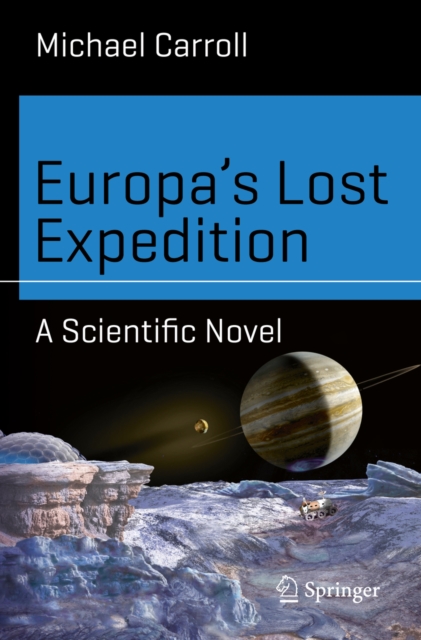
This classically styled, chilling murder mystery about an expedition under the ice of Jupiter's ocean moon Europa, backed up by the latest scientific findings on this icy satellite.
This book comprises a fascinating collection of contributions on the Merz telescopes in Italy that collectively offer the first survey on historical large refracting telescopes in the country, drawing on original documents and photographs.
This thesis presents several significant new results that shed light on two major puzzles of modern cosmology: the nature of inflation, the very early phase of the universe that is thought to have given rise to the large-scale structures that we observe today; and that of the current accelerated expansion.
This comprehensive textbook is devoted to classical and quantum cosmology, with particular emphasis on modern approaches to quantum gravity and string theory and on their observational imprint.