This book aims to describe the role of silicon in the environment from the biogeochemical cycle of terrestrial ecosystems, uptake to cellular and tissue bioaccumulation and its effects in mitigating abiotic and biotic stresses.
This book aims to describe the role of silicon in the environment from the biogeochemical cycle of terrestrial ecosystems, uptake to cellular and tissue bioaccumulation and its effects in mitigating abiotic and biotic stresses.
The Cardiovascular Glycocalyx in Health and Disease, Volume 91 gives updates on the glycocalyx function through the cardiovascular system and its integration in whole system physiology.
This book provides practical information on a whole set of protein experiments for advanced structural biology, such as X-ray crystallography, NMR, electron microscopy, advanced mass spectroscopy, and surface plasmon resonance, as well as a wide variety of expression systems including eukaryotic and in vitro expression.
This volume discusses the cellular and molecular techniques used to study and characterize the different components of the CRAC channel signaling pathway.
Integrated Methods in Protein Biochemistry: Part C, Volume 679 in the Methods in Enzymology series, highlights new advances in the field with this new volume presenting interesting chapters on a variety of topics, including NanoBiT-based methods to monitor the activation and modulation of RTKs, The interplay of G-protein y subunit and PLC- enzyme in PIP2 hydrolysis and downstream signaling, Biochemical Analysis of Protein-Protein Interfaces underlying the regulation of Bacterial Secretion Systems, Probing the structure and function of N-acetylmannosamine-6-phosphate 2-epimerase, Spectroscopic analysis of cysteine dioxygenase: a mammalian thiol-dioxygenase, DeGlyPHER: MS-based analysis of viral spike N-glycoforms, and more.
This second edition expands on the previous edition with new chapters that are suitable for newcomers, as well as more detailed chapters that cover protein stability and storage, avoiding proteolysis during chromatography, protein quantitation methods including immuno-qPCR, and the challenges that scale-up of production poses to the investigator.
Over the past twenty years, the development of chromatin immunoprecipitation, or ChIP, assays has immensely enhanced the biological significance of the multifaceted DNA-binding proteins.
This volume provides a comprehensive guide on the Cyr61 (Cysteine-rich 61) (CCN) family of proteins and genes from basic research to cutting-edge methodologies and state-of-the-art techniques.
Antioxidants, Volume 121 in the Vitamins and Hormones series, highlights new advances in the field, with this new volume presenting interesting chapters written by an international board of authors.
This volume focuses on mono-ADP-ribosylation and enzymes that use NAD+ including Sirtuins, PARPs, and bacterial and eukaryotic ADP-ribosyltransferases.
Biochemical Pathways and Environmental Responses in Plants, Part B, Volume 682 in the Methods in Enzymology series, highlights advances in the field with this new volume presenting chapters on MIE 681/682: Biochemical pathways and environmental responses in plants, Structure, function, and engineering of plant polyketide synthases, A sensitive LC-MS/MS assay for enzymatic characterization of methylthioalkylmalate synthase involved in glucosinolate side-chain elongation, Assaying formate-tetrahydrofolate ligase with monoglutamylated and polyglutamylated substrates using a fluorescence-HPLC based assay, An Approach to Nearest Neighbor Analysis of Pigmented Protein Complexes by Using Chemical Crosslinking in Combination with Mass Spectrometry, Biochemical characterization of plant aromatic aminotransferases, and much more.
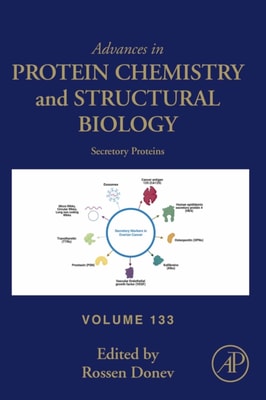
Secretory Proteins, Volume 133 in the Advances in Protein Chemistry and Structural Biology series highlights new advances in the field, including chapters on Proprotein Convertases regulate trafficking and maturation of key proteins within the secretory pathway, Secretory Proteins in Cancer Diagnosis, Senescent Cells and SASP in Cancer Microenvironment: new approaches in cancer therapy, Autophagy for secretory protein: Therapeutic targets in cancer, Secretory proteins and pathways of secretion of osteosarcoma, Monocyte secretory proteins as drug targets for arresting progression of atherosclerosis, The secretory phenotypes of envenomed cells: insights into venom cytotoxicity, Macromolecules for secretory pathway in SARS-CoV-2 infection, and much more.
This thorough volume explores predicting one-dimensional functional properties, functional sites in particular, from protein sequences, an area which is getting more and more attention.
Metalloproteins are involved in many key biological processes such as gas transport and metabolism, photosynthesis, cell respiration, the Krebs cycle and many other vital redox reactions.
Protein microarrays have been used for a wide variety of important tasks, such as identifying protein-protein interactions, discovering disease biomarkers, identifying DNA-binding specificity by protein variants, and for characterization of the humoral immune response.
Originally published in 1990, this volume addresses issues surrounding global ecological changes and sustainability of present patterns of urbanisation and industrialisation.
This new edition presents principle methods in capillary electrophoresis (CE) separation involving CZE, MEKC, MECC, NACE, and corresponding hyphenated techniques to organic mass spectrometry and ICP-MS.
Baculovirus Expression Protocols is a detailed guide for using the baculovirus expression vector system (BEVS) and/or insect cells to produce recombinant proteins.
This book is designed to serve as a textbook for core as well as elective courses offered to undergraduate and advanced undergraduate students enrolled in chemistry.
This proceedings volume results from the NATO Advanced Research Workshop on 'Biomarkers of Radiation in the Environment: Robust Tools for Risk Assessment (BRITE)'.
This book provides a comprehensive overview of the fundamental aspects of protein-protein interactions (PPI), including a detailed account of the energetics and thermodynamics involved in these interactions.
This book aims to present the age-related alterations in redox signaling networks and their diagnostic biomarkers in aging cells using multidisciplinary approach.
This book explains how peptide-based drug design works, what steps are needed to develop a peptide-based therapeutic, and challenges in synthesis as well as regulatory issues.
This book comprehensively reviews the proteins associated with neurodevelopmental disorders, including autism spectrum disorder (ASD) and attention deficit hyperactivity disorder (ADHD).
This book is a compilation of the most relevant molecular mechanisms and cellular processes that are involved in the infection processes in relation to lipid metabolism.
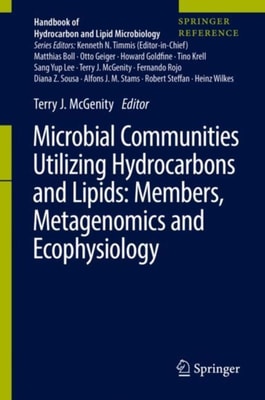
This book provides comprehensive, authoritative descriptions of the microbes involved in cleaning up oil spills and degrading climate-altering hydrocarbons such as methane, and has detailed discussions about the taxonomy, ecology, genomics, physiology and global significance of these hydrocarbon-degrading microbes.
This book provides comprehensive, authoritative discussions about microbial communities in environments that are rich in hydrocarbons, crude oil or lipids.
In this book, plant biology is considered from the perspective of plants and their surrounding environment, including both biotic and abiotic interactions.
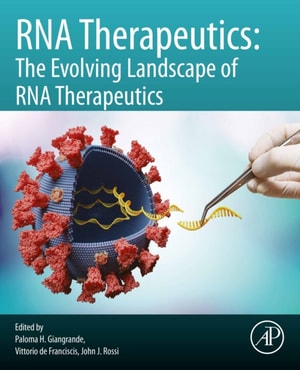
RNA Therapeutics: The Evolving Landscape of RNA Therapeutics provides a comprehensive overview of RNA therapeutic modalities, from bench-to-bedside, with an emphasis on the increasingly impactful areas of gene therapy, oligonucleotide therapeutics, gene editing and delivery.
The purpose of this book is to introduce the classified chemical components of hypoglycemic compounds in natural products, summarize the recent research progress of natural products with hypoglycemic activity in the past 20 years, and provide the original analysis and development opinions of relevant scholars.
The structural complexity and the synthetic challenges facing glycans have historically hampered efforts to study their multifaceted roles and the application of carbohydrates in drug development.
This unique book covers the latest developments in coupling and decoupling of biomolecules containing functionalized carbohydrate components, being one of the first collections in this important area of applied medicinal chemistry.