Transcription factors are the molecules that the cell uses to interpret the genome: they possess sequence-specific DNA-binding activity, and either directly or indirectly influence the transcription of genes.
Francis BACON, in his Novum Organum, Robert BOYLE, in his Skeptical Chemist and Rene DESCARTES, in his Discourse on Method; all of these men were witnesses to the th scientific revolution, which, in the 17 century, began to awaken the western world from a long sleep.
This book covers all aspect of legume production management technologies, plant ecological response, nutrients management, biological nitrogen fixation, molecular approaches, potential cultivars, biodiversity management under climate change.
r ed Algae in Genome Age book most people reading this book have childhood memories about being enthralled at the beach with those rare and mysterious living forms we knew as seaweeds.
The aim of this manual is to provide a comprehensive guide to the methods involved in collecting, preparing and screening plants for bioactive properties for manipulating key ruminal fermentation pathways and against gastrointestinal pathogens.
"e;Polymeric and Nanostructured Macromolecules"e; presents the recent advances made in the synthesis, characterization, and applications of polymeric macromolecules.
Environmental insults such as extremes of temperature, extremes of water status as well as deteriorating soil conditions pose major threats to agriculture and food security.
The birth and the development of molecular biology and, subsequently, of genetic engineering and biotechnology cannot be separated from the advancements in our knowledge of the genetics, biochemistry and physiology of bacteria and bacter- phages.
Lipids in Photosynthesis: Essential and Regulatory Functions, provides an essential summary of an exciting decade of research on relationships between lipids and photosynthesis.
Earlier works on plant essential elements have revealed a series of complicated, counter-intuitive relationships among various chemical elements in different plant species, due to both unlike usage of certain elements in plants and to different carriers effecting resorption and transport.
As the title suggests, Isotope Effects in the Chemical, Geological and Bio Sciences deals with differences in the properties of isotopically substituted molecules, such as differences in the chemical and physical properties of water and the heavy waters.
Biotechnology is a recognized research area that has increasingly advanced into new technologies and modern practices raising several legal, ethical and regulatory issues.
Following their own brilliant careers in haeme protein research, the outstanding scientists Jonathan and Beatrice Wittenberg continue to provide inspiration to the research community in the study of oxygen-binding proteins.
Dieses fundierte Lehrbuch führt systematisch in die faszinierende Chemie des Lebens ein und vermittelt die essentiellen Grundlagen der Biochemie und organischen Chemie für Medizinstudierende und interessierte Leser.
Proteins: Concepts in Biochemistry teaches the biochemical concepts underlying protein structure, evolution, stability, folding, and enzyme kinetics, and explains how interactions in macromolecular structures determine protein function.
This volume covers a wide array of topics on protein-protein docking ranging from the fundamentals of the method and its recent developments to docking tools and examples of protein-protein docking applications.
This book offers a comprehensive perspective of herbal medicine phytochemistry and explores the application of plant extracts as bioactive compounds in disease prevention and treatment in modern or traditional medicine.
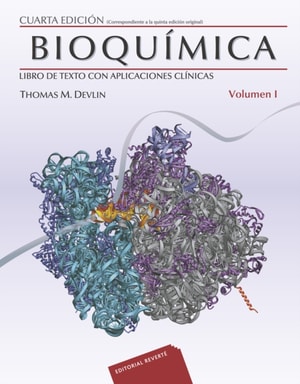
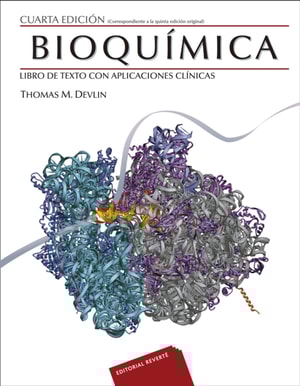
Los objetivos de esta cuarta edición (correspondiente a la traducción de la quinta edición original) del Libro de Texto de Bioquímica con Aplicaciones Clínicas son: presentar una discusión clara y precisa de la bioquímica de las células de mamífero y, cuando esté justificado, de células procarióticas y eucarióticas; relacionar los hechos bioquímicos a nivel celular con los procesos fisiológicos que tienen lugar en el animal entero; y citar ejemplos de procesos bioquímicos anormales en enfermedades humanas.
Los objetivos de esta cuarta edición (correspondiente a la traducción de la quinta edición original) del Libro de Texto de Bioquímica con Aplicaciones Clínicas son: presentar una discusión clara y precisa de la bioquímica de las células de mamífero y, cuando esté justificado, de células procarióticas y eucarióticas; relacionar los hechos bioquímicos a nivel celular con los procesos fisiológicos que tienen lugar en el animal entero; y citar ejemplos de procesos bioquímicos anormales en enfermedades humanas.
Desde su primera edición la contribución de este libro a la enseñanza de la bioquímica ha sido relevante, y ha tenido una influencia decisiva en la pedagogía de la asignatura, ofreciendo una escritura excepcionalmente clara, graficas innovadoras y la cobertura de las últimas técnicas y avances en investigación.
Desde su primera edición la contribución de este libro a la enseñanza de la bioquímica ha sido relevante, y ha tenido una influencia decisiva en la pedagogía de la asignatura, ofreciendo una escritura excepcionalmente clara, graficas innovadoras y la cobertura de las últimas técnicas y avances en investigación.
La originalidad del abordaje de los temas estriba, a diferencia de los libros clásicos de problemas, en que hace un recorrido sistemático de toda la Bioquímica no trata de forma exhaustiva sólo asuntos monográficos, ni completa con cuestiones a otros textos ya famosos (Stryer, Lehninger, Alberts, Darnell,.
El objetivo de este libro es ordenar los principios y conceptos básicos de la Bioquímica para presentarlos en una estructura clara que muestre al lector el camino hacia el fascinante cosmos de las biomoléculas y lo guíe en los temas más importantes.
El contenido de esta obra explica de manera sencilla y ampliamente ilustrada, los distintos procesos bioquímicos que tienen lugar en los componentes celulares, así como sus interrelaciones.
Los objetivos de esta edición del Libro de Texto de Bioquímica con Aplicaciones Clínicas son: presentar una discusión clara y precisa de la bioquímica de las células de mamífero y, cuando esté justificado, de células procarióticas y eucarióticas; relacionar los hechos bioquímicos a nivel celular con los procesos fisiológicos que tienen lugar en el animal entero; y citar ejemplos de procesos bioquímicos anormales en enfermedades humanas.
En esta obra se ha llevado a cabo un intento de profundizar en lo que podría describirse, a falta de una definición mejor, com la aplicación a los sistemas biológicos de la teoría de la Ingeniería Química del diseño de ractores y procesos.
El libro está dirigido sobre todo a profesionales sanitarios; las Escuelas de Enfermería lo encontrarán especialmente adecuado para sus cursos de Bioquímica y también será de utilidad para estudiantes de Medicina, e incluso médicos en ejercicio que deseen actualizar conocimientos.
Protocols in Biochemistry and Clinical Biochemistry, second edition, offers clear, applied instruction in fundamental biochemistry methods and protocols, from buffer preparation to nucleic acid purification, protein, lipid, carbohydrate, and enzyme testing, and clinical testing of vitamins, glucose, and cholesterol levels, among other diagnostics.
This brief describes various methods of chitosan nano-materials synthesis, with detailed discussion of various factors effecting its synthesis process, stability and physicochemical properties.