Ideas in Chemistry and Molecular Sciences gives an account of the most recent results of research in life sciences in Europe based on a selection of leading young scientists participating in the 2008 European Young Chemists Award competition.
Bringing the power of biochemical analysis to toxicology, this modern reference explains genotoxicity at the molecular level, showing the links between a DNA lesion and the resulting cellular or organismic response.
Divided into five major parts, the two volumes of this ready reference cover the tailoring of theoretical methods for biochemical computations, as well as the many kinds of biomolecules, reaction and transition state elucidation, conformational flexibility determination, and drug design.
This reference handbook is the first to provide a comprehensive overview, systematically characterizing all known transporters involved in drug elimination and resistance.
This first book on the market covers the many new and important RNA species discovered over the past five years, explaining current methods for the enrichment, separation and purification of these novel RNAs.
By covering the full spectrum of topics relevant to peptidic drugs, this timely handbook serves as an introductory reference for both drug developers and biomedical researchers interested in pharmaceutically active peptides, presenting both the advantages and challenges associated with this molecular class.
In this first comprehensive resource to cover the application of single molecule techniques to biological measurements, the pioneers in the field show how to both set up and interpret a single molecule experiment.
Perfectly timed, this handbook covers many important aspects of the topic that have only recently been understood -- making this a truly comprehensive work.
The first comprehensive coverage of this unique and interdisciplinary field provides a complete overview, covering such topics as chemoenzymatic synthesis, microbial production of DNA building blocks, asymmetric transformations by coupled enzymes and much more.
Edited by one of the main driving forces behind the field's momentous rise in recent years, this one-stop reference is the first comprehensive resource to integrate recent advances.
The only resource to systematically review current experimental methods, this handy reference enables researchers to select the best solution for their experimental problems.
This long-awaited first guide to sample preparation for proteomics studies overcomes a major bottleneck in this fast growing technique within the molecular life sciences.
With its detailed description of membrane protein expression, high-throughput and genomic-scale expression studies, both on the analytical and the preparative scale, this book covers the latest advances in the field.
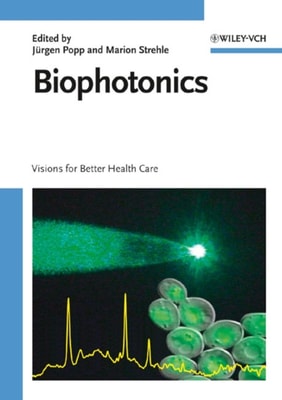
An account of a three-year research program funded by the German government, in which physicists and physical chemists set off together with biologists and physicians to develop new techniques for medical and biological problems and ended up with sophisticated scientific solutions and innovative equipment, partly ready for the market.
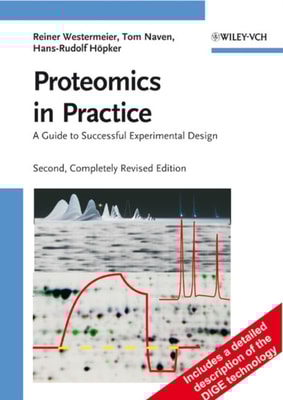
Still the only concise practical guide to laboratory experiments in proteomics, this new edition now also covers DIGE technology and liquid-chromatography, while the troubleshooting section has been considerably extended.
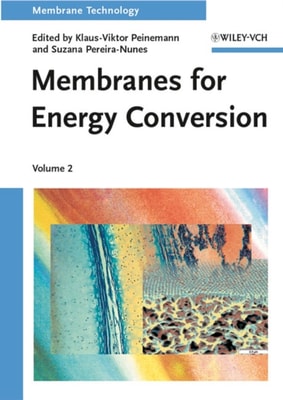
Focusing on recent developments in innovative energy conversion, this second volume features emerging applications with the capacity to transform the entire energy economy.
Based on results previously restricted for military use and inaccessible to the public, this practice-oriented handbook introduces the use of enzymes for fast and efficient decontamination of B/C weapons in various scenarios, including terrorist attacks.
This ready reference is the first to collate the interdisciplinary knowledge from materials science, bioengineering and nanotechnology to give an in-depth overview of the topic.
The authors describe basic theoretical concepts of vibrational spectroscopy, address instrumental aspects and experimental procedures, and discuss experimental and theoretical methods for interpreting vibrational spectra.
Meeting the need for a book on developing and using new methods to investigate membrane proteins, this is the first of its kind to present the full range of novel techniques in one resource.
This mini-encyclopedia contains more than 1,500 alphabetical entries from the entire field of peptide science in one handy volume, as well as the technical terms, acronyms and concepts used in peptide chemistry.
The second volume in a new series dedicated to protein degradation, this book discusses the mechanism and cellular functions of targeted protein breakdown via the ubiquitin pathway.
In this first integrated view, practically each of the world's leading experts has contributed to this one and only authoritative resource on the topic.
Barrier, reservoir, target site - those are but some of the possible functions of biological lipid membranes in the complex interplay of drugs with the organism.
Bioinformatics, in this context the application of computer science to biological problems, has become an indispensable part of any research in the biosciences.
Proteomics - the analysis of the whole set of proteins and their functions in a cell - is based on the revolutionary developments which have been achieved in protein analysis during the last years.
As research on the human, animal, plant and microbial genomes matures towards descriptive fullness, the need for understanding the proteome has clearly emerged as the next major endeavor of life sciences.
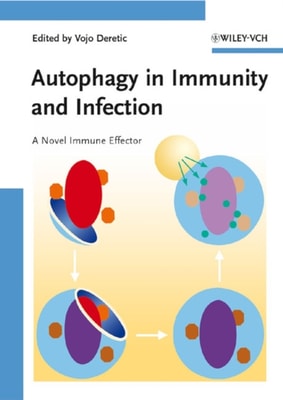
This first book to cover this new topic at the interface of cell biology, immunology and infection biology offers a unique insight as to how the innate and possibly the adaptive immune system are shaped by cellular mechanisms.
From skillful handling of the wide range of technologies to successful applications in drug discovery -- this handbook has all the information professional proteomics users need.
Filling the gap created over the past five years, during which many new techniques have entered the market, this book is directed at both the new and the experienced ion channel researcher wishing to learn more about the considerations and methods for studying recombinant ion channels.
This keenly awaited first overview of the field represents a complete guide to the structure and function of the most important mammalian cell membrane organelles.
Edited by one of the leading experts in the field, this book fills the need for a book presenting the most important methods for high-throughput screenings and functional characterization of enzymes.
The ability to introduce non-canonical amino acids in vivo has greatly expanded the repertoire of accessible proteins for basic research and biotechnological application.