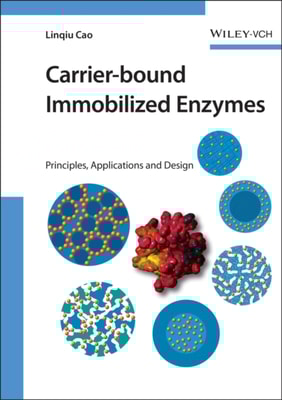
Carrier-bound Immobilized Enzymes The first systematic overview of this key technique since the early 1990s, this authoritative reference is the only handbook available to include all recent developments.
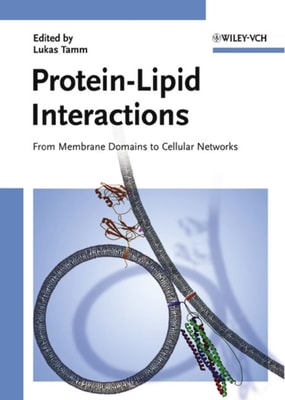
In 17 contributions by leading research groups, this first comprehensive handbook in the field covers the interactions between proteins and lipids that make the fabric of biological membranes from every angle.
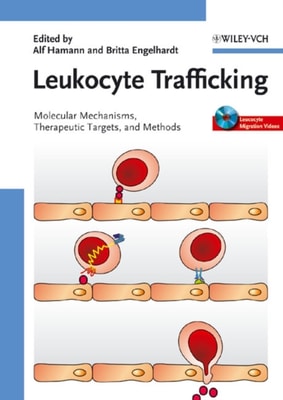
In this first book to provide an overview of applications of proteomics in the discovery of new diagnostic, prognostic and therapeutic targets, a team of international specialists from research institutions, hospitals and companies contribute with their specific expertise.
With its focus on industrial pharmaceutical research, written by international experts from the industry, this book fills in a gap in the existing literature.
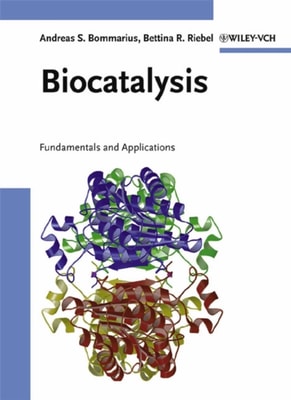
The lock-and-key principle formulated by Emil Fischer as early as the end of the 19th century has still not lost any of its significance for the life sciences.
This is the very first book to focus on this new approach that will eventually aid in developing new diagnostic markers and therapies for controlling and treating heart disease - the number-one killer in the industrialized world.
In light of the increasing importance of these proteins and their ligands for our understanding of cellular growth, differentiation, and development, as well as of diseases such as obesity, insulin resistance, atherosclerosis, cancer, and inflammation, a team of internationally renowned editors and authors have compiled here the very first comprehensive book on these topics.
This book is the first of its kind in the field of protein microarrays and addresses novel strategies for constructing highly functional and biocompatible microarrays for screening proteins.
Leading experts from all over the world present an overview of the use of enzymes in industry for: - the production of bulk products, such as glucose, or fructose - food processing and food analysis - laundry and automatic dishwashing detergents - the textile, pulp and paper and animal feed industries - clinical diagnosis and therapy - genetic engineering.
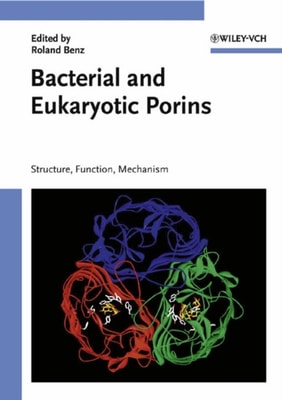
This first book dedicated to the topic relates the known physiological functions of porins to their molecular structure and mechanism, as documented by various in vitro and in vivo methods, including the generation of null mutants in mice.
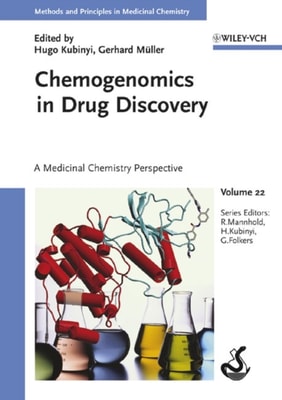
Chemogenomics brings together the most powerful concepts in modern chemistry and biology, linking combinatorial chemistry with genomics and proteomics.
Central Asia is a large and understudied region of varied geography, ranging from the high passes and mountains of Tian Shan, to the vast deserts of Kyzyl Kum, Taklamakan to the grassy treeles steppes.
This text details the plant-assisted remediation method, "e;phytoremediation"e;, which involves the interaction of plant roots and associated rhizospheric microorganisms for the remediation of soil contaminated with high levels of metals, metalloids, fuel and oil hydrocarbons, nano particles, pesticides, solvents, organic compounds and various other contaminants.
This textbook provides a structured, easy to understand and thorough insight into the mode of function of plant secondary metabolites in plants and humans.
This book provides discussion on the importance of hydroponics with particular focus on the nutrient film technique for the production of premium, fresh vegetables in a highly economically feasible method.
This updated monograph deals with methanogenic endosymbionts of anaerobic protists, in particular ciliates and termite flagellates, and with methanogens in the gastrointestinal tracts of vertebrates and arthropods.
This book offers an overview of the diverse fields application of proteases (also termed proteolytic enzymes or proteinases), including food science and technology, pharmaceutical industries, and detergent manufacturing, reviewing the advances in the biotechnological application plant proteolytic enzymes over the last decade.
This book provides a comprehensive overview of modern computer-based techniques for analyzing the structure, properties and dynamics of biomolecules and biomolecular processes.
This work brings together a wealth of data regarding the reference values and factors of variation in biochemical parameters used by camel veterinarians and scientists to determine these animals' nutritional and clinical status.
This book presents a detailed overview and critical evaluation of recent advances and remaining challenges in improving nutritional quality and/or avoiding the accumulation of undesirable substances in plants using a variety of strategies based on modern biological tools and techniques.
This book summarizes the latest research results on the role of reactive oxygen species (ROS) in plants, particularly in many abiotic stresses, and their regulation.
The leaf is an organ optimized for capturing sunlight and safely using that energy through the process of photosynthesis to drive the productivity of the plant and, through the position of plants as primary producers, that of Earth's biosphere.
This handbook covers the most commonly used techniques for measuring plant response to biotic and abiotic stressing factors, including: in vitro and in vivo bioassays; the study of root morphology, photosynthesis (pigment content, net photosynthesis, respiration, fluorescence and thermoluminiscence) and water status; thermal imaging; the measurement of oxidative stress markers; flow cytometry for measuring cell cycle and other physiological parameters; the use of microscope techniques for studying plant microtubules; programmed-cell-death; last-generation techniques (metabolomics, proteomics, SAR/QSAR); hybridization methods; isotope techniques for plant and soil studies; and the measurement of detoxification pathways, volatiles, soil microorganisms, and computational biology.
This book starts with a general introduction to phytochemistry, followed by chapters on plant constituents, their origins and chemistry, but also discussing animal-, microorganism- and mineral-based drugs.