Implementing biocatalytic strategies in an industrial setting at a commercial scale is a challenging task, necessitating a balance between industrial need against economic viability.
Biotechnology harnesses cellular and biochemical systems to advance knowledge of the molecular cause of disease and to provide new diagnostic tools and more precisely targeted drugs.
Surface plasmon resonance (SPR) plays a dominant role in real-time interaction sensing of biomolecular binding events and with the biosensor field expanding more applications are being found.
Authored by leading experts in the enzymology of natural product biosynthesis, this textbook provides a thorough description of the types of natural products, the biosynthetic pathways that enable the production of these molecules, and an update on the discovery of novel products in the post-genomic era.
Molecular imaging of drugs or drug carriers is a valuable tool that can provide important information on spatiotemporal distribution of drugs, allowing improved drug distribution at target sites.
Surface plasmon resonance (SPR) plays a dominant role in real-time interaction sensing of biomolecular binding events and with the biosensor field expanding more applications are being found.
The rapid development of efficient computational tools has allowed researchers to tackle biological problems and to predict, analyse and monitor, at an atomic level, molecular recognition processes.
Biophysical techniques are used in many key stages of the drug discovery process including in screening for new receptor ligands, in characterising drug mechanisms, and in validating data from biochemical and cellular assays.
This book provides comprehensive and up-to-date knowledge relating to the morphological, structural, and functional characteristics of tuber starches, particularly in relation to their applications in food and industry.
This book provides comprehensive and up-to-date knowledge relating to the morphological, structural, and functional characteristics of tuber starches, particularly in relation to their applications in food and industry.
Sodium Dithionite, Rongalite and Thiurea Oxides provides an in depth overview of historical and newly developed fields of application for important sulfur-containing reductants.
The structural complexity and the synthetic challenges facing glycans have historically hampered efforts to study their multifaceted roles and the application of carbohydrates in drug development.
In this Completely Revised and Extended Edition with a significantly enhanced content, all Chapters have been updated considering relevant literature and recent developments until 2016 together with application oriented examples with a focus on Industrial Biocatalysis.
This invaluable volume, written by group of internationally established scientists, presents an overview of the most recent findings on the biology of neutrophils.
Since the classic work Metal-Catalyzed Oxidations of Organic Compounds (edited by R A Sheldon and J K Kochi, 1991), no book has been devoted to advances in the field of biomimetic oxidations, which was created nearly 18 years ago.
This book provides up-to-date information on some of the most important aspects of ryanodine receptor function and has been written by experts in the field.
This book is intended for a wide range of individuals, including scientists, students and informed laypersons who are interested in agricultural biotechnology, alternative agriculture, bioremediation of the environment and decreasing our reliance on pesticides and fungicides.
As the new millennium approaches, it is appropriate to ask how far medicine and the life sciences have brought us, and to wonder how specific fields will develop over the next decade or so.
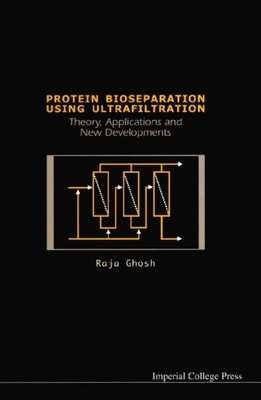
Ultrafiltration is a pressure-driven, membrane-based separation process, which is used for a broad variety of applications, ranging from the processing of biological macromolecules to wastewater treatment.