As the technology base for the preparation of increasingly c- plex peptides has improved, the methods for their purification and ana- sis have also been improved and supplemented.
Since the development of the concept of "e;proteomics"e;, great progress has granted deeper insight into the cellular network, but the enormous range of protein abundance, dynamics, and interactions leaves many further challenges in the field.
Membrane proteins play a key role in numerous pathologies such as cancer, cystic fibrosis, epilepsy, hyperinsulinism, and Alzheimer's disease, yet studies on these and other disorders are hampered by a lack of information about the proteins involved.
In Protein Dynamics: Methods and Protocols, expert researchers in the field detail both experimental and computational methods to interrogate molecular level fluctuations.
This volume explores techniques that study interactions between proteins in different species, and combines them with context-specific data, analysis of omics datasets, and assembles individual interactions into higher-order semantic units, i.
This volume covers past and present western blot techniques, such as diffusion blotting, slice blotting, blotting of high and low molecular weight proteins, single cell blotting and automated blotting.
Salmonella: Methods and Protocols presents detailed methods on a variety of aspects of Salmonella research, focusing on those which provide landmarks for future discovery.
This book is an inclusive collection of topics on research on UVB for its impact on plants with a focus on its use as an emerging technology for crop growth and protection.
Carbohydrate microarrays emerged as a key technology for the deciphering of the glycospace by providing a multiplex technology where tens to hundreds of carbohydrates/protein interactions can be probed in parallel.
Not only is the quantity of life science data expanding, but new types of biological data continue to be introduced as a result of technological development and a growing understanding of biological systems.
Recently, many ground-breaking steps have been made towards better understanding NO/cGMP/PKG pathways, its components, substrates, and their localization within a given cell.
Nuclear G-Protein Coupled Receptors: Methods and Protocols is a compilation of a number of conceptual and methodological aspects important for the validation and characterization of intacrine signaling systems.
This volume provides a variety of methods used to analyze ADAMTS proteases and ADAMTS-like proteins, including their structure, substrate profile, tissue and cell distribution, post-translational modification and biological pathways.
The continued successes of large- and small-scale genome sequencing projects are increasing the number of genomic targets available for drug d- covery at an exponential rate.
Microbial Gene Essentiality: Protocols and Bioinformatics contains a comprehensive collection of experimental and computational strategies and techniques for microbial genome-scale essentiality studies, developed and presented by the leading groups in the field.
At the time of the lightbulb's invention, not even the most imaginative thinkers could have predicted the prevention and treatment of disease through genes delivered by electric fields.
A highly anticipated update of the previous edition, In Vitro Transcription and Translation Protocols, Second Edition, provides molecular biology laboratories with the most powerful techniques for exploiting in vitro transcription and translation systems.
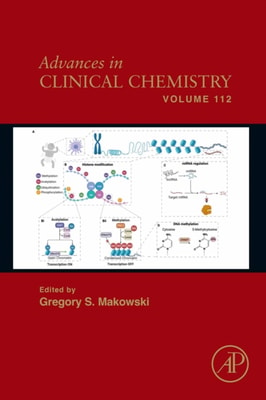
Advances in Clinical Chemistry, Volume 112 highlights new advances in the field, with this new volume presenting interesting chapters on a variety of timely topics, including Heterogeneity in Major Depressive Disorder: The need for Biomarker-based and Personalized Treatments, Advances in exosome analysis, Translational Proteomics and Phosphoproteomics: Tissue to Extracellular Vesicles, Immune Checkpoint Therapy, Tumor Immunology, and Biomarkers in Non-Small-Cell Lung Cancer, Advances in Congestive Heart Failure Biomarkers, Fluid biomarkers in Alzheimer's disease, and more.
With the rapid development of proteomic technologies in the life sciences and in clinical applications, many bioinformatics methodologies, databases, and software tools have been developed to support comparative proteomics study.
Through the rapid development of proteomics methods and technologies, an enormous amount of data was created, leading to a wide-spread rethinking of strategy design and data interpretation.
The second edition of this volume provides novel protocols for the study of newly discovered function and modifications of components of the Hh pathways.
This book covers elements of both the data-driven comparative modeling approach to structure prediction and also recent attempts to simulate folding using explicit or simplified models.
As our understanding of G protein-coupled receptor (GPCR) signal transduction continues to grow, we cannot help but be struck by the emerging complexity and the ability of this receptor superfamily to continually surprise us as new facets are discovered.
This detailed volume assembles comprehensive protocols to assist with the study of structural, molecular, cell biological, and in vivo facets of GPCRs, and to enable the development of experimental tools for screening novel GPCR drugs.
This collection explores the latest advances in riboregulators, such as RNA-only systems and ribonucleoprotein systems, and provides detailed techniques to study, evolve, and design them.
In Molecular Embryology: Methods and Protocols, Second Edition, expert investigators provide a comprehensive guide to the cutting-edge methods used across the dramatically growing field of vertebrate molecular embryology.
Despite being known and studied for years, peptides have never before attracted enough attention to necessitate the invention of the term "e;peptidomics"e; in order to specify the study of the complement of peptides from a cell, organelle, tissue or organism.
This volume provides a better understanding of the advancements in phenotypic readouts and improved disease models that generate novel biological insights and recapitulate clinically relevant biology.
This volume presents modern and enhanced methods that detail techniques to perform proteomics analyses dedicated to biomarker discovery for human health.
This second edition provides new and updated methods on the principles underlying modern protein analysis, from statistical issues to gel-based and mass spectrometry-based applications.
Chemokines constitute a large family of structurally similar cytokines that contain a signature of conserved cysteine residues joined by disulfide bridges.