CRISPR is a crucial technology in plant physiology and molecular biology resulting in more sustainable agricultural practices, including outcomes of better plant stress tolerance and crop improvement.
This book reviews all important aspects of plant genome editing to shed new light on these genome editing technologies together in crop improvement and sustainable agriculture.
This book reviews all important aspects of plant genome editing to shed new light on these genome editing technologies together in crop improvement and sustainable agriculture.
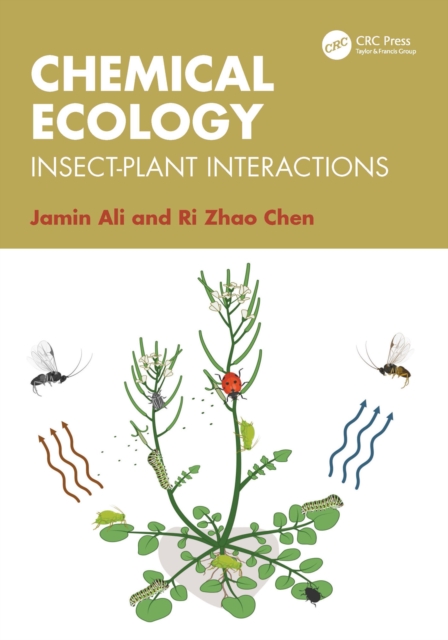
A CHOICE Recommended title 2025This textbook provides a comprehensive overview of the principles, methods and applications of chemical ecology, covering such topics as chemical signalling, predator-prey interactions, host plant selection and chemical defence.
This book addresses complex problems associated with crop improvement programs, using a wide range of programming solutions, for genomics data handling and sustainable agriculture.
Theory and early empirical work posed that herbivore pressure should be lower on islands than on the mainland owing to lower herbivore abundance and diversity in insular systems.
Theory and early empirical work posed that herbivore pressure should be lower on islands than on the mainland owing to lower herbivore abundance and diversity in insular systems.
The evolution of genome's modification by genetic engineering was characterized by a major technological breakthrough with the discovery of CRISPR in 2012.
The evolution of genome's modification by genetic engineering was characterized by a major technological breakthrough with the discovery of CRISPR in 2012.
In its revised, improved and expanded 7th Edition, Westcott's Plant Disease Handbook presents newly discovered diseases and newly identified hosts in the classic format that has won favor with readers at every level of expertise and experience.
The major part of this Catalog presents host lists of particular aphid species in the Palaearctic Region based on published data and more than 2,400 author's unpublished host records, with respective references arranged by geographical provenance.
This book introduces the nature, causes and impact of plant diseases, describes briefly the history of plant pathology as a scientific discipline, and introduces the disease cycle as the key tool for understanding disease development and devising appropriate management strategies.
This book introduces the nature, causes and impact of plant diseases, describes briefly the history of plant pathology as a scientific discipline, and introduces the disease cycle as the key tool for understanding disease development and devising appropriate management strategies.
Melatonin (N-acetyl-5-methoxytryptamine) is a widely studied biomolecule, and its function has been investigated in bacteria, mammals, birds, amphibians, reptiles, fish and plants.
This book Introduces the extensive applications of metabolomics from all possible areas of research and development so that not only an undergraduate can understand the advancement of metabolomics, but an entrepreneur can harness the knowledge to address possible problems to make a perfect tool to address their research question.
Nanofertilizers and nanopesticides increase crop efficiency because of a several-fold increase in the surface-to-volume ratio of nano-forms of nutrients and their suitability to foliar application.
Readers will find in this book a comprehensive text on the intersection of genetic and agriculture, addressing the different levels at which DNA is studied for agricultural purposes.
Dieses klare und übersichtliche Buch bietet einen Einführungskurs in die Sprache des Genklonens und deckt dabei mikrobielle, pflanzliche und Säugetiersysteme ab.
This book comprehensively covers the topics of origin and distribution, evolution and types, regional and global importance, biodiversity conservation, plant-soil interfaces, ecosystem functions and services, social-ecological systems, climate change adaptations, land degradation and restoration, grazing management and pastoral production, and sustainable future of the grasslands on the Qinghai-Tibetan Plateau (QTP), which is a globally unique eco-region called the "e;Roof of the World"e; because of its high elevation, "e;Third Pole on Earth"e; because of its alpine environment and the "e;Water Tower in Asia"e; because of its headwater location.