Grassland farming in Europe was already established during the settlement of the rst farmers together with their domesticated animals after the last ice age.
Hands-On Chemical Ecology: Simple Field and Laboratory Exercises, a premiere collection of practical exercises in chemical ecology, offers tools and strategies for understanding this young science.
Plant biotechnology applies to three major areas of plants and their uses: (1) control of plant growth and development; (2) protection of plants against biotic and abiotic stresses; and (3) expansion of ways by which specialty foods, biochemicals, and pharmaceuticals are produced.
With the continued implementation of new equipment and new concepts and methods, such as hydroponics and soilless practices, crop growth has improved and become more efficient.
In 2007, the first edition of Handbook of Plant Nutrition presented a compendium of information on the mineral nutrition of plants available at that time-and became a bestseller and trusted resource.
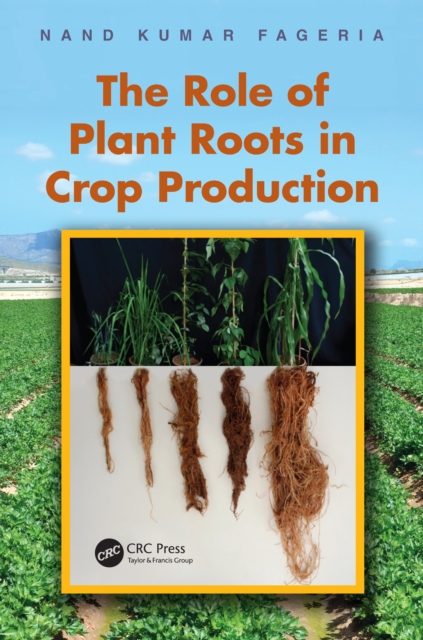
The Role of Plant Roots in Crop Production presents the state of knowledge on environmental factors in root growth and development and their effect on the improvement of the yield of annual crops.
Third in a three volume series, this book presents the basic and applied aspects of gene sequencing and its implication in the fine-scale elucidation of plant genomes.
Transgenic plants present enormous potential to become one of the most cost-effective and safe systems for large-scale production of proteins for industrial, pharmaceutical, veterinary, and agricultural uses.
Put Theory into PracticeScarcity of natural resources, higher costs, higher demand, and concerns about environmental pollution- under these circumstances, improving food supply worldwide with adequate quantity and quality is fundamental.
Given the explosive development of new molecular marker techniques over the last decade, newcomers and experts alike in the field of DNA fingerprinting will find an easy-to-follow guide to the multitude of techniques available in DNA Fingerprinting in Plants: Principles, Methods, and Applications, Second Edition.
With contributions from experts in various specialties, Plant-Environment Interactions discusses recent advances in cellular and molecular regulation of stress tolerance.
A benchmark text, Developmental Genetics and Plant Evolution integrates the recent revolution in the molecular-developmental genetics of plants with mainstream evolutionary thought.
In the rhizosphere, exudates from plants and microorganisms as well as stable soil organic matter influence processes that can control plant growth, microbial infections, and nutrient uptake.
2008 NOMINEEThe Council on Botanical and Horticultural Libraries Annual Award for a Significant Work in Botanical or Horticultural Literature From medicinal, industrial, and culinary uses to cutting-edge laboratory techniques in modern research and plant conservation strategies, Natural Products from Plants
Drawing from a decade-long collaboration between Japan and Russia, this important volume presents the first major synthesis of current knowledge on the ecophysiology of the coniferous forests growing on permafrost at high latitudes.
The 21st century has seen the beginnings of a great restoration effort towards the world's forests, accompanied by the emergence of an increasing literature on reforestation, regeneration and regrowth of forest cover.
The offered volume intends to review the biological control theme of phytonematodes from several prospects: ecological; applicative as well as commercial state of the art; understanding the mode-of-action of various biocontrol systems; interaction between the plant host, nematodes' surface and microorganism's; candidates for biocontrol; extrapolation of the wide knowledge existed in another systems for understanding biocontrol processes: C.
Rice blast, caused by the fungal pathogen Magnaporthe grisea, is one of the most destructive rice diseases worldwide and destroys enough rice to feed more than 60 million people annually.
In the last four decades of the twentieth century the use of sweetpotato was diversified beyond their classification as subsistence, food security, and famine-relief crop.
Feeding on Non-Prey Resources by Natural Enemies Moshe Coll Reports on the consumption of non-prey food sources, particularly plant materials, by predators and parasitoids are common throughout the literature (reviewed recently by Naranjo and Gibson 1996, Coll 1998a, Coll and Guershon, 2002).
Abstract This chapter defines food security as the condition reached when a nation's population has access to sufficient, safe, and nutritious food to meet its dietary needs and food preferences.
The book 'Silent Spring' written by Rachel Carson in 1962, is considered the la- mark in changing the attitude of the scientists and the general public regarding the complete reliance on the synthetic pesticides for controlling the ravages caused by the pests in agriculture crops.
Knowledge of downy mildew pathogens and diseases has increased significantly in taxonomy, phylogeny, genetics, molecular biology, host-parasite interactions, ecology, epidemiology and control.
This book contains fuller versions of the papers and posters presented in the Knowledge and Technology Transfer and Teaching Plant Pathology sessions at the 9th International Congress of Plant Pathology held in Turin, Italy in 2008.
This collection of papers represents some of those given at the International Congress for Plant Pathology held in Turin in 2008 in the session with the title "e;The Role of Plant Pathology in Food Safety and Food Security"e;.
As a collection of papers that includes material presented at the 2008 International Congress for Plant Pathology, this text features research right at the leading edge of the field.
Essential processes in biology such as cell and nuclear division, development, intracellular transport and physiological response, rely on the perception of environmental and intracellular signals and their transduction to subcellular targets.
Plant disease management remains an important component of plant pathology and is more complex today than ever before including new innovation in diagnostic kits, the discovery of new modes of action of chemicals with low environmental impact, biological control agents with reliable and persistent activity, as well as the development of new plant varieties with durable disease resistance.