After more than twenty years of use Good Laboratory Practice, or GLP, has attained a secure place in the world of testing chemicals and other "e;test items"e; with regard to their safety for humans and the environment.
Arabidopsis has long been acknowledged as the 'Botanical Drosophila' with its small genome, low levels of repetitive DNA, small size and fast generation time it is an ideal molecular genetic tool for the analysis of development in higher plants.
This volume focuses on the structural aspects of cell division, ranging from nuclear envelope breakdown to cytokinesis and partitioning of the cytoplasm.
Since the publication of the first edition of Signal Transduction: A Practical Approach in 1992 there has been a great deal of new information about the processes of signal transduction and consequently many new methods have been developed.
The steroid / nuclear receptor superfamily is a large and growing group of transcription factors that are studied by a large and varied number of basic and clinical researchers.
Since the publication of the first edition five years ago, a wide range of new methodologies have been developed to facilitate studies on both isolated parts of the genome and the genome as a whole.
Virus Culture: A Practical Approach provides a broad treatment of the principles and practice of virus culture and will be of interest to all those, whether in academic, industrial, or clinical research, involved in virus culture.
Eukaryotic DNA Replication: A Practical Approach is a comprehensive practical manual, with each of its eleven chapters describing an aspect of the methods currently used to investigate DNA replication in eukaryotes.
Since the publication of Protein Kinases in 1994 many novel protein kinases have been discovered, but perhaps more importantly there have been dramatic advances in our understanding of the cellular functions of this remarkably diverse class of proteins.
Since the first edition of Light Microscopy in Biology: A Practical approach was published, techniques in modern light microscopy have improved considerably.
NEW YORK TIMES BESTSELLER'Highly recommended, it's filled with practical strategies to begin restoring your health and vitality even if you have a chronic and supposedly irreversible disease.
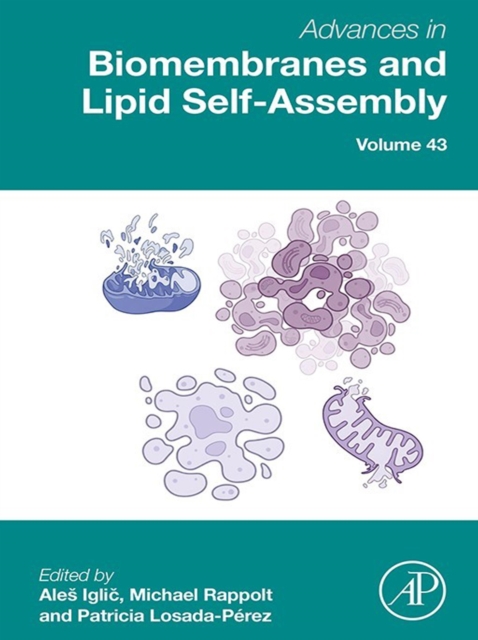
Advances in Biomembranes and Lipid Self-Assembly, Volume 43 highlights new advances in the field, with this new volume presenting interesting chapters written by an international board of authors.
This book emphasizes the importance of the extracellular matrix (ECM) in diseases and explains how this knowledge can be applied to tissue engineering.
This innovative textbook addresses the critical gap between traditional cell culture education and the urgent need for diverse, representative research models in modern biomedical science.
This innovative textbook addresses the critical gap between traditional cell culture education and the urgent need for diverse, representative research models in modern biomedical science.
This book emphasizes the importance of the extracellular matrix (ECM) in diseases and explains how this knowledge can be applied to tissue engineering.
This volume is one of those published from the proceedings of the invited lectures to the First International Congress of Comparative Physiology and Biochemistry I organized at Liege (Belgium) in August 1984 under the auspices of the Section of Comparative Physiology and Biochemistry of the International Union of Biological Sciences.
Metallomics is an integrated biometal science as it unifies different disciplines into a mainstream subject that can be taught to students of the biological and biomedical sciences.
Metallomics is an integrated biometal science as it unifies different disciplines into a mainstream subject that can be taught to students of the biological and biomedical sciences.
This volume presents the response of the eukaryotic translational apparatus to cellular stress and apoptosis, including kinases activated through both the ERK and stress-activated pathways.
Advances in Biosystems investigates the latest techniques for evaluating, detecting, measuring, and enhancing the functional bioactivities, chemical composition, and physicochemical characteristics of animal, plant, and environmental biosystems.