Stem Cells and Tissue Repair: Methods and Protocols presents in-depth methods for the three major approaches of rejuvenating an aging or sick body: latent regenerative capacity stimulated in a targeted way, replacement organs grown de novo and surgically implanted, and tissue surgically implanted and coaxed to integrate and restore problem areas.
The identification of normal and breast cancer stem cells has offered a new vision of this heterogeneous disease and new hopes for its prognosis and treatment.
Biomimetics and Stem Cells: Methods and Protocols collects a series of approaches to demonstrate the role and value of biomimetics for the better understanding of stem cell behavior and the acceleration of their application in regenerative medicine.
Considerable advances have taken place since the initial isolation and characterization of human embryonic stem (HES) cells; however, significant challenges remain before their potential for restoration and regeneration processes in patients can be realized.
Only in recent times has the possibility of growing and implanting replacement teeth, made from one's own cells, moved into the realm of realistic possibilities; however, the molecular and cellular mechanisms of tooth development must be studied in a range of vertebrates, from zebrafish to mice, so that evolutionarily conserved network kernels, which will define the cellular states of generic vertebrate tooth development, can be recognized.
Imaging and Tracking Stem Cells: Methods and Protocols gathers representative protocols related to the vital techniques of stem cell imaging and lineage tracing, including that of live cells, both in vivo and in vitro.
Mesenchymal Stem Cells have seen an unprecedented level of interest in the last decade, primarily due to their relative ease of isolation, the large numbers of cells present in the adult, and the ability to propagate these cells in culture.
Due to their vital involvement in a wide variety of housekeeping and specialized cellular functions, exocytosis and endocytosis remain among the most popular subjects in biology and biomedical sciences.
This volume looks at the latest technologies and methods--combined with new genetic tools available in animal models--used in this constantly evolving field.
This book provides a thorough introduction to widely used techniques for the study of the intersection between developmental biology and neuroscience, an exceptional area to address and investigate impacting biological questions.
This volume presents a broad collection of state-of-the-art methods to study the biology of thermogenic fat using in vitro cell culture and animal models.
This volume presents a broad collection of state-of-the-art methods to study the biology of thermogenic fat using in vitro cell culture and animal models.
This thorough edition explores numerous methodological approaches that can be extremely informative for our understanding of the developmental toxicant mechanisms, characterization of developmental outcomes, and development of potential interventions that are clinically relevant.
This is an introductory textbook for the study of human evolution, and covers all major topics of human origins taught under paleoanthropology, anthropology, archaeology, and evolutionary biology courses.
The Immunological Synapse, Part A, Volume 173 in the Methods in Cell Biology series provides state-of-the-art methods for the study of the immunological synapse.
This volume explores the latest developments in the field and showcases the vast potential of human induced pluripotent stem cells (hiPSCs) in advancing neuroscience research.
Mechanisms of Morphogenesis, Third Edition offers a bottom-up discussion of mechanisms of cell and tissue morphogenesis in a diverse array of organisms, including prokaryotes, animals, plants and fungi.
Mechanisms of Morphogenesis, Third Edition offers a bottom-up discussion of mechanisms of cell and tissue morphogenesis in a diverse array of organisms, including prokaryotes, animals, plants and fungi.
Spontaneous pattern formation in nonlinear dissipative systems far from equilibrium is a paradigmatic case of emergent behaviour associated with complex systems.
This detailed volume presents validated and well-adapted procedures involving humanized and/or stem cell-based neural model systems that have proven helpful in better understanding the essential brain functions involved in the pathogenesis of brain disorders.
This detailed volume presents validated and well-adapted procedures involving humanized and/or stem cell-based neural model systems that have proven helpful in better understanding the essential brain functions involved in the pathogenesis of brain disorders.
This book addresses the structural and biological properties of the extracellular matrix component and glycosaminoglycan polymer hyaluronan (or hyaluronic acid, HA).
This book addresses the structural and biological properties of the extracellular matrix component and glycosaminoglycan polymer hyaluronan (or hyaluronic acid, HA).
Modern humans, descendants of a founding population that separated from chimpanzees some five to eight million years ago, are today the only living representative of a branching group of African apes called hominins.
Modern humans, descendants of a founding population that separated from chimpanzees some five to eight million years ago, are today the only living representative of a branching group of African apes called hominins.
This volume provides a broad overview of some cutting-edge philosophical topics of growing interest at the juncture between cognitive science and biology.
This volume provides a broad overview of some cutting-edge philosophical topics of growing interest at the juncture between cognitive science and biology.
In Developmental Biology of the Sea Urchin and Other Marine Invertebrates: Methods and Protocols, expert researchers in the field detail many of the methods which are now used to study sea urchins and other marine invertebrates in the laboratory.
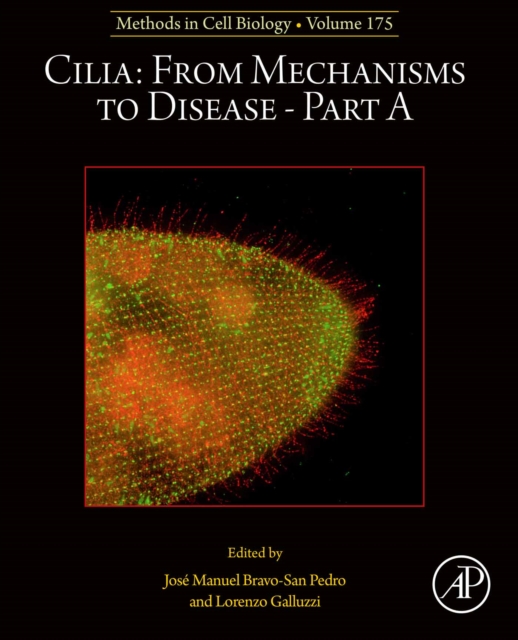
Cilia: From Mechanisms to Disease, Part A, Volume 175 in the Methods in Cell Biology series, offers a range of techniques and protocols that can be used to study aspects of this interesting cellular organelle both in vitro and in vivo.
The epistemological synthesis of the various theories of evolution, since the first formulation in 1802 with the transmission of the inherited characters by J.
This book comprehensively summarizes the biological mechanisms of coloration and pattern formation of animals at molecular and cellular level, offering up-to-date knowledge derived from remarkable progress in the last 10 years.
In this book, plant biology is considered from the perspective of plants and their surrounding environment, including both biotic and abiotic interactions.