African Ethnobotany in the Americas provides the first comprehensive examination of ethnobotanical knowledge and skills among the African Diaspora in the Americas.
Along the undisturbed shores, especially of the Mediterranean Sea and the European North Atlantic Ocean, is a quite widespread plant called Beta maritima by botanists, or more commonly sea beet.
Rhim and Kremer's state-of-the-art volume on Human Cell Transformation: Role of Stem Cells and the Microenvironment highlights the latest findings on the current state of human cell transformation model systems and provides the insight into the molecular and cellular changes involved in the conversion of normal cells to neoplastic cells.
Color Atlas of Fetal and Neonatal Histology serves as a comprehensive atlas of the developmental histology of the major organs from 15 weeks gestation to the neonatal period.
Cell biology is moving at breakneck speed, and many of the results from studies on insects have helped in understanding some of the central problems of biology.
This book has evolved by processes of selection and expansion from its predecessor, Practical Scanning Electron Microscopy (PSEM), published by Plenum Press in 1975.
Comparative endocrinology is one of the most rapidly developing subdis- ciplines within the field of endocrinology, and it is having a significant impact on research at the molecular, cellular, organisma1 and environmental levels.
In the last decade, since the publication of the first edition of Scanning Electron Microscopy and X-ray Microanalysis, there has been a great expansion in the capabilities of the basic SEM and EPMA.
The World Congress of In Vitro Fertilization and Alternate Assisted Reproduction, held in Jerusalem, Israel, 2-7 April, 1989, was the sixth in the sequence of these Congresses, but was the first to emphasize the major importance and the place of assisted reproductive technologies in the treatment of infertility.
During the last four decades remarkable developments have taken place in instrumentation and techniques for characterizing the microstructure and microcomposition of materials.
The use of human in vitro fertilization in the management of infertility is the outgrowth of years of laboratory observations on in vitro sperm-egg interaction.
The overall scope of this new series will be to evolve an understanding of the genetic basis of (1) how early mesoderm commits to cells of a heart lineage that progressively and irreversibly assemble into a segmented, primary heart tube that can be remodeled into a four-chambered organ, and (2) how blood vessels are derived and assembled both in the heart and in the body.
The overall scope of this new series will be to evolve an understanding of the genetic basis of (1) how early mesoderm commits to cells of a heart lineage that progressively and irreversibly assemble into a segmented, primary heart tube that can be remodeled into a four-chambered organ, and (2) how blood vessels are derived and assembled both in the heart and in the body.
The overall scope of this new series will be to evolve an understanding of the genetic basis of (1) how early mesoderm commits to cells of a heart lineage that progressively and irreversibly assemble into a segmented, primary heart tube that can be remodeled into a four-chambered organ, and (2) how blood vessels are derived and assembled both in the heart and in the body.
Intended for undergraduate and graduate courses in plant development, this book explains how the cells of a plant acquire and maintain their specific fates.
This book provides an overview of the extensive work that has been done on the design and implementation of the COVID-19 Philippines Local Government Unit Monitoring Platform, more commonly known as Feasibility Analysis of Syndromic Surveillance Using Spatio-Temporal Epidemiological Modeler for Early Detection of Diseases (FASSSTER).
This comprehensive volume developed under the guidance of guest editors Prakash Lakshmanan and David Songstad features broad coverage of the topic of biofuels and its significance to the economy and to agriculture.
The Practical Manual of In Vitro Fertilization: Advanced Methods and Novel Devices is a unique, accessible title that provides a complete review of the most well-established and current diagnostic and treatment techniques comprising in vitro fertilization.
Developmental genetic studies of the spine and linkage and family-based association studies have led to recent advances in understanding the genetic etiology of idiopathic, neuromuscular, and congenital forms of scoliosis.
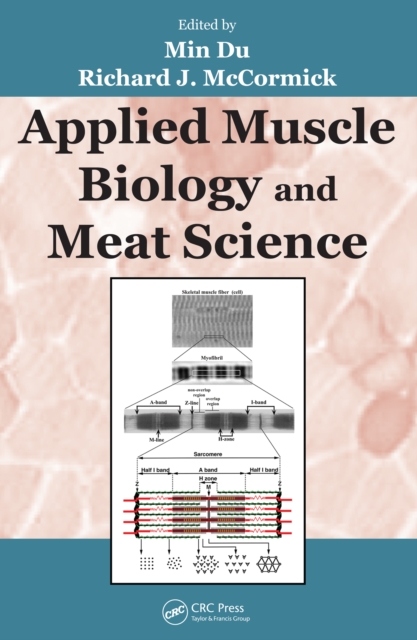
Knowledge of muscle biology is continuing to expand in the animal and food sciences industry, especially the understanding of the mechanisms that control skeletal muscle development, growth, and their impacts on meat production and quality.
Addressing the evolution of key innovations in metazoans, this challenging book summarizes the more recent results in phylogenetics and developmental biology.