The social anthropology of sickness and health has always been concerned with religious cosmologies: how societies make sense of such issues as prediction and control of misfortune and fate; the malevolence of others; the benevolence (or otherwise) of the mystical world; local understanding and explanations of the natural and ultra-human worlds.
Contemporary Dutch policy and legislation facilitate the use of high quality, accessible and affordable assisted reproductive technologies (ARTs) to all citizens in need of them, while at the same time setting some strict boundaries on their use in daily clinical practices.
Biomedical Entanglements is an ethnographic study of the Giri people of Papua New Guinea, focusing on the indigenous population s interaction with modern medicine.
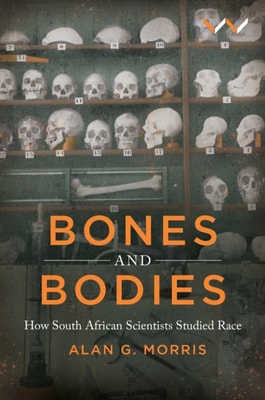
The author's original aim in writing this book was to chronicle the story of a very specific debate in human evolutionary studies that took place between the late 1880s and the 1930s - the 'eolith' debate that had to do with small, natural stones whose shape and edges suggested to our earliest ancestors their use as tools, either as they were, or with a small amount of chipping to the stone's edge, a process called 'retouch'.
Rural Disease Knowledge examines the ways in which knowledge of rural spaces and environments, on the one hand, and infectious diseases, on the other, have become inter-constituted since the late nineteenth century.
Drawing especially on insights emerging from studies of the cellular networks formed by fungi, this book describes the fundamental indeterminacy that enables life forms to thrive in and create inconstant circumstances.
Hepatitis A and B viruses have infected nearly half the current world population; and as many as 500 million people are still infected with the hepatitis B or C virus today.
This book provides up-to-date information on some of the most important aspects of ryanodine receptor function and has been written by experts in the field.
'A fascinating new analysis of human violence, filled with fresh ideas and gripping evidence from our primate cousins, historical forebears, and contemporary neighbors' Steven Pinker'A brilliant analysis of the role of aggression in our evolutionary history' Jane GoodallIt may not always seem so, but day-to-day interactions between individual humans are extraordinarily peaceful.
Notions of magic and healing have been changing over past years and are now understood as reflecting local ideas of power and agency, as well as structures of self, subjectivity and affect.
Using an entirely new conceptual vocabulary through which to understand men s experiences and expectations at the dawn of the twenty-first century, this path-breaking volume focuses on fatherhood around the globe, including transformations in fathering, fatherhood, and family life.
Integrating theoretical perspectives with carefully grounded ethnographic analyses of everyday interaction and experience, Living Translation examines the worlds of international translators as well as U.
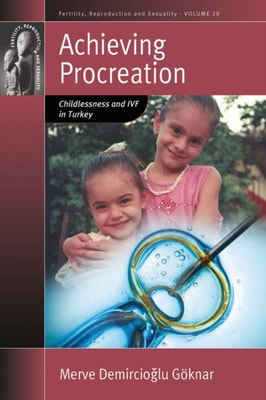
Following the birth of the first test-tube baby in 1978, Assisted Reproductive Technologies became available to a small number of people in high-income countries able to afford the cost of private treatment, a period seen as the First Phase of ARTs.
In Thailand, infertility remains a source of stigma for those couples that combine a range of religious, traditional and high-tech interventions in their quest for a child.
Following the detection of the first HIV infections in the early 1980s, by the 1990s Thailand was routinely depicted as having the world s fastest moving HIV/AIDS epidemic.
Modern medicine has penetrated Bedouin tribes in the course of rapid urbanization and education, but when serious illnesses strike, particularly in the case of incurable diseases, even educated people turn to traditional medicine for a remedy.
Managing social relationships for childless couples in pro-natalist societies can be a difficult art to master, and may even become an issue of belonging for both men and women.
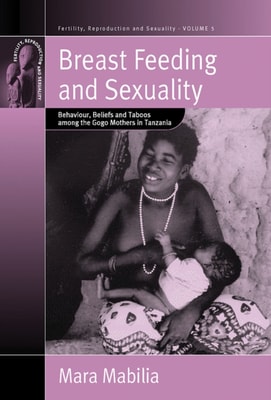
Whereas in western countries breastfeeding is an uncontroversial, purely personal issue, in most parts of the world mother and baby form part of a network of interpersonal relations with its own rules and expectations.
Belian is an exceptionally lively tradition of shamanistic curing rituals performed by the Luangans, a politically marginalized population of Indonesian Borneo.
Charting the experiences of internally or externally migrant communities, the volume examines social transformation through the dynamic relationship between movement, reproduction, and health.
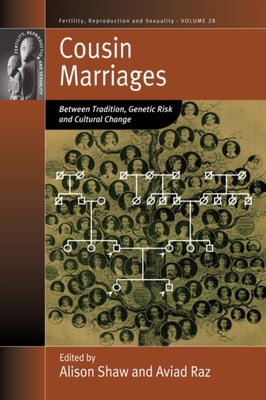
Juxtaposing contributions from geneticists and anthropologists, this volume provides a contemporary overview of cousin marriage and what is happening at the interface of public policy, the management of genetic risk and changing cultural practices in the Middle East and in multi-ethnic Europe.
Based on long-term medical anthropological research in northern Ghana, the author analyses issues of health and healing, of gender, and of the control and use of money in a changing rural African setting.
Most cultures tell the tale of a maiden who gives birth untouched by a man, and in the wild there are plenty of creatures turkeys, Komodo dragons, and the Jesus Christ lizard (which even walks on water) that take various approaches to making babies without having sex.
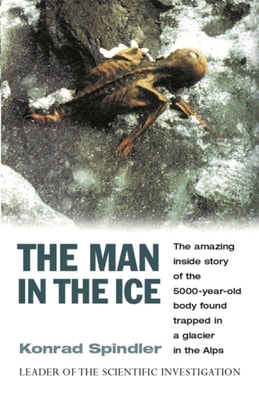
The amazing story of the discovery of a 5000-year-old body found perfectly preserved in the Alps - written by the leader of the investigationIn 1991 the world was electrified by a chance discovery of a perfectly preserved corpse trapped in an Alpine glacier.
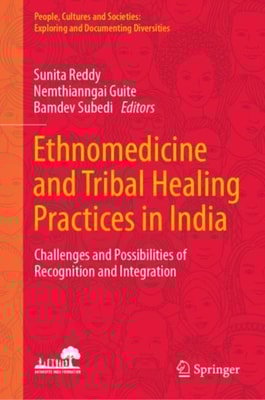
This book examines various aspects of ethnomedicine and tribal healing practices, including its importance for inclusion and integration from a health systems perspective.
Weve all heard the risk factors for cardiovascular disease: high blood pressure, high cholesterol, obesity, smoking, stress, and a sedentary lifestyle.