The NATO Advanced Study Institute on Biomechanics of Active Movement and Division of Cells was held September 19-29, 1993 in Istanbul and the Proceedings are presented in this volume.
Scientific visualization is a new and rapidly growing areain which efforts from computer graphics research and manyscientific and engineering disciplines are integrated.
Although many theoretical developments have been achieved inrecent years, the progress both in understanding andapplication of risk and reliability analysis in waterresources and environmental engineering remains slow.
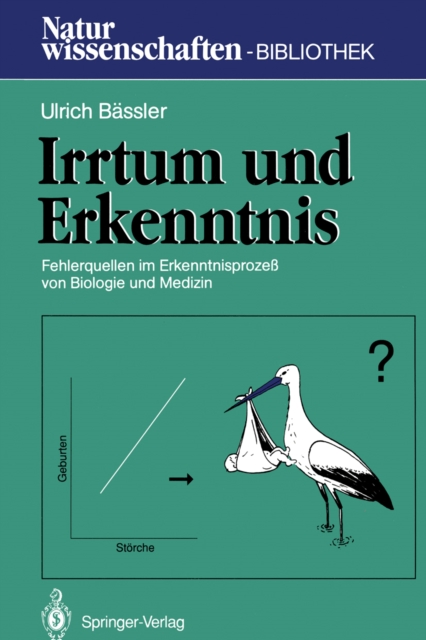
Die Praxis der Erkenntnisgewinnung in den Bio-Wissenschaften arbeitet nach einem allgemein anerkannten Kanon von Verhaltensvorschriften, der sich auf Grund von Erfahrungen in der Forschungspraxis und nicht durch die theoretischen Reflexionen der Erkenntnistheorie herausgebildet hat.
This volume contains the proceedings of the NATO Advanced Study Institute on "e;Picture Archiving and Communication Systems (PACS) in Medicine"e; held in Evian, France, October 14- 26, 1990.
The book collects the contributions to the NATO Advanced Study Institute on "e;Speech Recognition and Understanding: Recent Advances, Trends and Applications"e;, held in Cetraro, Italy, during the first two weeks of July 1990.
Supercomputing is an important science and technology that enables the scientist or the engineer to simulate numerically very complex physical phenomena related to large-scale scientific, industrial and military applications.
Roughly nine years ago, the two editors met for the first time in Amsterdam, the Netherlands at the EURO III meeting (organized by the Association of European Operational Research Societies) there.
Infectious diseases are transmitted through variousdifferent mechanisms including person to personinteractions, by insect vectors and via verticaltransmission from a parent to an unborn offspring.
Behavioural Mechanisms of Food Selection examines animals belonging to diverse trophic groups, from carnivores, herbivores, micro-algal grazers, to filter-feeders and detritus-feeders.
Mustererkennung heißt, ähnlich wie bei Sinneswahrnehmungen mit Sensoren Signale aus der technischen Umwelt zu empfangen und mit Hilfe zuvor gelernter Situationen momentane Messungen zu interpretieren und dabei im Hinblick auf neue Eindrücke lernfähig zu sein.
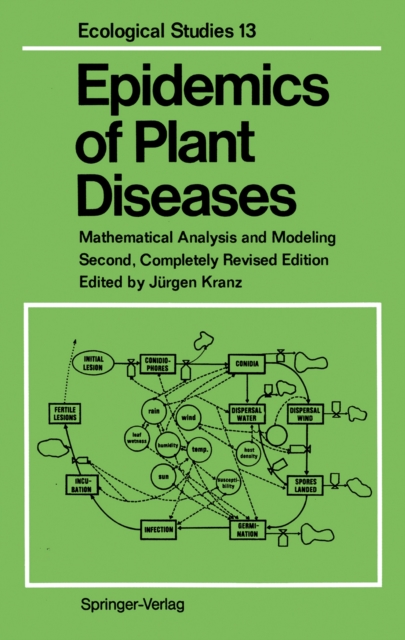
In this volume experts present the latest status of mathematical and statistical methods in use for the analysis and modeling of plant disease epidemics.
Das Buch behandelt die Robotik aus der Sicht der Künstlichen Intelligenz (KI) sowohl für einen einzelnen Roboter als auch für Roboterverbände (verteilte KI).
"e;Methods in Protein Sequence Analysis - 1988"e; - contains selected contributions on modern protein- analytical techniques as presented by speakers at the Seventh International Conference on "e;Methods in Protein Sequence Analysis"e;, held from July 3rd to July 8th, 1988 in Berlin.
Readers of my books, students and scientists, often ask for spe- cial references not commonly found in introductory or interme- diate books on statistics.
In May 1984 the Swedish Council for Scientific Research convened a small group of investigators at the scientific research station at Abisko, Sweden, for the purpose of examining various conceptual and mathematical views of the evolution of complex systems.
From earlier ecological studies it has become apparent that simple univariate or bivariate statistics are often inappropriate, and that multivariate statistical analyses must be applied.
The text of this book is derived from courses taught by the author in the Department of Applied Mathematics and Statistics at the State University of New York at Stony Brook.
These notes are based on (i) a series of lectures that I gave at the 14th Biennial Seminar of the Canadian Mathematical Congress held at the University of Western Ontario August 12-24, 1973 and (li) some of my lectures in a modeling course that I have cotaught in the Division of Bio-Medical Sciences at Brown during the past several years.
These Proceedings have been assembled from papers presented at the Conference on Models of Biological Growth and Spread, held at the German Cancer Research Centre Heidelberg and at the Institute of Applied Mathematics of the University of Heidelberg, July 16-21, 1979.
The Second Autumn Course on Mathematical Ecology was held at the Intern- ational Centre for Theoretical Physics in Trieste, Italy in November and December of 1986.