New developments in computer science, biology, mathematics and physics offer possibilities to obtain deeper understanding of growth and forms of organisms.
In February 1985 a small international meeting of scientists took place at the recreation resort of the Polish Academy of Sci- ences in Mogilany, near Cracow, Poland.
The purpose of these notes is to give a rather complete presentation of the mathematical theory of algebras in genetics and to discuss in detail many applications to concrete genetic situations.
In many fields of science and practice large amounts of dataand informationare collected for analyzing and visualizinglatent structures as orderings or classifications forexample.
The development of the life sciences may be said to have effected a gradual transition from a more or less intuitive prescientific approach based on crude observation, via a more refined type of observation to experimentation and hence to the level of formal theories.
A rich and abundant literature has developed during the last half century dealing with mechanical aspects of the eye, mainly from clinical and, experimental points of view.
From a mathematical point of view, physiologically structured population models are an underdeveloped branch of the theory of infinite dimensional dynamical systems.
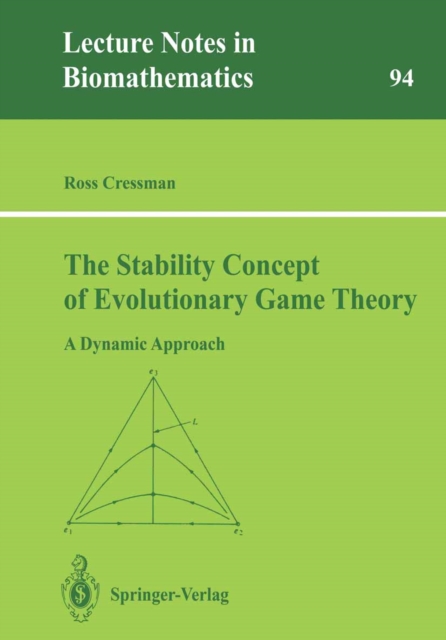
These Notes grew from my research in evolutionary biology, specifically on the theory of evolutionarily stable strategies (ESS theory), over the past ten years.
CAR is a symposium and exhibition covering the impact ofcomputer and communication systems applied to radiology andother medical disciplines, which use digital imaging fordiagnosis and therapy planning.
A mathematician who has taken the romantic decision to devote himself to biology will doubtlessly look upon cell kinetics as the most simple and natural field of application for his knowledge and skills.
These notes are in part based on a course for advanced students in the applications of stochastic processes held in 1978 at the University of Konstanz.
Radiation is the one agent among all environmental factors which may damage biological systems that is not only easily quantifiable but can also be measured with unsurpassed resolution.
The use of probabilistic methods in the biological sciences has been so well established by now that mathematical biology is regarded by many as a distinct dis- cipline with its own repertoire of techniques.
Over the past three years I have grown accustomed to the puzzled look which appears on people's faces when they hear that I am a mathematician who studies sleep.
The mathematical models in this book are concerned with a variety of approaches to the manner in which the clinical radiologic treatment of human neoplasms can be improved.
The articles of these proceedings arise from a NSF-CBMS regional conference on the mathematical modeling of the hearing process, that was held at Rensselaer Polytechnic Institute in the summer of 1980.
This book is an edited volume, the goal of which is to provide an overview of the current state-of-the-art in statistical methods applied to problems in structural bioinformatics (and in particular protein structure prediction, simulation, experimental structure determination and analysis).