The Human Respiratory System combines emerging ideas from biology and mathematics to show the reader how to produce models for the development of biomedical engineering applications associated with the lungs and airways.
This book presents a guide to building computational gene finders, and describes the state of the art in computational gene finding methods, with a focus on comparative approaches.
This brief introduces people with a basic background in probability theory to various problems in cancer biology that are amenable to analysis using methods of probability theory and statistics.
The recent trend in user-customized product design requires the shape of products to be automatically adjusted according to the human body's shape, so that people will feel more comfortable when wearing these products.
Stochastic Averaging and Extremum Seeking treats methods inspired by attempts to understand the seemingly non-mathematical question of bacterial chemotaxis and their application in other environments.
Many methods and models have been proposed for solving difficult problems such as prediction, planning and knowledge discovery in application areas such as bioinformatics, speech and image analysis.
We hope this book will make the bewildering variety of methods for estimat- ing the abundance of animal populations more accessible to the uninitiated and more coherent to the cogniscenti.
0 e This is the proceedings of the first annual symposium of the Safety-critical Systems Club (The Watershed Media Centre, Bristol, 9-11 February 1993), which provided a forum for exploring and discussing ways of achieving safety in computer systems to be used in safety-critical industrial applications.
Neural Network Applications contains the 12 papers presented at the second British Neural Network Society Meeting (NCM '91) held at King's College London on 1st October 1991.
Shape detection techniques are an important aspect of computer vision and are used to transform raw image data into the symbolic representations needed for object recognition and location.
Cellular Automata (CA), about to enter their fifties, are coming of age, seen by the breadth and quality of CA-related research carried out worldwide, as well as by the appearance of interesting applications to real world problems.
This book contains all full papers presented at ACRI 2000, the Fourth International Conference on Cellular Automata for Research and Industry, held at the University of Karlsruhe (Germany), 4 - 6 October, 2000.
This book is the first to provide a comprehensive survey of the computational models and methodologies used for studying the evolution and origin of language and communication.
This book is the product of a 15-month intensive investigation of the European artificial network scene, together with a view of the broader framework of the subject in a world context.
In recent years, extensive research on stochastic processes such as neuron networks, molecular motors, dynamics models, anomalous diffusion, and disordered media has led to the development of various methods for applying the Classical and Quantum Smoluchowski Equation to these phenomena.
The book provides a self-contained and complete description of the long time evolution of the solutions to a class of one-dimensional reaction-diffusion equations, in which the diffusion is given by an integral operator.
In an increasingly globally-connected world, the ability to predict, monitor, and contain pandemics is essential to ensure the health and well-being of all.
This book presents a complete overview of COVID-19 and provides a series of in-depth analyses of the literature and a comprehensive discussion and perspectives on promising anti-SARS-CoV-2 agents based on the system of ethnopharmacology, which covers Chinese medicine, traditional medicines of India and Africa, Turkish folk medicine, essential oils, and some well-known medicinal plants.
This richly illustrated book presents the latest techniques for the identifiability analysis and standard and robust regression analysis of complex dynamical models, and looks at their objectives.
This richly illustrated book presents the latest techniques for the identifiability analysis and standard and robust regression analysis of complex dynamical models, and looks at their objectives.
Filling a gap in literature, this book examines surgical trials with a special focus on the underlying principles, challenges, and best practices to successfully conduct rigorous surgical research.
Hereditary systems (or systems with either delay or after-effects) are widely used to model processes in physics, mechanics, control, economics and biology.
This book constitutes the refereed proceedings of the 15th EAI International Conference on Bio-inspired Information and Communications Technologies, BICT 2024, held in Quzhou, China, during August 15-16, 2024.
This two-volume set LNBI 14881-14882 constitutes - in conjunction with the 13-volume set LNCS 14862-14874 and the 6-volume set LNAI 14875-14880 - the refereed proceedings of the 20th International Conference on Intelligent Computing, ICIC 2024, held in Tianjin, China, during August 5-8, 2024.
This volume convenes selected, peer-reviewed research and survey articles that address the modern state-of-the-art in varied areas of applied mathematical analysis.
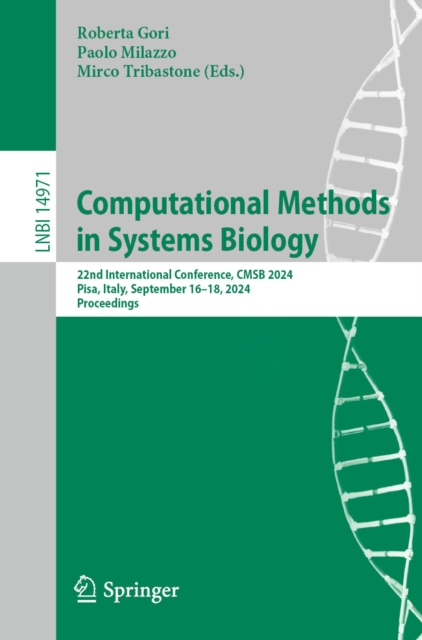
This book constitutes the refereed proceedings of the 22nd International Conference on Computational Methods in Systems Biology, CMSB 2024, which took place in Pisa, Italy, during September 16-18, 2024.
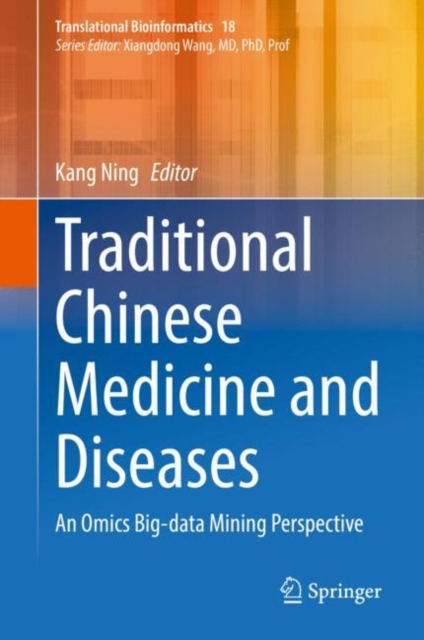
This book focuses on the multi-omics big-data integration, the data-mining techniques and the cutting-edge omics researches in principles and applications for a deep understanding of Traditional Chinese Medicine (TCM) and diseases from the following aspects: (1) Basics about multi-omics data and analytical methods for TCM and diseases.
This book provides practical guidance on all aspects of reverse phase protein array (RPPA) technology, which permits the quantification of protein levels in cell or tissue lysates.
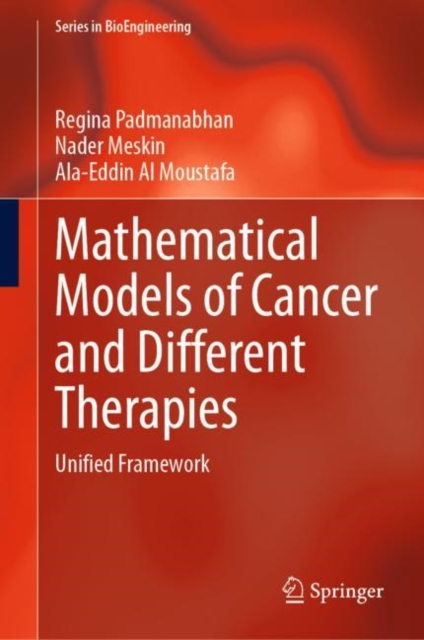
This book provides a unified framework for various currently available mathematical models that are used to analyze progression and regression in cancer development, and to predict its dynamics with respect to therapeutic interventions.