This volume LNCS 15276 constitutes the revised selected papers of the 19th International Meeting on Computational Intelligence Methods for Bioinformatics and Biostatistics, CIBB 2024, held in Benevento, Italy, during September 4–6, 2024.
This volume convenes carefully selected, peer-reviewed papers presented at the BIOMAT 2023 International Symposium, which was virtually held on November 6-9, 2023, with an organization staff based in Rio de Janeiro, Brazil.
This volume convenes carefully selected, peer-reviewed papers presented at the BIOMAT 2023 International Symposium, which was virtually held on November 6-9, 2023, with an organization staff based in Rio de Janeiro, Brazil.
This book examines the development and applications of system biology approaches for the prevention, diagnosis, and understanding of disease mechanisms.
This volume gathers together selected peer-reviewed works presented at the BIOMAT 2022 International Symposium, which was virtually held on November 7-11, 2022, with an organization staff based in Rio de Janeiro, Brazil.
This two-volume set LNBI 14881-14882 constitutes - in conjunction with the 13-volume set LNCS 14862-14874 and the 6-volume set LNAI 14875-14880 - the refereed proceedings of the 20th International Conference on Intelligent Computing, ICIC 2024, held in Tianjin, China, during August 5-8, 2024.
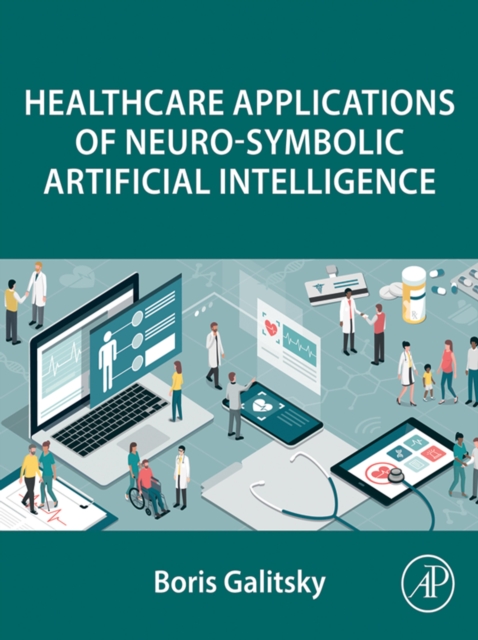
Healthcare Applications of Neuro-Symbolic Artificial Intelligence provides a comprehensive introduction to the field of neuro-symbolic (NS) artificial intelligence (AI), presenting the most recent advances in deep learning and integration of NS systems and large language models (LLMs).
This second edition volume brings together some of the best experts in the field of modern metabolomics to discuss the latest various techniques used to study specific metabolite classes, and metabolomics in bacterial and mammalian systems.
This second edition volume brings together some of the best experts in the field of modern metabolomics to discuss the latest various techniques used to study specific metabolite classes, and metabolomics in bacterial and mammalian systems.
This volume explores computational methods for the rapid analysis of viral infections and strategies for their mitigation, which have significantly advanced the understanding of viral pathogenesis and host responses.
This volume explores computational methods for the rapid analysis of viral infections and strategies for their mitigation, which have significantly advanced the understanding of viral pathogenesis and host responses.
This book presents a comprehensive collection of methods, resources, and studies that use large language models (LLMs) in the field of protein bioinformatics.
This book presents a comprehensive collection of methods, resources, and studies that use large language models (LLMs) in the field of protein bioinformatics.
This book introduces both qualitative and quantitative aspects of human physiology through language and concepts familiar to engineers and other physical scientists.
This book provides state-of-the-art information on logistics and implementation of Lean Healthcare models, and showcases what industrial engineering and medical science can offer together to increase the value of patient-oriented healthcare in the next scenario 5.
This book provides state-of-the-art information on logistics and implementation of Lean Healthcare models, and showcases what industrial engineering and medical science can offer together to increase the value of patient-oriented healthcare in the next scenario 5.
This book comprehensively covers all the core bioinformatics topics and includes practical examples completed using the MATLAB bioinformatics and machine learning toolboxes(TM).
This book aims to promote the interaction among the scientific community to discuss applications of CS/AI with an interdisciplinary character, exploring the interactions between sub-areas of CS/AI, Bioinformatics, Chemoinformatics and Systems Biology.
This book aims to promote the interaction among the scientific community to discuss applications of CS/AI with an interdisciplinary character, exploring the interactions between sub-areas of CS/AI, Bioinformatics, Chemoinformatics and Systems Biology.
Comprising two volumes, RNA: Computational Methods for Structure, Kinetics, and Rational Design is a comprehensive treatment of computational methods concerning the secondary structure, folding kinetics and rational design of RNA.
A Step-by-Step Guide to Describing Biomolecular StructureComputational and Visualization Techniques for Structural Bioinformatics Using Chimera shows how to perform computations with Python scripts in the Chimera environment.
The handling and analysis of data generated by proteomics investigations represent a challenge for computer scientists, biostatisticians, and biologists to develop tools for storing, retrieving, visualizing, and analyzing genomic data.
Research has generated a number of advances in methods for spatial cluster modelling in recent years, particularly in the area of Bayesian cluster modelling.
Written by a dynamic team of highly regarded and experienced scientists, many of whom pioneered current methodologies in computer-assisted research in the life sciences, this interdisciplinary handbook covers terminology, software, and applications of computational biology with academic-level precision.
Machine Learning Models and Architectures for Biomedical Signal Processing presents the fundamental concepts of machine learning techniques for bioinformatics in an interactive way.
From the spontaneous rapid firing of cortical neurons to the spatial diffusion of disease epidemics, biological systems exhibit rich dynamic behaviour over a vast range of time and space scales.
Rapid advancements in the application of soft computing tools and techniques have proven valuable in the development of highly scalable systems and resulted in brilliant applications, including those in biometric identification, interactive voice response systems, and data mining.
To harness the high-throughput potential of DNA microarray technology, it is crucial that the analysis stages of the process are decoupled from the requirements of operator assistance.
Take Control of Your Data and Use Python with ConfidenceRequiring no prior programming experience, Managing Your Biological Data with Python empowers biologists and other life scientists to work with biological data on their own using the Python language.
With the advent of sophisticated general programming environments like Mathematica, the task of developing new models of metabolism and visualizing their responses has become accessible to students of biochemistry and the life sciences in general.
The future of cancer research and the development of new therapeutic strategies rely on our ability to convert biological and clinical questions into mathematical models-integrating our knowledge of tumour progression mechanisms with the tsunami of information brought by high-throughput technologies such as microarrays and next-generation sequencin
The availability of molecular imaging and measurement systems enables today's biologists to swiftly monitor thousands of genes involved in a host of diseases, a critical factor in specialized drug development.
Due to the tremendous accumulation of data for genetic markers, pharmacogenomics, the study of the functions and interactions of all genes in the overall variability of drug response, is one of the hottest areas of research in biomedical science.
Emphasizing the search for patterns within and between biological sequences, trees, and graphs, Combinatorial Pattern Matching Algorithms in Computational Biology Using Perl and R shows how combinatorial pattern matching algorithms can solve computational biology problems that arise in the analysis of genomic, transcriptomic, proteomic, metabolomic
Offering a rich diversity of models, Bayesian phylogenetics allows evolutionary biologists, systematists, ecologists, and epidemiologists to obtain answers to very detailed phylogenetic questions.
Novel Techniques for Analyzing and Combining Data from Modern Biological StudiesBroadens the Traditional Definition of Meta-AnalysisWith the diversity of data and meta-data now available, there is increased interest in analyzing multiple studies beyond statistical approaches of formal meta-analysis.
A reflection of the explosion of research and development in this field, OMICS: Biomedical Perspectives and Applications explores applications of omics in bioinformatics, cancer research and therapy, diabetes research, plant science, molecular biology, and neurosciences.