Data Mining and Applications in Genomics contains the data mining algorithms and their applications in genomics, with frontier case studies based on the recent and current works at the University of Hong Kong and the Oxford University Computing Laboratory, University of Oxford.
This book contains fuller versions of the papers and posters presented in the Knowledge and Technology Transfer and Teaching Plant Pathology sessions at the 9th International Congress of Plant Pathology held in Turin, Italy in 2008.
This collection of papers represents some of those given at the International Congress for Plant Pathology held in Turin in 2008 in the session with the title "e;The Role of Plant Pathology in Food Safety and Food Security"e;.
As a collection of papers that includes material presented at the 2008 International Congress for Plant Pathology, this text features research right at the leading edge of the field.
Plant disease management remains an important component of plant pathology and is more complex today than ever before including new innovation in diagnostic kits, the discovery of new modes of action of chemicals with low environmental impact, biological control agents with reliable and persistent activity, as well as the development of new plant varieties with durable disease resistance.
This volume contains the lectures and seminars given at the NATO Advanced Study Institute on "e;Sensor Systems for Biological Threads: The Algal Toxins Case"e;, held in Pisa, Italy in October, 2007.
Biophysics represents perhaps one of the best examples of interdisciplinary research areas, where concepts and methods from disciplines such as physics, biology, b- chemistry, colloid chemistry, and physiology are integrated.
This volume comprises papers presented at the 2005 edition of the "e;Crystallography of Molecular Biology"e; courses that have been held since 1976 at the Ettore Majorana Centre for Scientific Culture in Erice, Italy.
The major characteristic pathological findings of pulmonary vascular remodelling are increased wall thickening of pulmonary vessels and mus- larization of small arteries.
I had taught courses in applied ecology, population dynamics, and population management for many years and, like many of my colleagues, had grown acc- tomed to the blank stares of my students as we wove our way through the confused semantics and intricate concepts of traditional ecology and wrestled with elaborate mathematical arguments.
Systems biology is defined for the purpose of this study as the understanding of biological network behaviors, and in particular their dynamic aspects, which requires the utilization of mathematical modeling tightly linked to experiment.
A comprehensive guide to the revolutionary area of systems biology and its application in cell culture engineering, this volume presents an overall picture of the current topics central to structural and functional genomics, proteomics, metabolomics and bioinformatics, including such hot topics as RNAi, metabolic engineering and unfolded protein response.
The application of microbiological methods to the extraction of metals from minerals has definitely gained a prominent role and is supported by the several bioleaching and biooxidation processes operating in different sites over the world.
Computer Applications in Sustainable Forest Management presents state-of-the-art computer applications in a variety of specialty areas of forestry, including inventory, remote sensing, information management, modelling and visualization, biometrics, forest and harvest planning, bioeconomics and marketing, and decision science for management.
Molecular dynamics simulations have become instrumental in replacing our view of proteins as relatively rigid structures with the realization that they were dynamic systems, whose internal motions play a functional role.
The present volume originated in 2001 when we, together with our publishing editors at (then) Kluwer Academic Publishers, realized that the th following year the 50 volume of our journal Acta Biotheoretica would see the light.
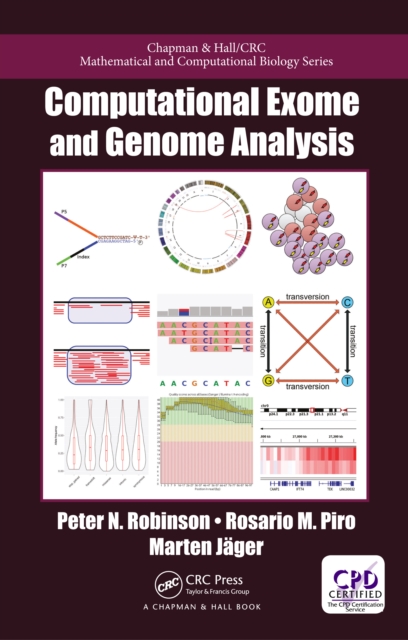
Exome and genome sequencing are revolutionizing medical research and diagnostics, but the computational analysis of the data has become an extremely heterogeneous and often challenging area of bioinformatics.
Research on abnormal human hemoglobins (protein in blood that carries oxygen), has taught us about the inheritance, biochemistry, and distribution of these traits.
Research on abnormal human hemoglobins (protein in blood that carries oxygen), has taught us about the inheritance, biochemistry, and distribution of these traits.
Tools for Chemical Product Design: From Consumer Products to Biomedicine describes the challenges involved in systematic product design across a variety of industries and provides a comprehensive overview of mathematical tools aimed at the design of chemical products, from molecular design to customer products.
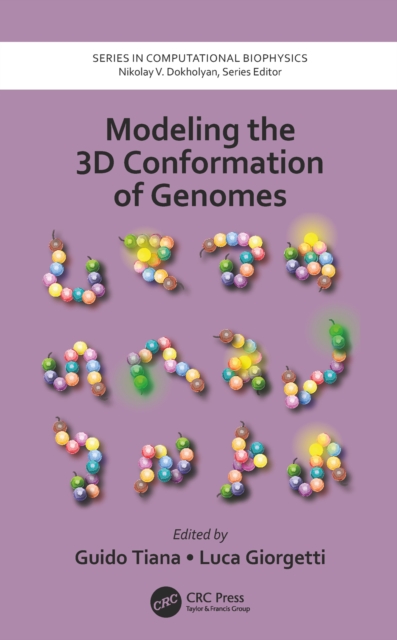
This book provides a timely summary of physical modeling approaches applied to biological datasets that describe conformational properties of chromosomes in the cell nucleus.
This book provides a timely summary of physical modeling approaches applied to biological datasets that describe conformational properties of chromosomes in the cell nucleus.
Microarray Technology, Volumes 1 and 2, present information in designing and fabricating arrays and binding studies with biological analytes while providing the reader with a broad description of microarray technology tools and their potential applications.
This volume addresses the latest state-of-the-art systems biology-oriented approaches that--driven by big data and bioinformatics--are utilized by Computational Systems Biology, an interdisciplinary field that bridges experimental tools with computational tools to tackle complex questions at the frontiers of knowledge in medicine and biotechnology.
Basic principles of applied life sciences such as recombinant DNA technology is used in most life sciences industries marketing bio-formulations for designing more effective protein-based drugs, such as erythropoietin and fast-acting insulin etc.
This book discusses some of the innumerable ways in which computational methods can be used to facilitate research in biology and medicine - from storing enormous amounts of biological data to solving complex biological problems and enhancing treatment of various grave diseases.