Mary Catherine Bateson, author of Composing a Life, is our guide on a fascinating intellectual exploration of lifetime learning from experience and encountering the unfamiliar.
How genes are not the only basis of heredity-and what this means for evolution, human life, and diseaseFor much of the twentieth century it was assumed that genes alone mediate the transmission of biological information across generations and provide the raw material for natural selection.
A new framework for the neuroscientific study of emotions in humans and animalsThe Neuroscience of Emotion presents a new framework for the neuroscientific study of emotion across species.
An essential introduction to microbiome science, a new cutting-edge discipline that is transforming the life sciencesThis book provides an accessible and authoritative guide to the fundamental principles of microbiome science, an exciting and fast-emerging new discipline that is reshaping many aspects of the life sciences.
A treasure trove of illuminating and entertaining quotations from the legendary naturalistHere is Charles Darwin in his own words-the naturalist, traveler, scientific thinker, and controversial author of On the Origin of Species, the book that shook the Victorian world.
Metacommunity ecology links smaller-scale processes that have been the provenance of population and community ecology-such as birth-death processes, species interactions, selection, and stochasticity-with larger-scale issues such as dispersal and habitat heterogeneity.
From one of the world's leading authorities on animal behavior, the astonishing story of how the female brain drives the evolution of beauty in animals and humansDarwin developed the theory of sexual selection to explain why the animal world abounds in stunning beauty, from the brilliant colors of butterflies and fishes to the songs of birds and frogs.
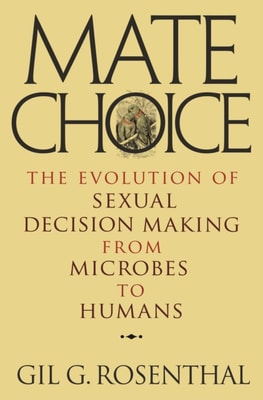
A major new look at the evolution of mating decisions in organisms from protozoans to humans The popular consensus on mate choice has long been that females select mates likely to pass good genes to offspring.
An authoritative exploration of why understanding evolution is crucial to human life todayIt is easy to think of evolution as something that happened long ago, or that occurs only in "e;nature,"e; or that is so slow that its ongoing impact is virtually nonexistent when viewed from the perspective of a single human lifetime.
A groundbreaking theory of what makes the human mind uniqueThe Recursive Mind challenges the commonly held notion that language is what makes us uniquely human.
An important look at a groundbreaking forty-year study of Darwin's finchesRenowned evolutionary biologists Peter and Rosemary Grant have produced landmark studies of the Galapagos finches first made famous by Charles Darwin.
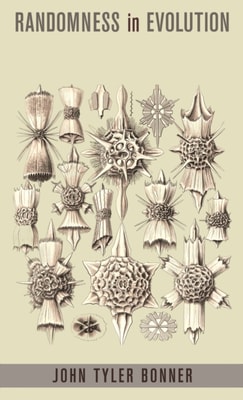
The important role that randomness plays in evolutionary changeJohn Tyler Bonner, one of our most distinguished and insightful biologists, here challenges a central tenet of evolutionary biology.
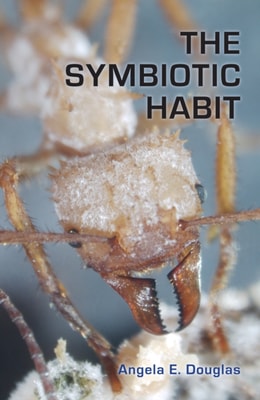
Throughout the natural world, organisms have responded to predators, inadequate resources, or inclement conditions by forming ongoing mutually beneficial partnerships--or symbioses--with different species.
Why size plays such a big role in the living worldJohn Tyler Bonner, one of our most distinguished and creative biologists, here offers a completely new perspective on the role of size in biology.
From shark attack survivor to the shark's biggest advocate, Paul de Gelder tells us just why these majestic diverse animals need our help as much as we need them.
Winner of the Whitley Award for Best Natural History Book 2022A compelling, funny, first-hand account of Australia's wonderfully unique mammals and how our perceptions impact their future.
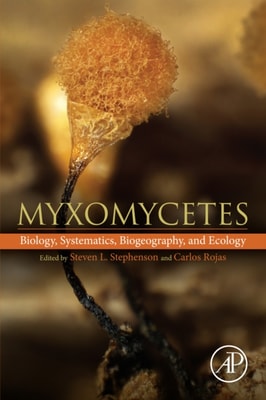
Myxomycetes: Biology, Systematics, Biogeography, and Ecology is a comprehensive overview of the body of accumulated knowledge that now exists on myxomycetes.
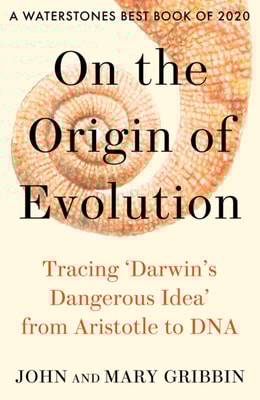
A Waterstones Best Book of 2020The theory of evolution by natural selection did not spring fully formed and unprecedented from the brain of Charles Darwin.
A richly illustrated nature tour of Galapagos-now expanded, thoroughly updated, and with more than 650 color photographsGalapagos is a comprehensive, up-to-date, and profusely illustrated natural history of this spectacular archipelago.
From two of the world's leading authorities on dogs, an imaginative journey into a future of dogs without peopleWhat would happen to dogs if humans simply disappeared?
The follow-up to the BBC Radio 4 Book of the Week Other MindsA Times and Sunday Times Book of the YearA Waterstones Best Book of 2020The scuba-diving philosopher explores the origins of animal consciousness.
Leading scholars take stock of Darwin's ideas about human evolution in the light of modern scienceIn 1871, Charles Darwin published The Descent of Man, a companion to Origin of Species in which he attempted to explain human evolution, a topic he called "e;the highest and most interesting problem for the naturalist.
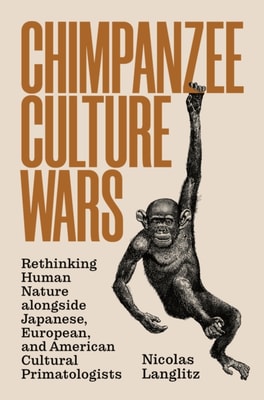
The first ethnographic exploration of the contentious debate over whether nonhuman primates are capable of cultureIn the 1950s, Japanese zoologists took note when a number of macaques invented and passed on new food-washing behaviors within their troop.
A comprehensive account of the origins, evolution, and behavior of South and Central American primatesNew World Monkeys brings to life the beauty of evolution and biodiversity in action among South and Central American primates, who are now at risk.
The most up-to-date and authoritative resource on the biology and evolution of solitary beesWhile social bees such as honey bees and bumble bees are familiar to most people, they comprise less than 10 percent of all bee species in the world.
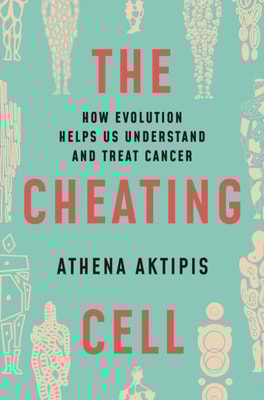
A fundamental and groundbreaking reassessment of how we view and manage cancer When we think of the forces driving cancer, we don't necessarily think of evolution.