Although the species is one of the fundamental units of biological classification, there is remarkably little consensus among biologists about what defines a species, even within distinct sub-disciplines.
Plants produce a considerable number of structures of one kind, like leaves, flowers, fruits, and seeds, and this reiteration is a quintessential feature of the body plan of higher plants.
For most, the mere mention of lice forces an immediate hand to the head and recollection of childhood experiences with nits, medicated shampoos, and traumatic haircuts.
As social and symbolic animals-animals with language and systems of signs-humans are informed by two different kinds of heritage, one biological, the other cultural.
The Evolution of Vertebrate Design is a solid introduction to vertebrate evolution, paleontology, vertebrate biology, and functional, comparative anatomy.
Primate Societies is a synthesis of the most current information on primate socioecology and its theoretical and empirical significance, spanning the disciplines of behavioral biology, ecology, anthropology, and psychology.
Looking for the first time at the cut-price anatomy schools rather than genteel Oxbridge, Desmond winkles out pre-Darwinian evolutionary ideas in reform-minded and politically charged early nineteenth-century London.
From Eve to Evolution provides the first full-length study of American women's responses to evolutionary theory and illuminates the role science played in the nineteenth-century women's rights movement.
All organisms live in clusters, but such fractured local populations, or demes, nonetheless maintain connectivity with one another by some amount of gene flow between them.
Coevolution-reciprocal evolutionary change in interacting species driven by natural selection-is one of the most important ecological and genetic processes organizing the earth's biodiversity: most plants and animals require coevolved interactions with other species to survive and reproduce.
In recent years, evolutionary theorists have come to recognize that the reductionist, individualist, gene-centered approach to evolution cannot sufficiently account for the emergence of complex biological systems over time.
Victorian Scientific Naturalism examines the secular creeds of the generation of intellectuals who, in the wake of The Origin of Species, wrested cultural authority from the old Anglican establishment while installing themselves as a new professional scientific elite.
Darwin's theory of evolution transformed the life sciences and made profound claims about human origins and the human condition, topics often viewed as the prerogative of religion.
In tracing the history of Darwin's accomplishment and the trajectory of evolutionary theory during the late nineteenth and early twentieth centuries, most scholars agree that Darwin introduced blind mechanism into biology, thus banishing moral values from the understanding of nature.
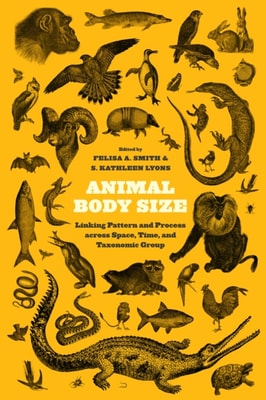
Galileo wrote that "e;nature cannot produce a horse as large as twenty ordinary horses or a giant ten times taller than an ordinary man unless by miracle or by greatly altering the proportions of his limbs and especially of his bones"e;-a statement that wonderfully captures a long-standing scientific fascination with body size.
In Reading Darwin in Arabic, Marwa Elshakry questions current ideas about Islam, science, and secularism by exploring the ways in which Darwin was read in Arabic from the late 1860s to the mid-twentieth century.
This book offers a comprehensive understanding of the natural history of the Japanese Archipelago (Yaponesia), employing cutting-edge genomic research to provide insights into the prehistory in this region.
The Teeth of Non-Mammalian Vertebrates: Form, Function, Development and Growth, Second Edition is devoted to the teeth and dentitions of living fishes, amphibians, and reptiles.
Plant evolutionary ecology is a rapidly growing discipline which emphasizes that populations adapt and evolve not in isolation, but in relation to other species and abiotic environmental features such as climate.
Over the last 25 years, evolutionary game theory has grown with theoretical contributions from the disciplines of mathematics, economics, computer science and biology.
Over the last 25 years, evolutionary game theory has grown with theoretical contributions from the disciplines of mathematics, economics, computer science and biology.
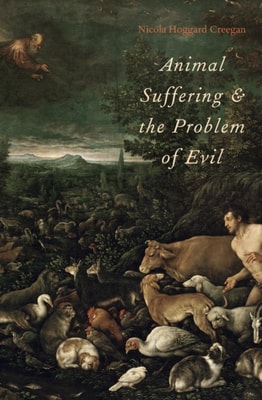
Nicola Hoggard Creegan offers a compelling examination of the problem of evil in the context of animal suffering, disease, and extinction and the violence of the evolutionary process.
A recent poll revealed that one in four Americans believe in both creationism and evolution, while another 41% believe that creationism is true and evolution is false.
"e;And, behold, I, even I, do bring a flood of waters upon the earth, to destroy all flesh, wherein is the breath of life, from under heaven; and every thing that is in the earth shall die.
This is the story of a profound revolution in the way biologists explore life's history, understand its evolutionary processes, and reveal its diversity.
Research conducted in the last fifteen years has placed in question many of the traditional conclusions scholars have formed about human female sexuality.
Primary sexual traits, those structures and processes directly involved in reproduction, are some of the most diverse, specialized, and bizarre in the animal kingdom.
Relying mostly on modern genetic science, this book exposes how various forms of creationism-including intelligent design-fail to provide testable models for the appearance and evolution of life.
Oxford presents, in one convenient and coherently organized volume, 20 influential but until now relatively inaccessible articles that form the backbone of Boyd and Richerson's path-breaking work on evolution and culture.