Responsible Genomic Data Sharing: Challenges and Approaches brings together international experts in genomics research, bioinformatics and digital security who analyze common challenges in genomic data sharing, privacy preserving technologies, and best practices for large-scale genomic data sharing.
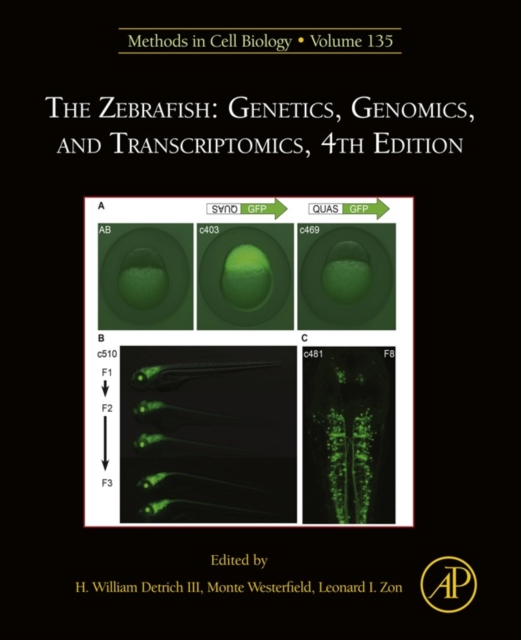
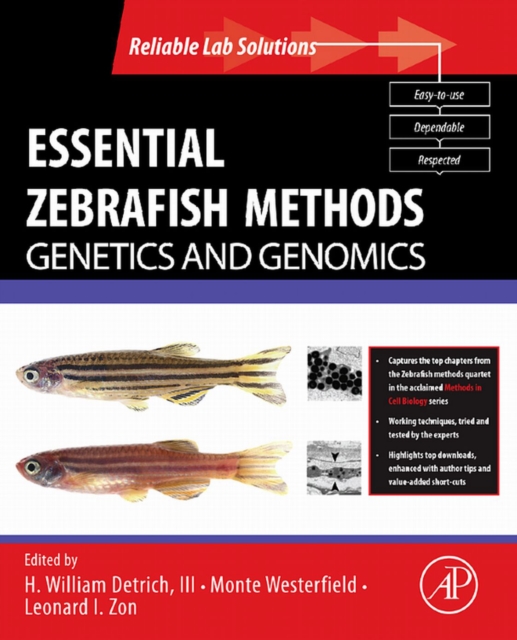
The Zebrafish: Genetics, Genomics, and Transcriptomics, Fourth Edition, is the latest volume in the Methods in Cell Biology series that looks at methods for the analysis of genetics, genomics, and transcriptomics of Zebrafish.
The field of genetics is rapidly evolving and new medical breakthroughs are occurring as a result of advances in knowledge gained from genetics research.
This fully revised second edition provides the only unified synthesis of available information concerning the mechanisms of higher-order memory formation.
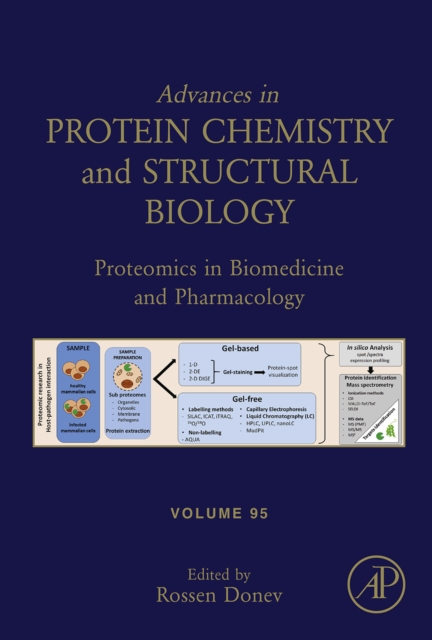
The content of this volume is designed to reach a wide audience, including those involved with relevant technologies such as electrophoresis and mass spectrometry, to those interested in how proteomics can benefit research.
The Third Edition of Chromatin: Structure and Function brings the reader up-to-date with the remarkable progress in chromatin research over the past three years.
This volume explores the conceptual framework and the practical issues related to genomic prediction of complex traits in human medicine and in animal and plant breeding.
Volume 95 of Advances in Protein Chemistry and Structural Biology focuses on advances in proteomic techniques and their application in biomedicine and pharmacology.
**Selected for Doody's Core Titles(R) 2024 in Clinical Genetics**Prenatal Genetic Counseling: Practical Support for Prenatal Diagnostics, Decision-Making, and Dealing with Uncertainty provides a foundation for new research and a one-stop source for physicians, genetic counselors, psychologists, social workers, general practitioners, grief workers, translational researchers, and administrators seeking to work in the field of clinical genomics ethically and in full consideration of patients' psychological well-being.
Since its introduction in 2012, cell-free (cf) DNA based Non-Invasive Prenatal Testing (NIPT) has been employed to test for fetal chromosome abnormalities, and gene mutations that lead to a variety of genetic conditions, by millions of pregnant women, in more than 90 countries worldwide.
It's in Your DNA: From Discovery to Structure, Function and Role in Evolution, Cancer and Aging describes, in a clear, approachable manner, the progression of the experiments that eventually led to our current understanding of DNA.
This manual is an indispensable tool for introducing advanced undergraduates and beginning graduate students to the techniques of recombinant DNA technology, or gene cloning and expression.
This volume of Progress in Molecular Biology and Translational Science covers the recent advances in the expanding fields of nutrigenetics and nutrigenomics.
Developmental Human Behavioral Epigenetics: Principles, Methods, Evidence, and Future Directions, Volume 23, a new volume in the Translational Epigenetics series, offers the first systematic account of theoretical G79 frameworks, methodological approaches, findings, and future directions in the field of human behavioral epigenetics.
Sox2: Biology and Role in Development and Disease offers a thorough discussion of the important role of Sox2 in cellular and developmental processes, aimed at facilitating greater understanding of how Sox2 functions across different disciplines.
Biological DNA Sensor defines the meaning of DNA sensing pathways and demonstrates the importance of the innate immune responses induced by double stranded DNA (dsDNA) through its influencing functions in disease pathology and immune activity of adjuvants for vaccines.
Structural Biology Using Electrons and X-Rays discusses the diffraction and image-based methods used for the determination of complex biological macromolecules.
Never before has it been so critical for lab workers to possess the proper tools and methodologies necessary to determine the structure, function, and expression of the corresponding proteins encoded in the genome.
Prostate Cancer, Science and Clinical Practice, Second Edition, continues to be an important translational reference that bridges the gap between science and clinical medicine.
Craniofacial Development, the latest volume of Current Topics in Developmental Biology continues the legacy of this premier serial with quality chapters authored by leaders in the field.
Genomics of Rare Diseases: Understanding Disease Genetics Using Genomic Approaches, a new volume in the Translational and Applied Genomics series, offers readers a broad understanding of current knowledge on rare diseases through a genomics lens.
Genome Chaos: Rethinking Genetics, Evolution, and Molecular Medicine transports readers from Mendelian Genetics to 4D-genomics, building a case for genes and genomes as distinct biological entities, and positing that the genome, rather than individual genes, defines system inheritance and represents a clear unit of selection for macro-evolution.
Biotechnology, Second Edition approaches modern biotechnology from a molecular basis, which has grown out of increasing biochemical understanding of genetics and physiology.
While every cell of an organism has an identical genomic content, extremely complex networks exist to tailor the genomic output to the needs of that cell.
Applied Genomics and Public Health examines the interdisciplinary and growing area of how evidence-based genomic knowledge can be applied to public health, population health, healthcare and health policies.
The field of Genetics is rapidly evolving and new medical breakthroughs are occuring as a result of advances in knowledge gained from genetics research.
Advances in Genetics, Volume 98 provides the latest information on the rapidly evolving field of genetics, presenting new medical breakthroughs that are occurring as a result of advances in our knowledge of the topic.
Due to its prolific reproduction and the external development of the transparent embryo, the zebrafish is the prime model for genetic and developmental studies, as well as research in genomics.
Translating microRNA to the Clinic reviews the possibilities of current methodological tools and experimental approaches used by leading translational researchers.