Chickpea: Crop Wild Relatives for Enhancing Genetic Gains explores aspects related to critical analysis on factors responsible for narrow genetic base of chickpea productions including domestication bottleneck, the level of diversity present in different cultivated and wild species, the uniqueness and usefulness of potential gene sources available and maintained in production systems across the globe, the level of genetic erosion both at landrace and species level over time and space etc.
The 2e of Molecular Diagnostics, the only book dealing with diagnosis on a molecular level, discusses current molecular biological techniques used to identify the underlying molecular defects in inherited disease.
Low-Abundance Proteome Discovery addresses the most critical challenge in biomarker discovery and progress: the identification of low-abundance proteins.
This volume provides comprehensive information on how mapping an individual's epigenome can be medically relevant and holds the potential to improve preventive medicine and precision therapeutics at an early-stage (prior to disease onset).
Human Embryos and Preimplantation Genetic Technologies: Ethical, Social, and Public Policy Aspects presents the first holistic analysis of PGD and PGS as it is practiced and regulated worldwide.
Handbook of Clinical Adult Genetics and Genomics: A Practice-Based Approach provides a thorough overview of genetic disorders that are commonly encountered in adult populations and supports the full translation of adult genetic and genomic modalities into clinical practice.
Emery and Rimoin's Principles and Practice of Medical Genetics and Genomics: Cardiovascular, Respiratory, and Gastrointestinal Disorders, Seventh Edition includes the latest information on seminal topics such as prenatal diagnosis, genome and exome sequencing, public health genetics, genetic counseling, and management and treatment strategies.
Marine Carbohydrates: Fundamentals and Applications brings together the diverse range of research in this important area which leads to clinical and industrialized products.
This fully updated edition of the bestselling three-part Methods in Enzymology series, Guide to Yeast Genetics and Molecular Cell Biology is specifically designed to meet the needs of graduate students, postdoctoral students, and researchers by providing all the up-to-date methods necessary to study genes in yeast.
PCR Guru: An Ultimate Benchtop Reference for Molecular Biologists is provides researchers in molecular biology with a handy reference for approaching and solving challenging problems associated with PCR setup and optimization.
"e;Engineering"e; has firmly taken root in the entangled bank of biology even as proposals to remake the living world have sent tendrils in every direction, and at every scale.
THE LATEST BREAKTHROUGHS IN COMPUTER-AIDED DRUG DESIGN AND DELIVERYThis definitive text provides in-depth information on computer-assisted techniques for discovering, designing, and optimizing new, effective, and safe drugs.
Dental defects may be the physical expression of genetic defects, and so they can often be seen in a variety of syndromes associated with malformations of organs.
This book relates how, between 1954 and 1961, the biologist Seymour Benzer mapped the fine structure of the rII region of the genome of the bacterial virus known as phage T4.
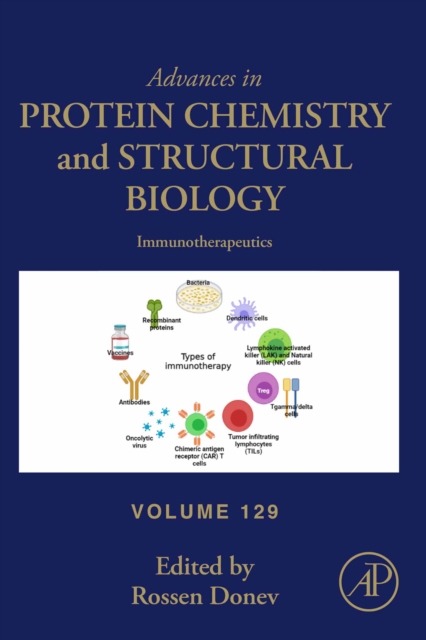
Immunotherapeutics, Volume 129 in the Advances in Protein Chemistry and Structural Biology series highlights new advances in the field, with this new volume presenting interesting chapters on a variety of topics, including Vaccines for the prophylaxis and treatment of HPV, Lung-targeted RNA-based therapeutics, Clostridium difficile: Current overview and future perspectives, Antivenoms for treatment of snake bites, Natural killer cell-based strategies for immunotherapy of cancer, Immunological insights of selectins in human disease mechanism, Current update, challenges, and future aspects of immunotherapeutics in non-small cell lung cancer, In silico interaction analysis of NEMO binding domain peptide on the NFkB protein, and much more.
Artificial Intelligence, Machine Learning, and Deep Learning in Precision Medicine and Liver Diseases: Concept, Technology, Application, and Perspectives combines four major applications of artificial intelligence (AI) within the field of clinical medicine specific to liver diseases: radiology imaging, electronic health records, pathology, and multiomics.
Although scientists recognize the role of epigenetic mechanisms in DNA damage response, the complex, mechanistic interplay between chromatin regulation and DNA repair is still poorly understood.
Post-transcriptional Gene Regulation in Human Disease, a new volume in the Translational Epigenetics book series, offers a thorough overview and discussion of post-transcriptional genetic control mechanisms and their roles across various pathologies and human developmental outcomes, along with regulatory mechanisms targeted for therapeutic approaches.
A challenging new look at the entwined histories of genetic medicine and eugenics, with thoughtful discussion on the moral risks of seeking human perfection Almost daily we hear news stories, advertisements, and scientific reports that promise genetic medicine will make us live longer, enable doctors to identify and treat diseases before they start, and individualize our medical care.
A fascinating exploration of the extreme world of animal athletics, how these stunning abilities have evolved, and their insights into human performance and evolution"e; How is it that fish can climb waterfalls, snakes glide, and cheetahs run so fast?
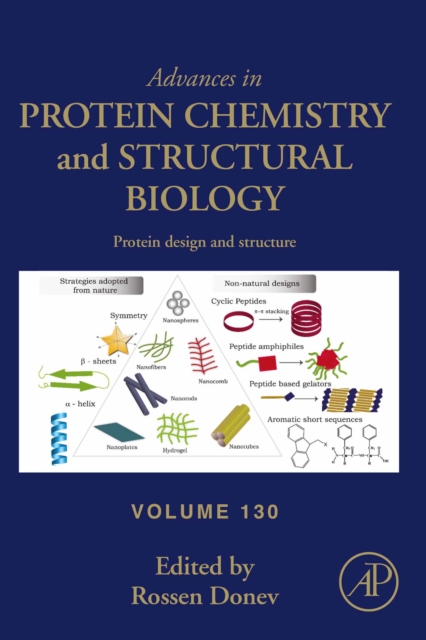
Protein Design and Structure, Volume 130 in the Advances in Protein Chemistry and Structural Biology series, highlights new advances in the field, with this new volume presenting interesting chapters.
The critically acclaimed laboratory standard for forty years, Methods in Enzymology is one of the most highly respected publications in the field of biochemistry.
Advances in Genetics provides the latest information on the rapidly evolving field of genetics, presenting new medical breakthroughs that are occurring as a result of advances in our knowledge of the topic.
A uniquely accessible way of looking at recent major advances in the science of embryonic development In the span of just three decades, scientific understanding of the formation of embryos has undergone a major revolution.
Progress in Genomic Medicine: From Research to Clinical Application provides a careful synthesis of the foundations, current trends and translational challenges in genomic medicine, clarifying pathways forward and enabling genomic medicine research and implementation across clinical settings and treatment development.
Advances in Genetics provides the latest information on the rapidly evolving field of genetics, presenting new medical breakthroughs that are occurring as a result of advances in our knowledge of the topic.
How unassuming government researcher Marshall Nirenberg beat James Watson, Francis Crick, and other world-famous scientists in the race to discover the genetic code.
The field of genetics is rapidly evolving, and new medical breakthroughs are occurring as a result of advances in knowledge gained from genetics reasearch.
Genomics in Biosecurity: Principles and Applications of Genomic Technologies in Expanded Biosecurity Concepts, in the Translational and Applied Genomics series, explains in definite and practical terms the applicability of genomic technologies in every aspect of biosecurity, from emergent diagnostics to bioterrorism, agroterrorism, next generation biowarfare, biosurveillance and risk assessment.
A leading neuroscientist explains why your personal traits are more innate than you thinkWhat makes you the way you are-and what makes each of us different from everyone else?
This volume presents a collection of versatile methodologies to investigate prokaryotic gene regulation, with focus on the different levels of information processing and usefulness for various model organisms, whether archaeal, bacterial, or both.
This volume of the acclaimed Methods in Cell Biology series provides specific examples of applications of confocal microscopy to cell biological problems.
In this book, plant biology is considered from the perspective of plants and their surrounding environment, including both biotic and abiotic interactions.