Despite the amazing progress made by the stereotactic technique, particularly regarding the localization of the target, despite the extreme caution, which stereotactic neurosurgeons apply at every step of the procedures, despite the routine roentgenologic and physiologic controls (depth EEG, electric stimulation) preceding the production of a lesion, there remains a certain degree of uncertainty regarding the position, shape and extent of the lesion as well as of the electrode track and also regarding unintended lesions in the vicinity.
Recent physiologic investigations have shown that the deep cerebellar nuclei may play an important role in the initiation and monitoring of skilled move- ments.
The vertebrate eye has been, and continues to be, an object of interest and of inquiry for biologists, physicists, chemists, psychologists, and others.
In review, the amount of information available on the morphological and func- tional properties of the frog nervous system is very extensive indeed and in certain areas is the only available source of information in vertebrates.
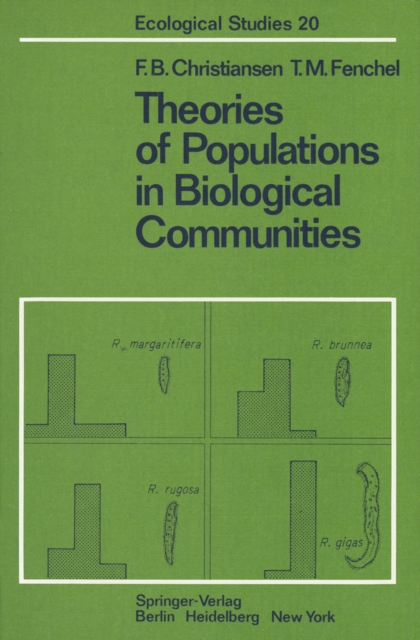
Animals are important components of any ecosystem and it is impossible to describe structure and funCtioning of the Fennoscandian tundra ecosystems without including this part of the system.
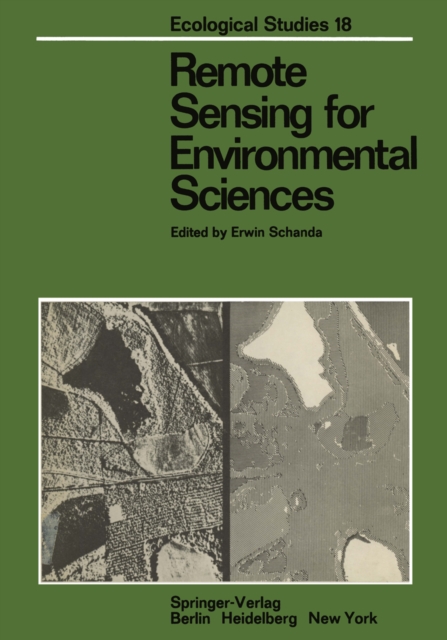
The public's serious concern about the uncertainties and dangers of the conse- quences of human activities on environmental quality demands policies to control the situation and to prevent its deterioration.
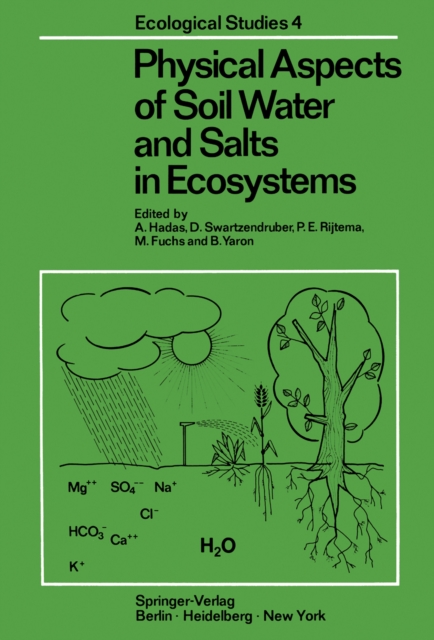
A book previously published within the framework of the Ecological Studies Series, entitled "e;Physical Aspects of Soil Water and Salts in Ecosystems"e; included awidespectrum of research papers devoted to new findings in the field of soil-plant-water relationships.
At the end of the last century and the beginning of this century, the prob- lems of immunity in lower vertebrates and the influence of environmental temperature attracted attention for the first time (ERNST, 1890; WIDAL and SICARD, 1897; METCHNIKOFF, 1901).
The papers collected in this book were given and discussed at the symposium on "e;Soil water physics and technology"e;, which was held in Rehovot, Israel, from August 19th-September 4th, 1971.
No other disjunct pieces of land present such striking similarities as the widely sepa- 1 rated regions with a mediterranean type of climate, that is, the territories fringing the Mediterranean Sea, California, Central Chile and the southernmost strips of South Mrica and Australia.
In 1971 I published a review of ichnology other concentrating only on traces made (Houston AAPG: SEPM Trace Fossil Field by a certain group of organisms, regardless Trip Guidebook) that I thought could be of their setting.
Although this is basically a translation of the second German edition published in 1970, more recent experimental findings have, in several instances, been incorporated into the text.
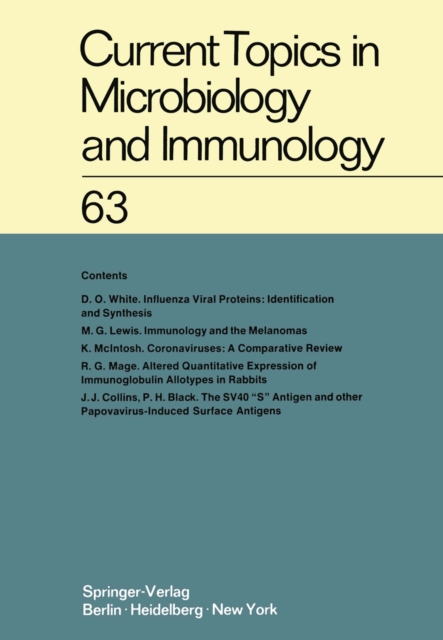
This volume is dedicated to the memory of the late Professor WERNER BRAUN, one of the most devoted and active members of the Editorial Board of the Current Topics in Microbiology and Immunology, who passed away, after suffering a heart attack, in November 1972.
General aspects of nucleic acid uptake by mammalian cells have been the subject of several reviews during the last few years (PAGANO, 1970; BHARGAVA and SHANMUGAM, 1971; DUBES, 1971; RYSER, 1967).
Since the publication of the first Atlas of Mammalian Chromosomes in 1967 the continuous compilation of mammalian karyotypes has become a useful instrument in cytologic and taxonomic studies.
This book is based on the Symposium "e;Metabolic Regulation and Functional Activity in the Central Nervous System"e; which was held on September 16 and 17, 1972, at Saint- Vincent (Aosta)/Italy, and was sponsored by the Accademia di Medicina di Torino with the scientific cooperation of the Istituto di Farmacologia, Universita di Torino, and the Pharmakologisches Institut der Freien Universitat Berlin.
The Advanced Series in Agricultural Sciences is designed to ftll a long-felt need for advanced educational and technological books in the agricultural sciences.
When Budge in the eighth decade of the nineteenth centlll'Y, started his investigations into the origin and development of the lymphatic system, he probably did not expect that these would be the starting-point for disputes that would continue well into our time.
The purpose of this monograph is to bring together in one volume some of the more recent knowledge of the cellular and biochemical constit- uents of sheep's blood.
These notes are based on (i) a series of lectures that I gave at the 14th Biennial Seminar of the Canadian Mathematical Congress held at the University of Western Ontario August 12-24, 1973 and (li) some of my lectures in a modeling course that I have cotaught in the Division of Bio-Medical Sciences at Brown during the past several years.